The secret to success with your own supplement brand is finding the right white label partner. Here’s a list of the best supplement vendors out there:

SETTING THE STAGE

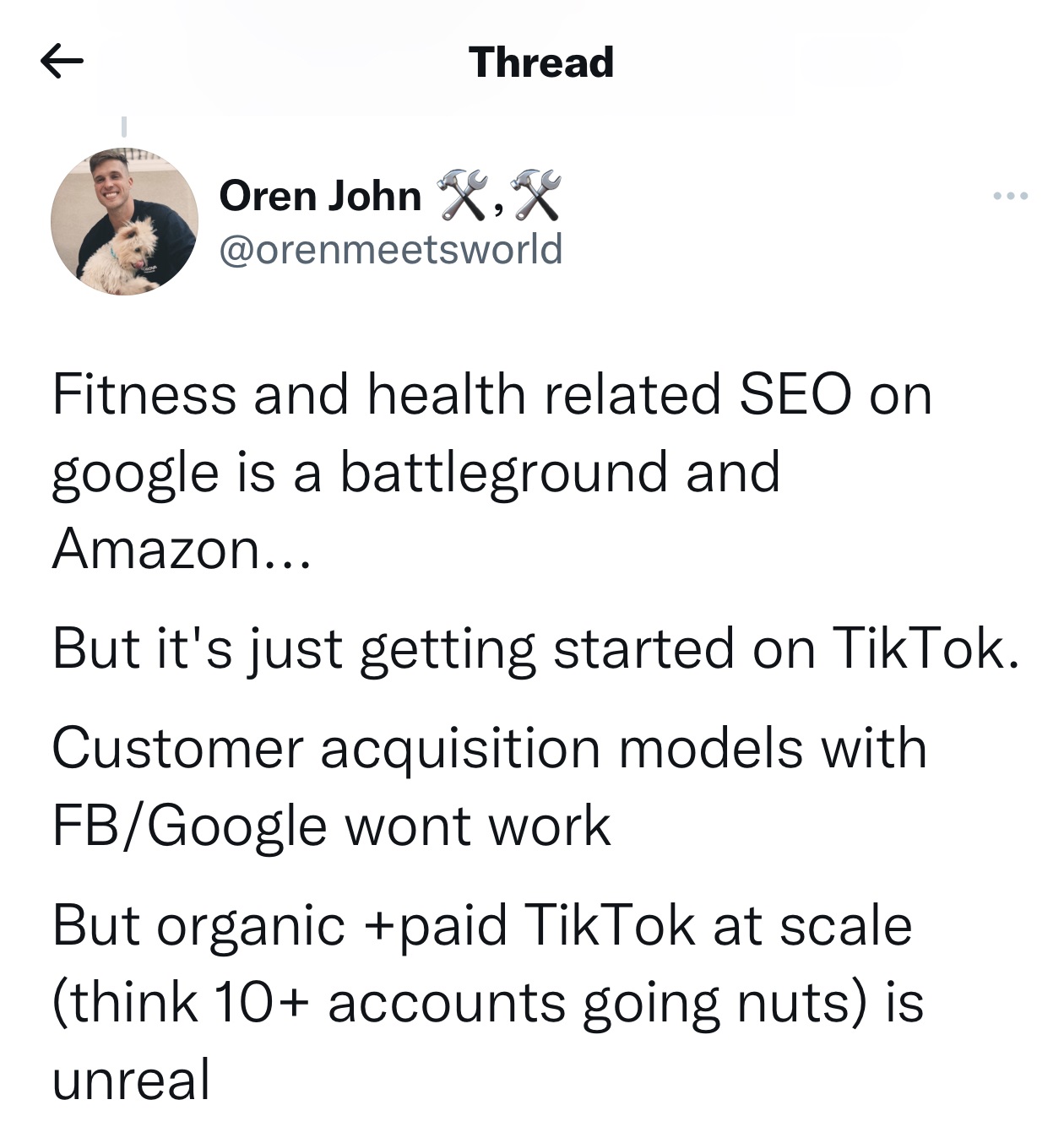
The market is ripe for individualized sports performance and supplement brands:

  • Big players are losing market share
  • Aggregators like GNC don’t have the power they once had and
  • Consumers are looking for specifics – organic, vegan, key ingredients, etc. 


We all see the noise around Athletic Greens. There’s 50 similar products on the shelves at your local Sprouts–they stood out with value proposition, audience, and tenacity over time. 

This isn’t about knocking off popular products; Everything about supplements is commoditized. It’s about who consumers trust to buy from and what added-value you can give them (bundle with info products, tests to help find the right fit, sustainable approaches, etc). 


SUPLIFUL

The most interesting white label supplement to watch is Supliful, who focus on making products for creators and those with a personal brand who want to leverage their audience (versus helping an entrepreneur launch a brand). They make it dead-easy across categories, including:

  • coffee
  • sports nutrition
  • health
  • nootropics
  • and superfoods

Using Supliful, you never touch a product or inventory, and just see the net profit. Set up a connected store, and customize product with their product catalog. The main value proposition for Supliful is if you have an existing audience, launch in 7 days or less for only $149.

Hat tip to @JamesonCamp who mentioned this on last week’s Tab Talk podcast:


JW NUTRITIONAL

Next up is JW Nutritional, known for protein blends and in particular, those with plenty of other options like vitamins, probiotics, etc. They drop-ship as well, which makes them a great one-stop-shop if you don’t want to hold inventory. 


VITALABS

Vitalabs is great because they have a wide variety of niches already laid out to work from – including halal certified, vegan, etc. Their portfolio spans:

  • vitamins
  • amino acids
  • minerals
  • probiotics
  • and sports nutrition


TRU BODY WELLNESS

Tru Body Wellness is an awesome low minimum order quantity (MOQ) option. Starting at 500 units for custom formulations or 100 units for their existing products, with a large catalog of options. 

There are plenty of providers out there, make sure yours has a GMP facility and FDA certification, and the more services they offer (dropshipping, labels, packaging) the better for ease. If you want to get more margin in exchange for your work, you can handle the logistics.


Thanks for reading. Let me know in the comments below how your brand has been doing, or if you think there’s any private label supplement suppliers that should be on this list.

– Oren


FOLLOW ME ON SOCIAL MEDIA:


READ NEXT:
The Essential Private Label Coffee Suppliers Guide


SUBSCRIBE FOR MORE:


I wrote a Twitter thread about coffee accessories a while back. These have a huge opportunity in organic social right now, as do coffee bean and cold brew products.  This is your guide to private label coffee roasters and their brews, and the private label coffee suppliers who keep their inventories fresh.

Let’s do this…


The #1 question I got after my Twitter thread? “How do I sell actual coffee?” Bingo!

I thought this niche would be saturated… But after some SEO research, I realized it’s not. There’s plenty of space in your local markets to get in on the ground floor and establish a name for your brand, and I’ve got just the list for you.

Terms you should know in this post:

  • Small-Run Coffee Beans: Suppliers who specialize in small-batch roasts and small private label runs for brands or in-house labels.
  • Dropshippers: Pick your brew, design your packaging, and they ship and send, with a ton of options.
  • Private label (or white label): Choose from existing products in a manufacturer’s portfolio and brand it as your own.
  • Contract manufacturing (also co-manufacturing or co-packing): Get involved in the process from start to finish, including formulation, packaging design, labeling options, and logistic considerations.
  • Ready-to-Drink: Beverages that are typically sold in cans, bottles, or similar containers and require no preparation to enjoy. Examples here include iced teas and cold brews, which you will find mention of down below.
  • MoQs: Minimum order quantities, meaning the least amount you can order of a given product. MoQs are one of my main selection criteria when choosing suppliers to buy from, and you’ll hear this term a lot in my posts and TikToks.


Get all the intel – in a nutshell – in my TikTok short below, or scroll to keep reading the expanded version.


@orenmeetsworld

How to start a coffee company, with manufacturers who can make your brand #ecommercetips #entrepreneurtok #coffeebrands #coffeetiktok #coffeetok #ecommercebusiness #coffeeaddict @orenmeetsworld

♬ Cool Kids (our sped up version) – Echosmith


Private Label Coffee Roasters

Established in 1840, this brand is said to be the oldest coffee merchant in the US. Gillies Coffee is a small-run coffee bean supplier with a low MoQ of just 72 units to start.

Plus they have a bunch of cool and fun old packaging that you can use. There’s plenty of options to choose from, lots of flavors, and green beans (a nice term for SEO and popular on social).


Private Label Coffee Roasters and Suppliers Guide - Start your own coffee brand today | Product World


Gillies Coffee is an easy way to get started, especially if you want to test selling it in-person.


Private Label Coffee Dropshippers

Dripshipper charges a monthly fee and they take care of everything,

The perfect solution for those who want to wake up tomorrow morning and process 1,000 orders by sunset.

  • 12oz-5lb bags
  • 12 or 60 pack pods


Private Label Coffee Roasters and Suppliers Guide - Start your own coffee brand today | Product World


If you truly want to do the minimum amount of work possible, Dripshipper lets you add your logo, choose from their existing coffee options, and sell but you’re going to get a much lower margin. So, the lowest profit option, but least work and upfront cost.


Start your coffee business in one day!

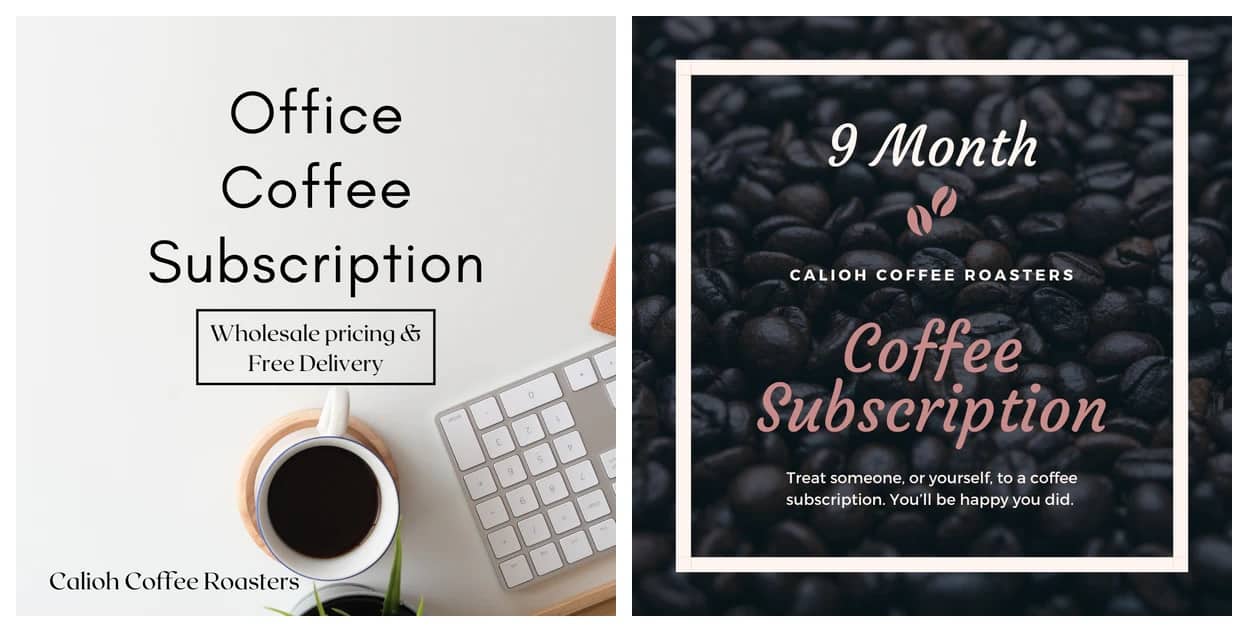
If dropshipping sounds like your best bet, here’s another private label coffee supplier you can take a look at. Calioh Coffee offers the whole spectrum of options, including:

  • Single origin, fair trade, and decaf
  • Bags, k-cups and Nespresso

No monthly fee here so they’re a little different to Dripshipper above. However, this one needs more time to set up. You need to take this one seriously because it’s going to take more of your time to get it just right.


Private Label Coffee Roasters and Suppliers Guide - Start your own coffee brand today | Product World


With 100% satisfaction guaranteed, this is probably the one I’d choose if I was going to do a brand. 


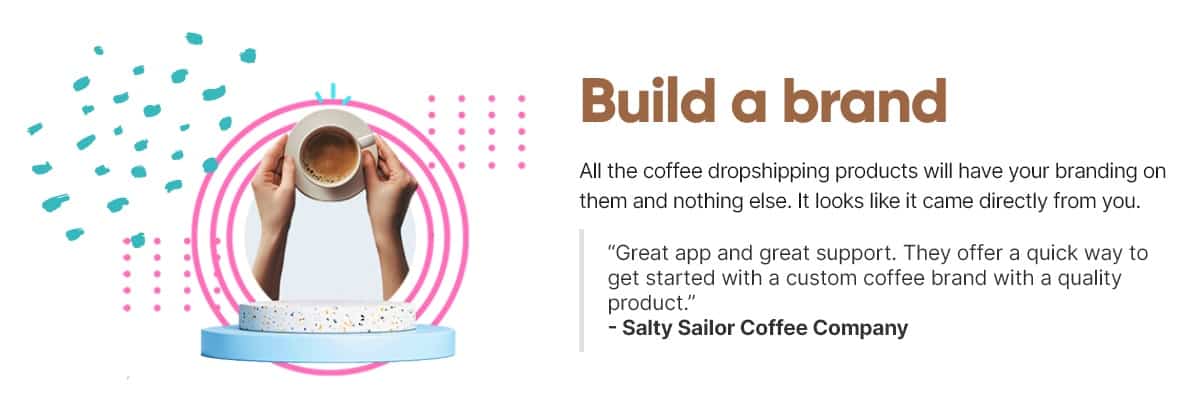
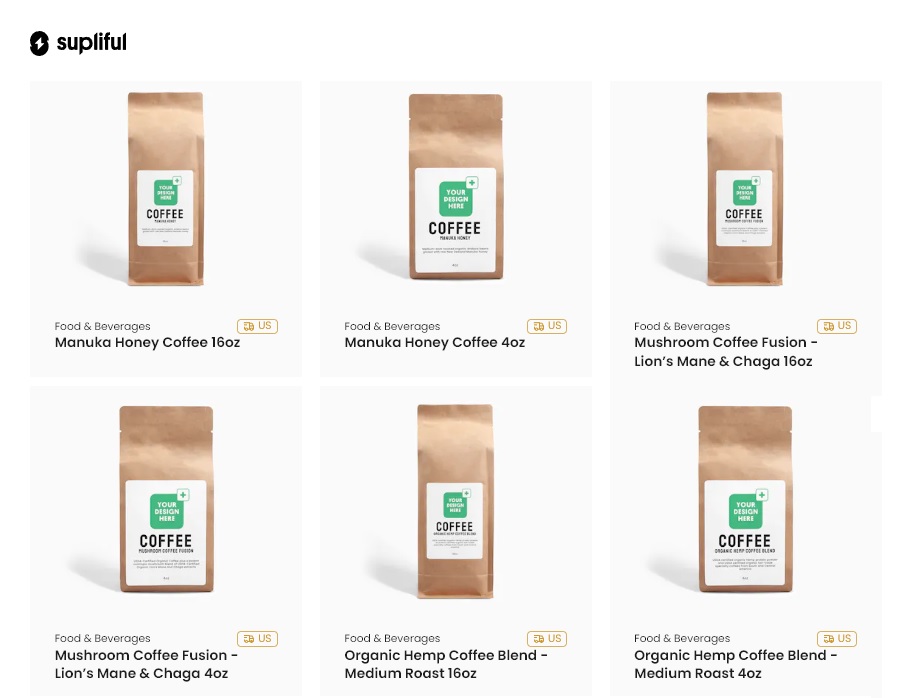
Supliful is another private label coffee dropshipper where you don’t have to hold inventory  or pay anything on a monthly basis. Simply send them your designed label, and integrate with Shopify. You’ll be able to sell right away. 


Private Label Coffee Roasters and Suppliers Guide - Start your own coffee brand today | Product World


Ready-to-Drink Private Label Coffee Suppliers

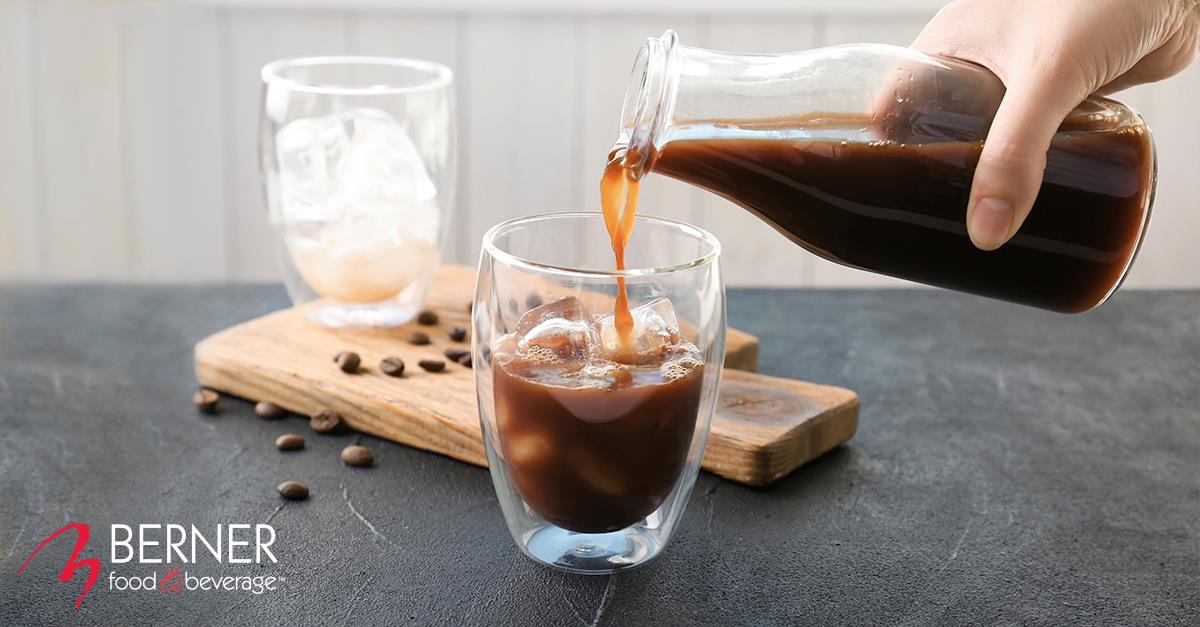
Berner Food & Beverage is a private-label co-manufacturer with a large selection of ready-to-drink coffee and tea beverages. 


Private Label Coffee Roasters and Suppliers Guide - Start your own coffee brand today | Product World


Choose from four flavored cold brew coffee profiles: caramel, coffee, vanilla, and mocha.  The iced latte product line includes more flavors, such as peppermint mocha, pumpkin spice, and s’mores.

They also have many other customizable solutions, like:

  • Coffee (cold brew and milk alternatives)
  • Energy (blends, including those with added caffeine)
  • Tea (extracts and lattes)
  • Functional (protein-enhanced and vitamin blends)
  • Innovation (mocktails and bespoke flavors)

The R & D team at Berner’s can also assist you with rapid market deployment. They collaborate with multi-packaging service providers to get your product canned, bottled, jarred, and custom-labeled with catchy designs.


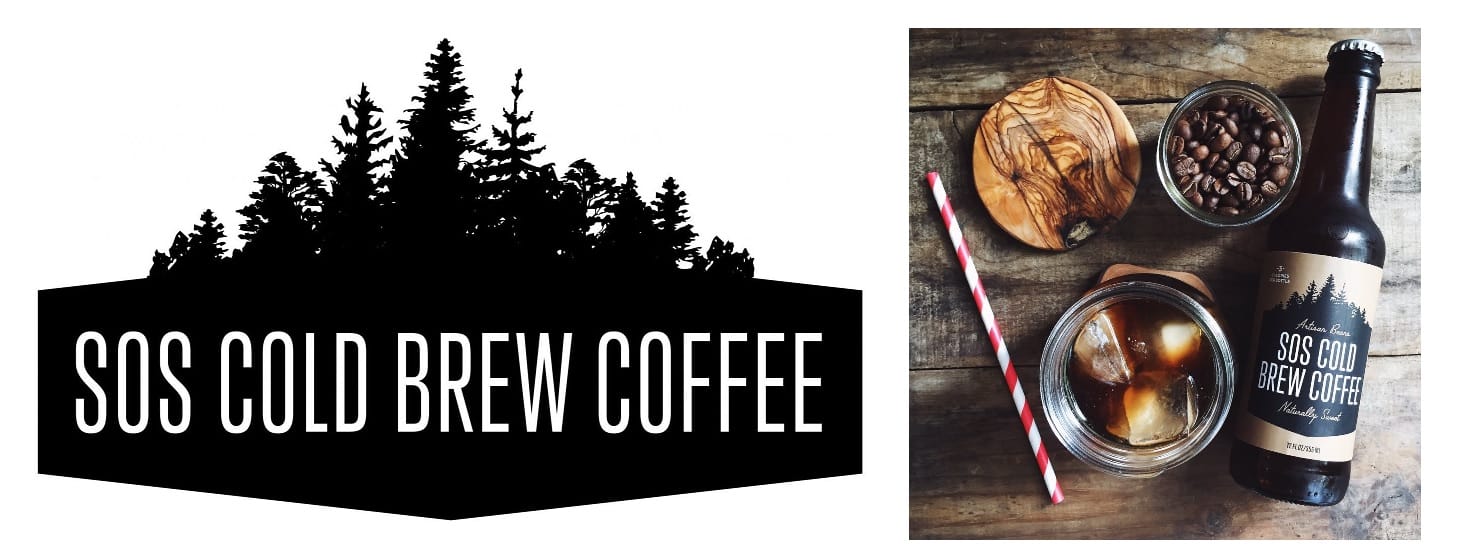
If you want to do bulk cold brew, SOS Cold Brew is a noted cold brew white labeler.


Private Label Coffee Roasters and Suppliers Guide - Start your own coffee brand today | Product World


Hailed as the better, healthier alternative to iced coffee and sweetened drinks, cold brewed coffee products from SOS Cold Brew contain no added sugars or preservatives.

  • Classic – Original recipe, balanced flavors, strength, and drinkability, an everyday cold brew. A 12oz serving provides 174mg of caffeine, and costs you just 7 calories.
  • Bold – 50% stronger than Classic but with the same base recipe, great over ice. A 12oz serving provides 247mg of caffeine, and gets delivered with only 10 calories.
  • Kona – A Hawaiian blend that’s rich and delicious. Serving and calorie info same as the Classic blend.

All products available in 12oz glass bottles, or 5-gallon “Corny” kegs (Still or Nitro pours).


JAVO MASTERS OF EXTRACTION

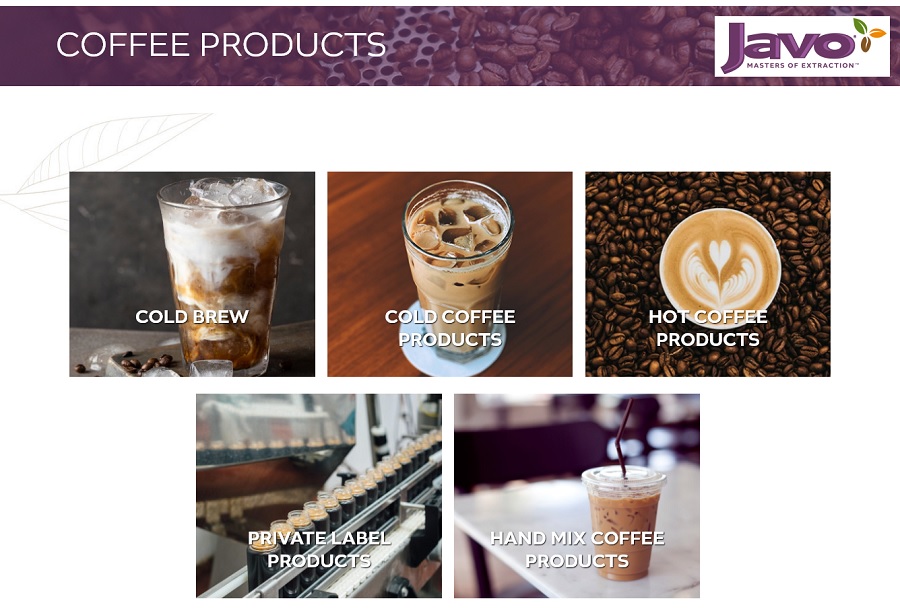
Javo Masters of Extraction are another super white label coffee supplier option, with a natural cold brew.


Private Label Coffee Roasters and Suppliers Guide - Start your own coffee brand today | Product World


Private label product solutions include developing custom bags-in-a-box or hand-mixed cold brew coffees and teas with either own-brand proprietary blends or using existing small-batch, in-house, craft-roasted coffee blends with your own brand.


Custom Coffee Beverages

If you want to do your own fully-custom beverage — whether that’s like a hard coffee, or you want to do a cold brew can or something like that — and actually do like a formulated consumer packaged goods, I’d recommend Tex-Bev in Texas to be your partner for that.


Private Label Coffee Roasters and Suppliers Guide - Start your own coffee brand today | Product World


They’re a great kind of small business with an excellent approach to having a good packer.

They do alcohol, too


Overall, coffee is hyper competitive to actually compete in but there’s still tons of people that sell and consume it everyday with subscription services, and new flavors and any number of things. If you want to get started, this is a pretty darn authoritative list of different ways to do that with different price points.

With any brand or product, it will be a sliding scale. The less work you do, the less you make. Dropshipping means you can expect 10-20% margin.

Buying in large bulk, getting custom packaging in bulk, all custom done, you can make closer to 50%, but with a more up-front cost.


Thanks for reading. Let me know in the comments below how you’re doing, or if you think there’s a private label coffee supplier that needs to be on this list.

– Oren


FOLLOW ME ON SOCIAL MEDIA:

READ NEXT:
The Best Private Label Manufacturers for Skin, Bath, Hair and Cosmetic Products


You can learn more by joining the thousands of happy readers already on my Product People newsletter. I’d be excited to have you in the community!


SUBSCRIBE FOR MORE:


The bag market is set to outpace designer apparel to be worth $100 billion by 2027! This is the time to own an e-commerce brand! Here’s my product playbook – with factories – to start your own bag brand now.
 

I’ve worked on many bag products, tens of thousands of total units. There are so many opportunities out there, ranging from product presentation, to retail exit bags, to school bags, to designer bags, to mini bags. The size of this market can’t be underestimated!


How to Start Your Own Bag Brand | Product World


Here’s a rough cost outline for bag products of different qualities from China:

  • Translucents/mini bags: $10
  • Artificial PU leather: $5-20
  • Simple canvas totes, duffels, etc: $3-10
  • Lower end genuine leather: $30-$55
  • Real leather/sheepskin at designer quality: $100-250


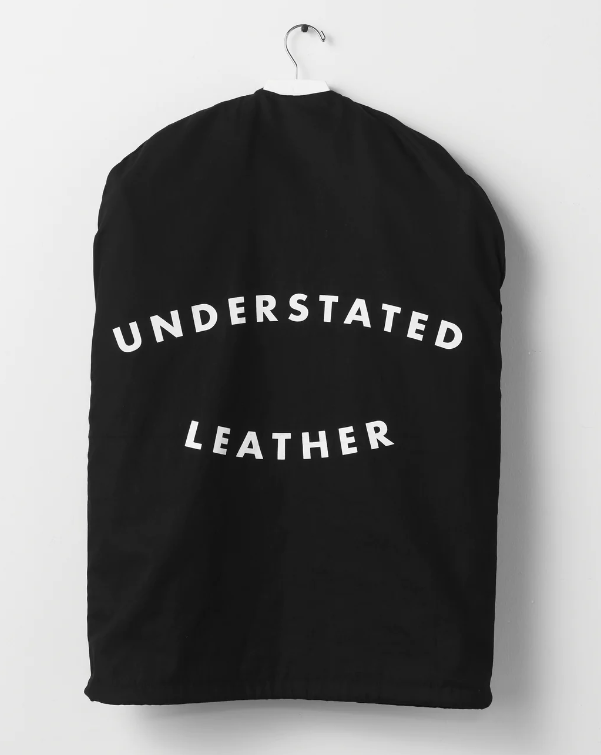
Garment and tote bags to include with products is a great option for existing brands.

I purchase a lot of Rick Owens. What you may not know is that many Rick Owens’ products come with a super high-quality canvas bag that I use absolutely all the time. Providing a quality option for this helps cement your brand.


How to Start Your Own Bag Brand | Product World


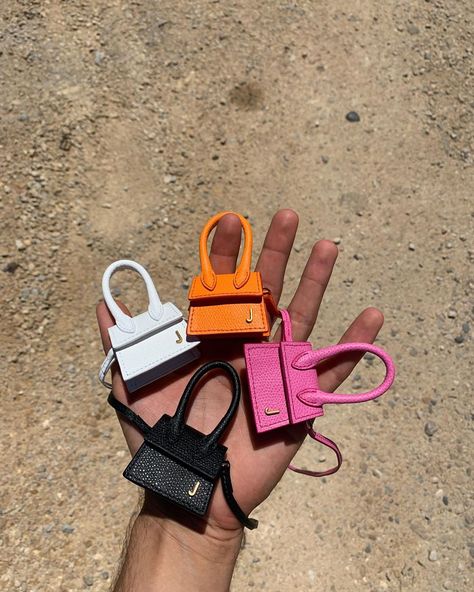
The Tiny Purse movement isn’t dead yet, and there’s lots of vendors with starting options. You need to ignore their styles, and design yourself. Take a loose concept they have so its a realistic starting point, but do you own design.


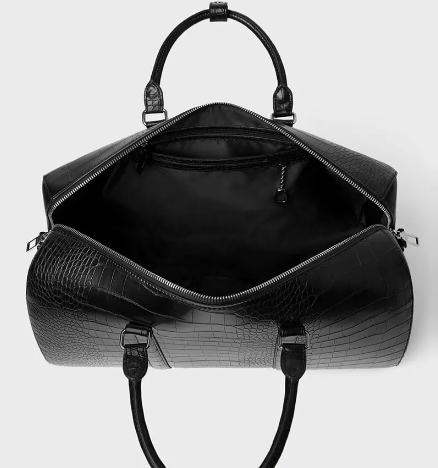
For most people it makes sense to start with an existing popular design and modify it to be something unique. This is a men’s option from Guangzhou Gaofeiya Leather Co

How to Start Your Own Bag Brand | Product World


Translucent bags are also popular and affordable. Good option to easily put out a design in a unique style (over shoulder, fanny pack, tote, etc) with fun designs – especially for TikTok.

These are $10, custom logo at 100 minimum order quantity (MOQ).


These are 500 MOQ with custom graphics and packaging, but only $4.60 each


A vendor option for PU leather and patterned options on the cheaper end? Look at Shijiazhuang Anhong Trade Co


Quanzhou Fanlostar Int’l Co and Chongqing B.m. Import & Export are two legit factories who will import various materials as needed for quality options for any style you want to make.

Tips for sending a great “brief” to your chosen vendors:

  • Note materials/colors inside & out
  • Note logo placement and type of print (embroidery/silk etc)
  • Clarify stitch types when possible
  • Note material + quality of parts and hardware for straps, zippers, highlights etc

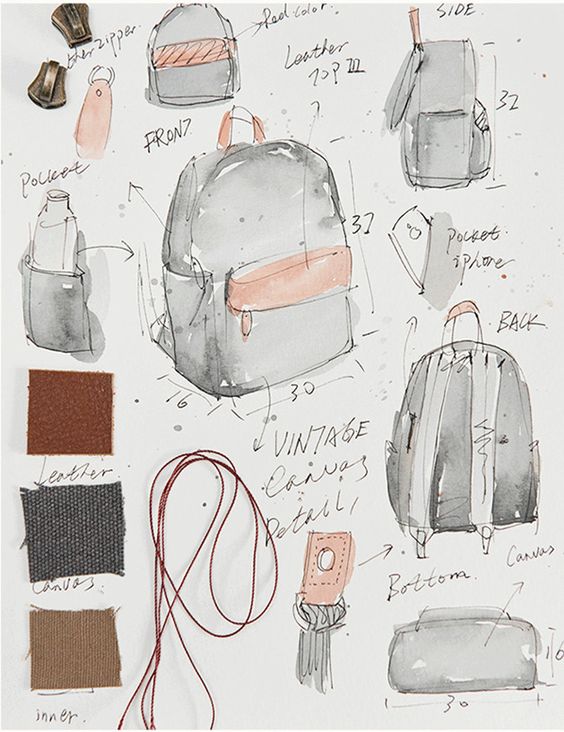
Process notes: Include sketches or cad drawings with dimensions in cm/mm. If you want real leather, get a sample of the leather sent prior to an actual bag mockup. Expect to pay hundreds for a real quality single sample. This can usually be applied against your order invoice (just ask).


How to Start Your Own Bag Brand | Product World


If you want to go expensive and charge a premium, read How to Differentiate a Luxury Brand. This is my starter guide for different techniques for differentiating a premium brand over time.


Laundry list of ideas I’ve had in this space you should use:

  • Kids’ book bags suck and haven’t changed in forever. There’s got to be better options to create.
  • With designer knockoffs so prevalent, I feel high-end personalization is the next big trend, own this!
  • Pattern development like Goyard/LV, etc. but using high-end digital techniques and renderings
  • Utilizing complex textiles enabled by services like Byborre
  • Mens’ bags is still wide open…


Backpacks are for kids, messengers aren’t much better. What’s a new form factor?


Quick checklist for succeeding with sourcing your product:

  • Find a reputable vendor with existing transaction history
  • Provide your product brief in significant detail
  • Always sample ahead of time
  • Go through all the details of packaging, shipment, and use by your customer


Thanks for reading! If you found it interesting, I’d appreciate your shares!

– Oren


Make your products come to life. Get more factories, insights, and tutorials like these. Follow me on Twitter: @orenmeetsworld

Join thousands of like-minded readers on my weekly Product People newsletter covering building brands and differentiated products.


SUBSCRIBE FOR MORE:


In today’s economy, differentiation is what’s going to make you stand apart from the crowd, like this vendor. With almost 1 million transactions under their belt (so to speak) the Dongguan Rainbow Touches Garment Co. is a great vendor for differentiated and custom men’s fashionwear. 


No time to read? Watch my TikTok short instead…


@orenmeetsworld

A great overseas manufacturer for mens fashion #productdevelopment #clothingline #appareldesign #fashionbrand #ecommercetips @orenmeetsworld #greenscreenvideo #greenscreen

♬ ASTRO Trap Beat – Hip Hop Instrumental – AfterInfinityMusic


Let’s start with this logo tee. If you look closely, this is actually a nice acid wash which will help make it stand out from what a basic tee is. You can start customizing your tee with a low MoQ (minimum order quantity) of just 30 pieces. Customized packaging also starts at just 30 pieces.


We’re looking at about 8.50 a piece on these if you want custom logo and packaging. Lead time for 100 or so pieces is just 7 days, and ordering 100 pieces also qualifies you for the $60 discount.


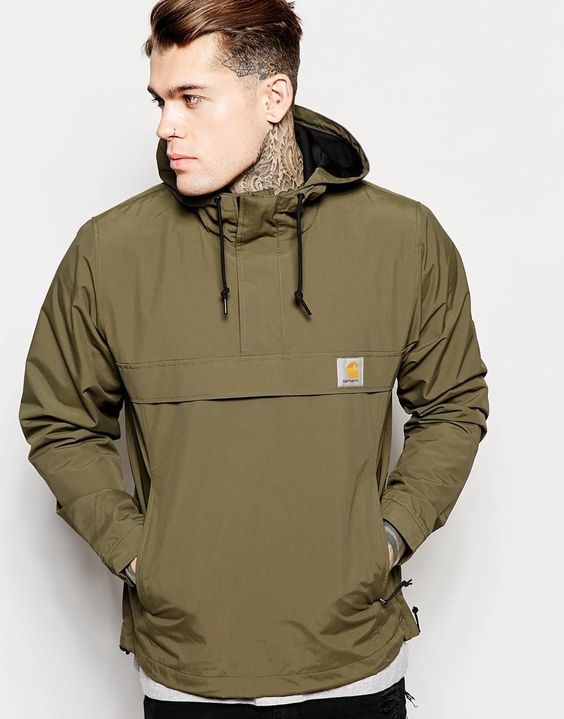
Let’s move on to this kind of jacket windbreaker, modeled here by legendary male model Stephen James. This is a great item for anyone doing merchandise because the actual cost is pretty cheap. And you don’t have to rush this for a super-high price point; You can make something useful and versatile for multiple seasons.


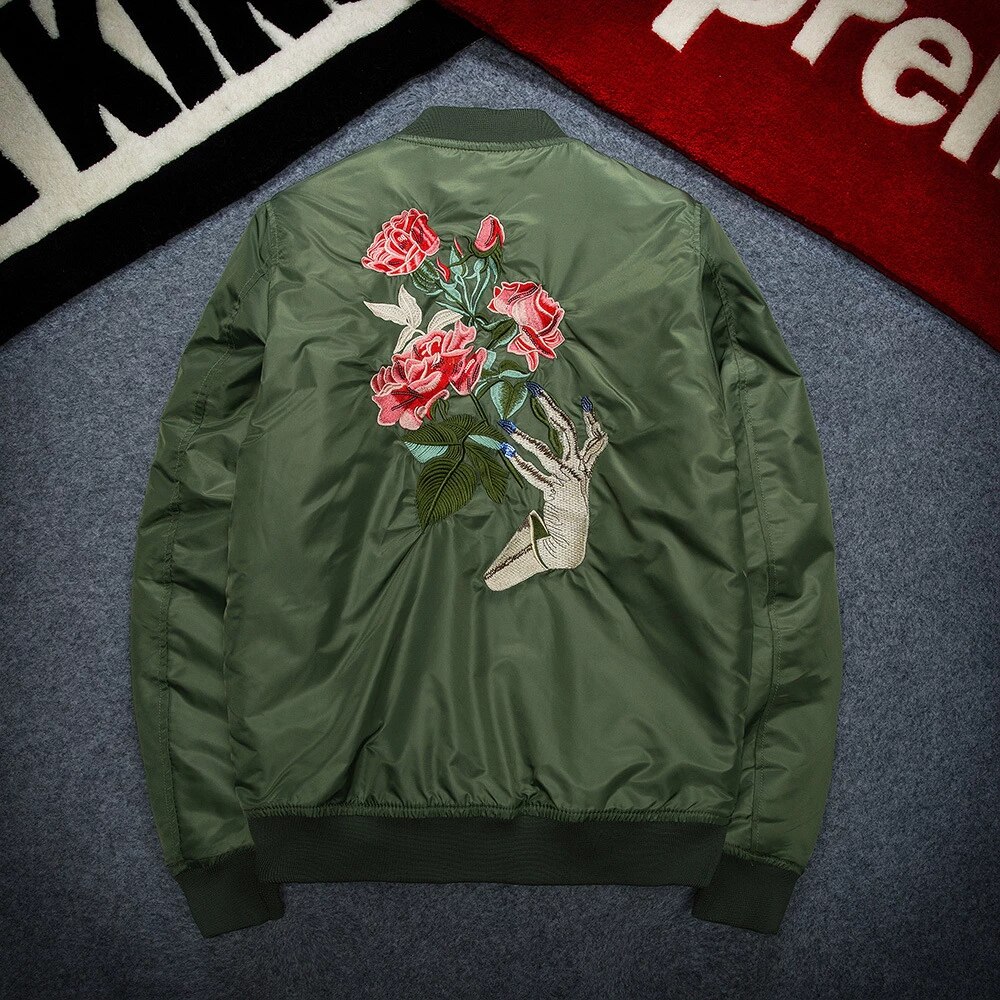
This is one of my favorites out of the options they offer. This is a satin-feel bomber jacket. Its obviously not real satin, but its embroidered with some really nice ideas.

With these, it would take about 200 pieces to get a customized logo, etc., and you’d need to order 500+ pieces for custom packaging. The good news is that you’re only looking at about $20 per piece, so you can get your thing up and running for about $1,000, plus shipping.

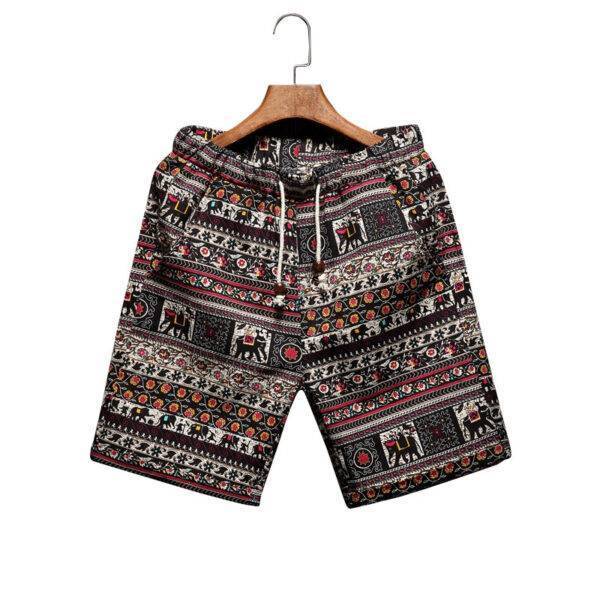
Here’s another unique item which would sell quite well. These all-over print shorts are polyester so I’d try to get a nicer fabric (like cotton or linen, perhaps). This has definitely got a very unique look that would help your merchandise stand out. This kind of all-over print is available in a range of options to choose from. 

What’s great about this is that a sample of your custom design is only $50 and you can get custom packaging at only 50 pieces. 200 MoQ for your own logo and the end cost is only about $10 per unit. 


Last is a great option for custom shorts if you’re looking for that 5-in. baggies look and all of the print. I actually like these camo ones right here, and with custom logos so you can make a fun product. Cost on these are only about $12 a piece.

Overall, this is a great vendor to look to if you want to start manufacturing clothing overseas. They have some versatile options and you can make more money than you would domestically.


Let me know in the comments below or on my TikTok video embedded above how far you got and what you eventually had made. And don’t forget to let me kno9w if you find other, similar vendors you think I should add to my curated list.

– Oren


FOLLOW ME ON SOCIAL MEDIA:


The best tool in their playbook for brands who are trying to launch their brands and get attention on the internet today is to the power of storytelling to showcase their brand and the business processes behind it with their content.


The Power of Storytelling to Showcase Your Brand | Product World


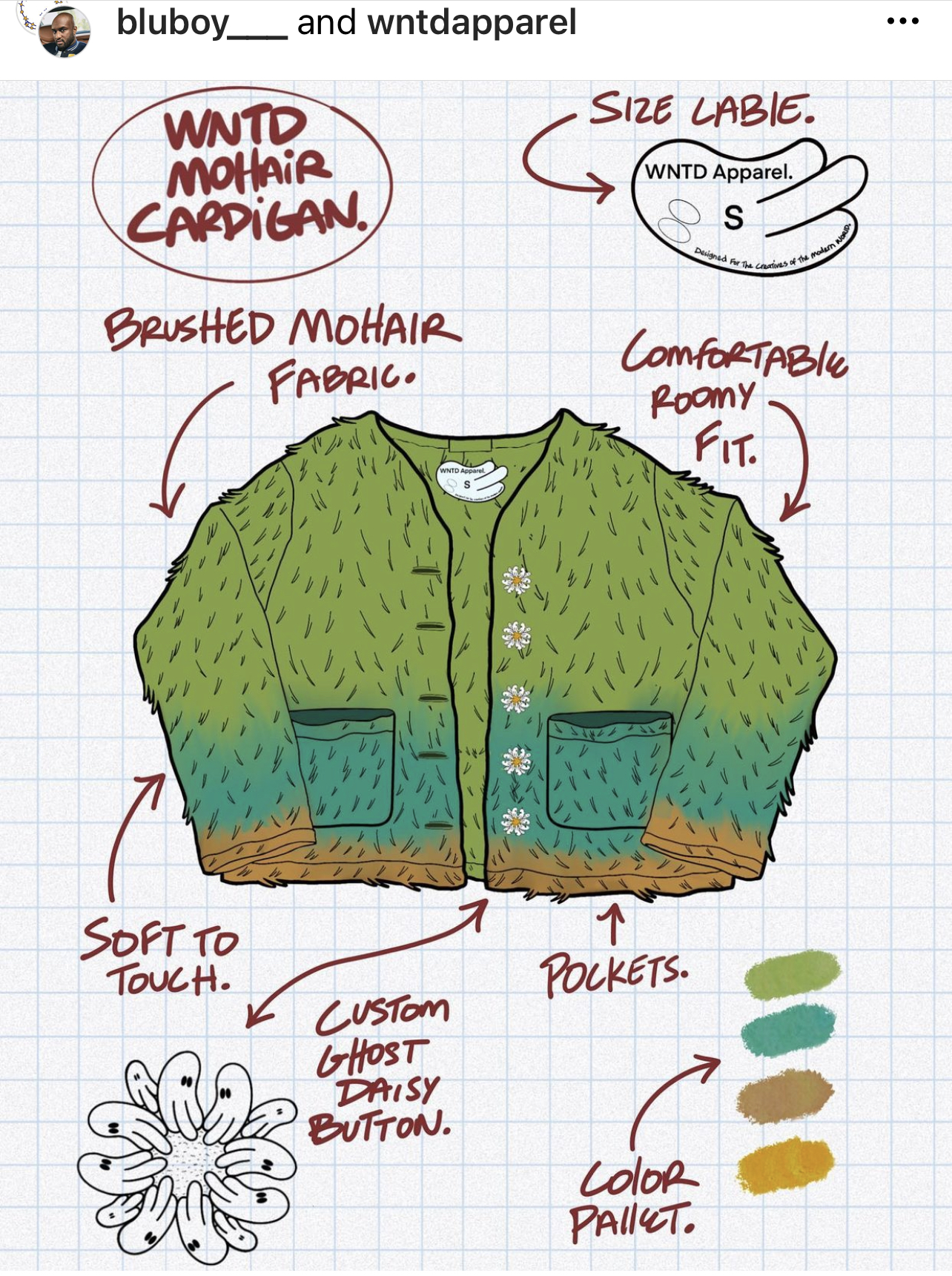
This sketch shows the mohair cardigan by Bluboy and WNTD Apparel below, which is just a super-unique piece. Bluboy’s done a great job of showcasing some of the creative process inside what he puts out.


I love this enamel button they’ve used to replace a traditional button on this cardigan. I think especially with the contrast to other green mohair, it’s just super-cool.


See this post in action on TikTok…

@orenmeetsworld

Storytelling and showing behind the scenes is a huge leg up for new brands #ecommercetips #brandingtips #marketingtips #fashionbrandcompany #fashionbrand @orenmeetsworld

♬ OCEAN DRIVE – HIGH ENERGY TROPICAL INSTRUMENTAL – Georgi Velichkov


The Power of Storytelling for Brands

Back to the concept…

Storytelling today for new brands is paramount. It can get your attention on social media, help people invest in your story, and helps those who are interested to learn. It then also gains a positive affinity for your brand because they are learning from it.

But the biggest reason you should consider doing this, is the biggest and most-established brands are going to try and hire all the value that they can. They’re not going to have the same playbook as the new creators – maybe some will, but most won’t – of saying “Hey, maybe we should share as much as possible, we’re going to provide much value.”

You ever heard that quote… “If you’re not giving away so much value, that it makes you uncomfortable, then you’re not giving away enough”? That’s how I feel all creators and new brands should be looking at how they showcase their creative process.


The power of a single story goes far beyond simply relaying facts and data and can be a highly effective tool to create customer loyalty
~ Tony Robbins


By sharing and giving away as much of your creative processes as possible to build an affinity for your brand, you’re releasing the power of storytelling. 


RELATED CONTENT
15 Steps to Start a Business Without Much Money


Thanks for reading. I regularly break down sourcing and developing different products to 5,000+ entrepreneurs on my Product People newsletter. You should join me there.

– Oren


FOLLOW ME ON SOCIAL MEDIA:

Sign up today for more content like this!


This is a super-interesting time to build a brand in activewear or the supplements industry. You can own this space, and it makes a lot of sense to start a niche brand here, especially now.
 I’m going to break down why. 


Grab the alpha – with visuals – in my TikTok short below, or scroll to keep reading:


@orenmeetsworld

If you want to build a brand in activewear and supplements right now, here are some trends and ideas worth being aware of #clothingbrand #fitnessbrand #wellnessbrand #ecommercetips #activewear #supplementsthatwork @orenmeetsworld

♬ Close Eyes – DVRST


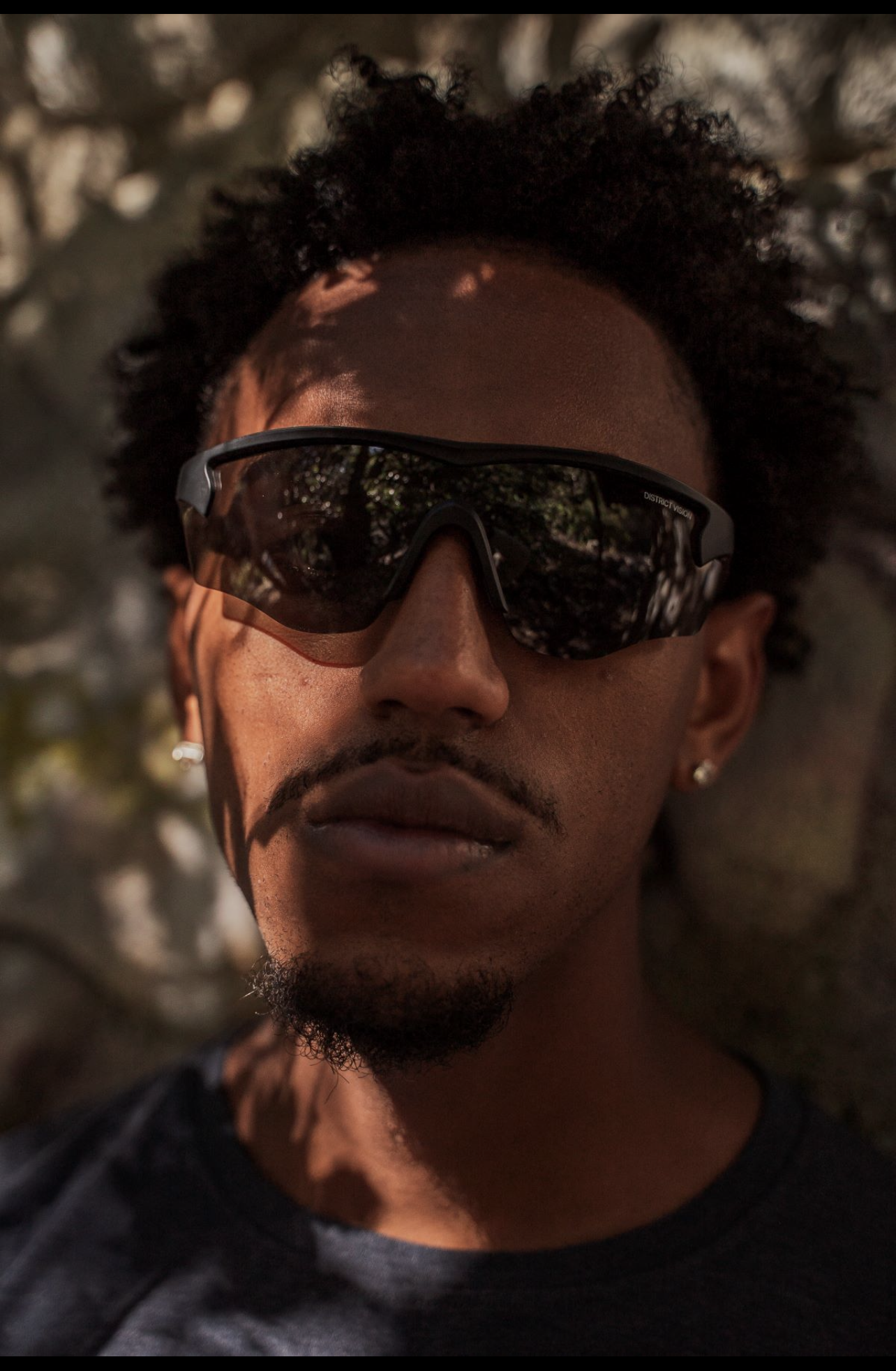
While activewear as an industry or niche might seem to be more saturated than ever, niche brands are really focused on the UX (user experience) of their corner of the market to build cult-like brands. District Vision is a great example of this principle.


Other brands that use this strategy for the same reasons include:

And what these brands are saying is, “We’re going to take the user experience for this exact sport we’re in and make it perfect. Let’s build an amazing brand around it.”

This is just at the beginning of what that could look like for sports like lacrosse (similar to baggataway), golf, pickleball, baseball, soccer, or even basketball. Activewear brands tend to focus on one niche sport, or related niches.


Now, if someone had told me they wanted to build a brand in activewear or the supplements market with traditional SEO and Facebook acquisition tactics, it just wouldn’t work. You could sure try, but the amount of effort required to really make it successful just wouldn’t be worth the nominal success it would bring.

What isn’t happening out there is brands taking advantage of that same kind of SEO on TikTok, and using the platform to scale organically. You can also increase  your odds of success on TikTok by having multiple pages and multiple people working together as a team for your brand.

It cannot be stressed enough: influencers in fitness or wellness spaces should be working together in groups of 3 to 6 to execute their brands collectively, building on audiences rather than relying on their personal brand, their customer, their investors, or whatever it ends up being to really push their brands forward.

There has never been a better time to collaborate than now!


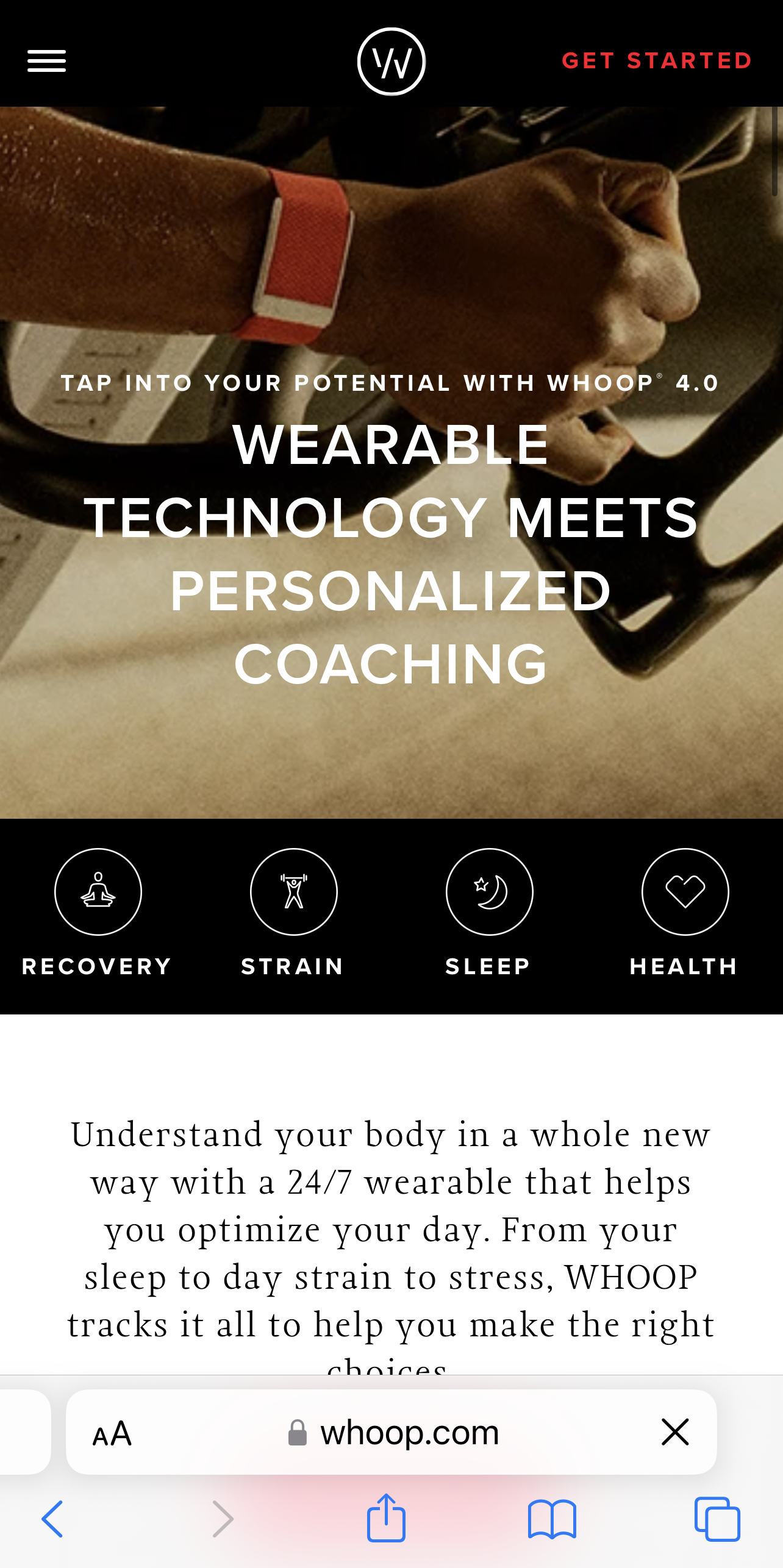
The supplement space is super interesting in the same way and a lot of it is because I believe that technology like the Whoop wristband pictured here has opened up the doors for those people who distrust the existing health and nutritional system. Technology like this helps people experiment, to learn about what makes them feel good, track their sleep, activity, and feelings.

Results and statistics can be used in journaling functions to actually test things that work for them – which will open up a whole new door for people. It’s also a great way to figure out if supplements may or may not work for them. 


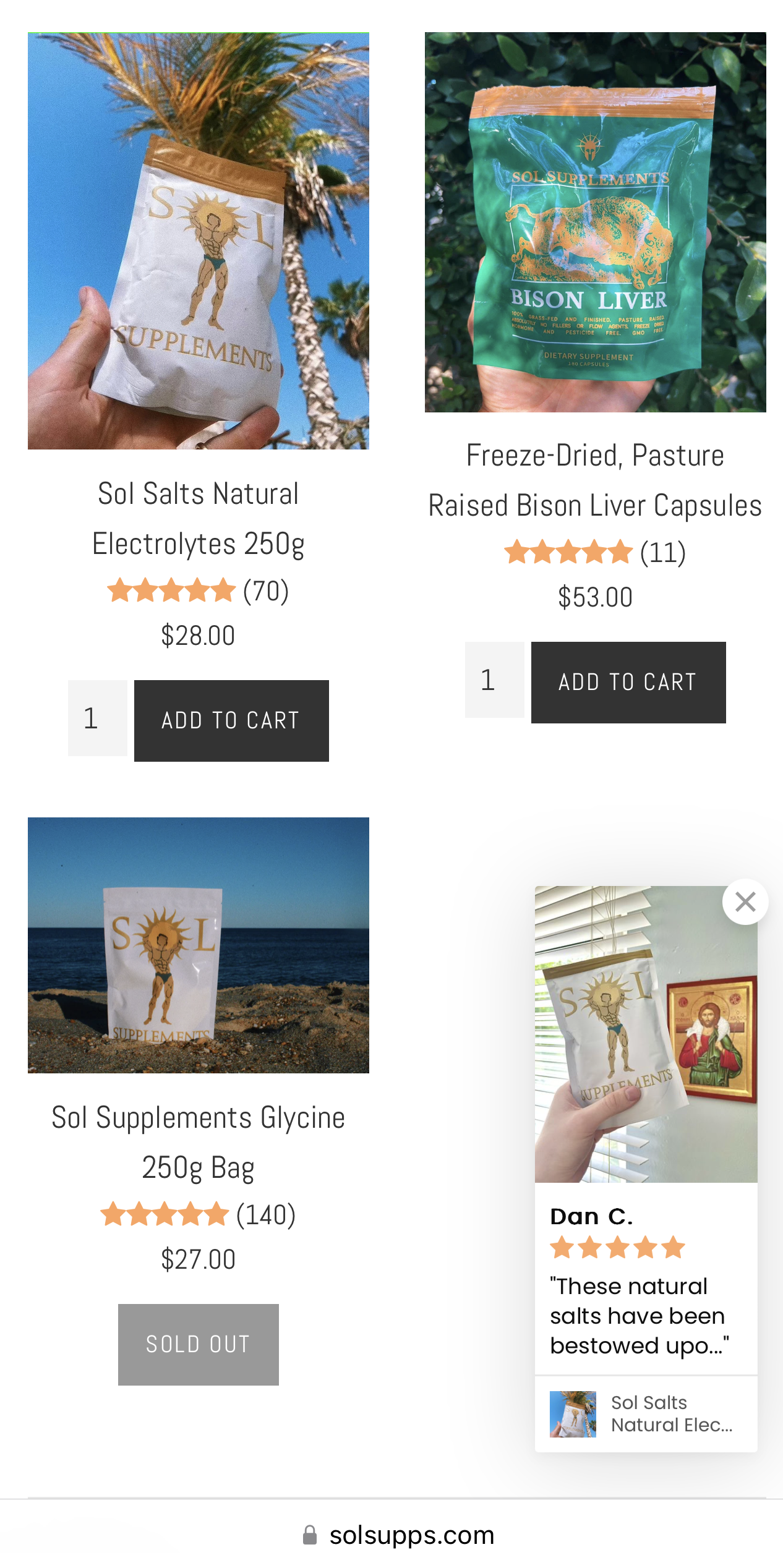
There’s also a growing movement for smaller brands like Sol Supps, brands who are super-focused on quality, organic, exactly-precise ingredients. These brands understand that to own a corner of the market – a niche – means that they understand what their consumers don’t want: weird protein shakes full of sugar and strange people dictating what goes into their supplements.

What consumers do want is things that just work, things that are built with passion. There’s an opportunity here across all existing supplement categories for newer protein brands to charge a couple of dollars more, understand their customers’ lifestyle, and really succeed.


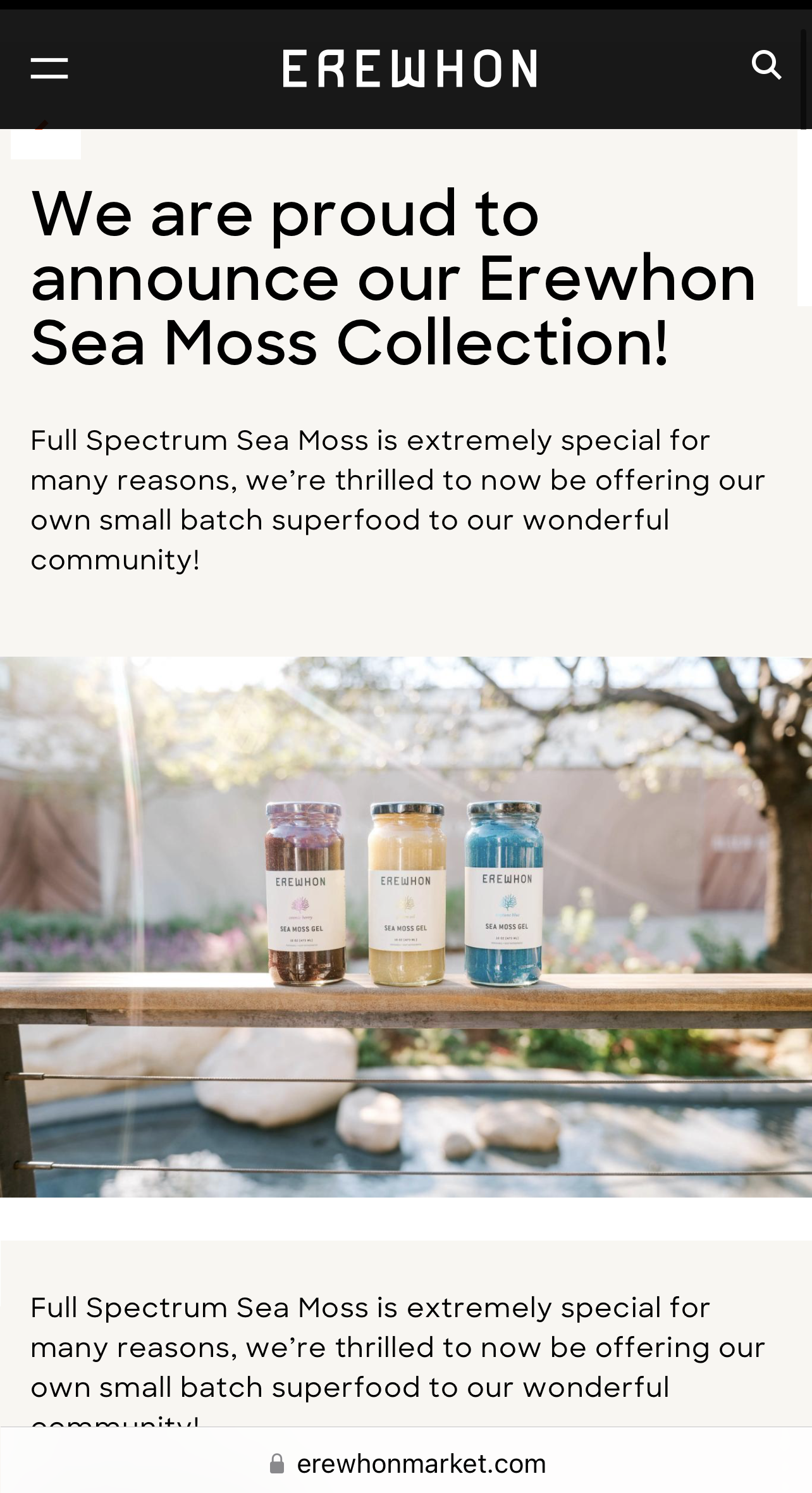
Not to mention, there’s a new era of specialty retailers who are doing things differently, like coming out with white label products. Erewhon (with their sea moss products) are part of this era, and they’re opening up brand new categories for discovery inside the communities they function in.

Best of all? They’re accesessing people who aren’t just totally online experimenting in this.

The most important takeaway you need here is to not let anyone tell you that this niche is saturated. You can do this!

– Oren


FOLLOW ME ON SOCIAL MEDIA:


This is how you take a standard product and make it stand out. Satisfy Running is a great example of how to nail down on your customers’ user experiences, and create a fantastic product you can sell for a premium. There’s also my free product development guide on building a private label activewear brand in this niche.

Let’s do this.


By the way, if you missed my TikTok short on this, you can catch it below, or scroll to keep reading here on the blog.


@orenmeetsworld

How do you take a basic product and make it work for your niche? Lets start with how to make a stsndout activewear product @orenmeetsworld #fashionbrand #fitnessbrand#activewear #productdevelopment #ecommercetips #trends

♬ Close Eyes – DVRST


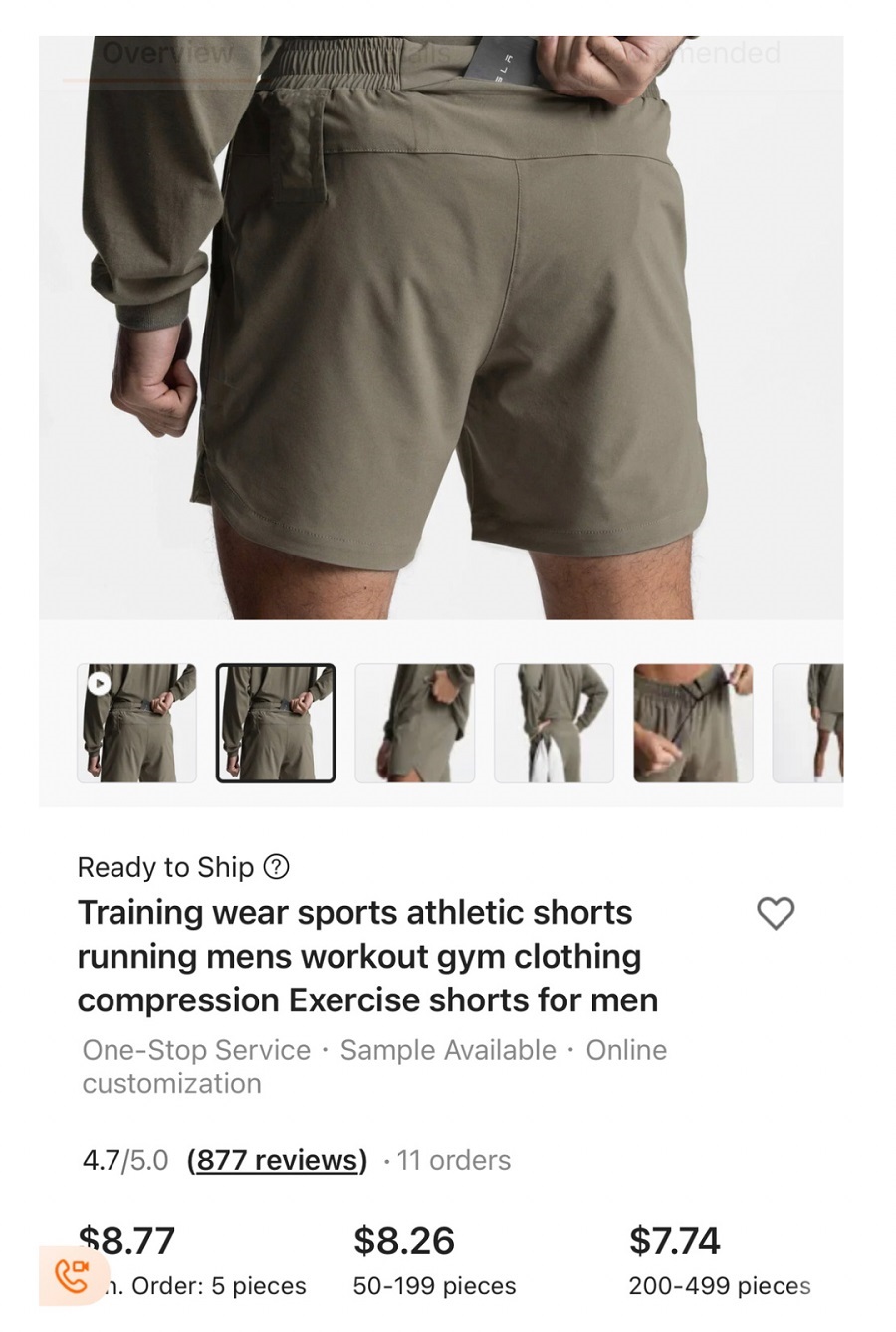
There are dozens of companies on Alibaba that offer basic polyester shorts for activewear. These designs are relatively well thought-through and modern, in an affordable price range.


Private Label Activewear Vendors +FREE Product Development Guide | Product World


These above will run you about $7.75 each for 200 pairs.

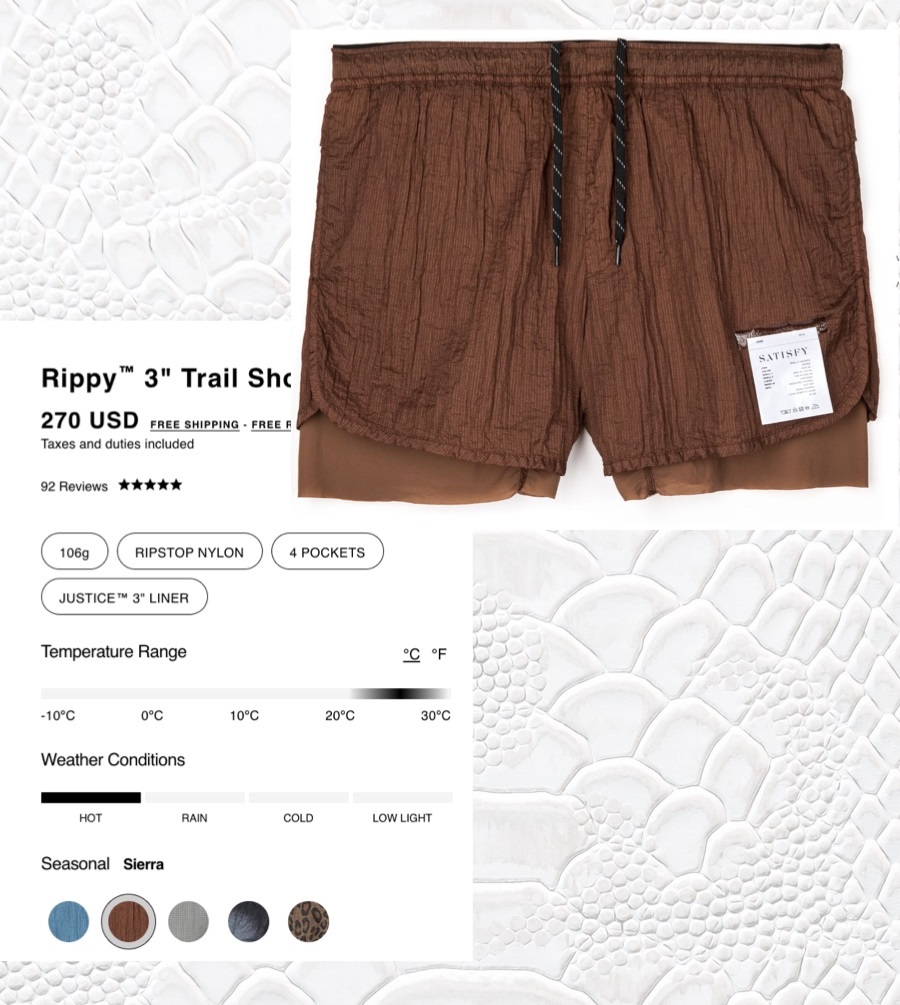
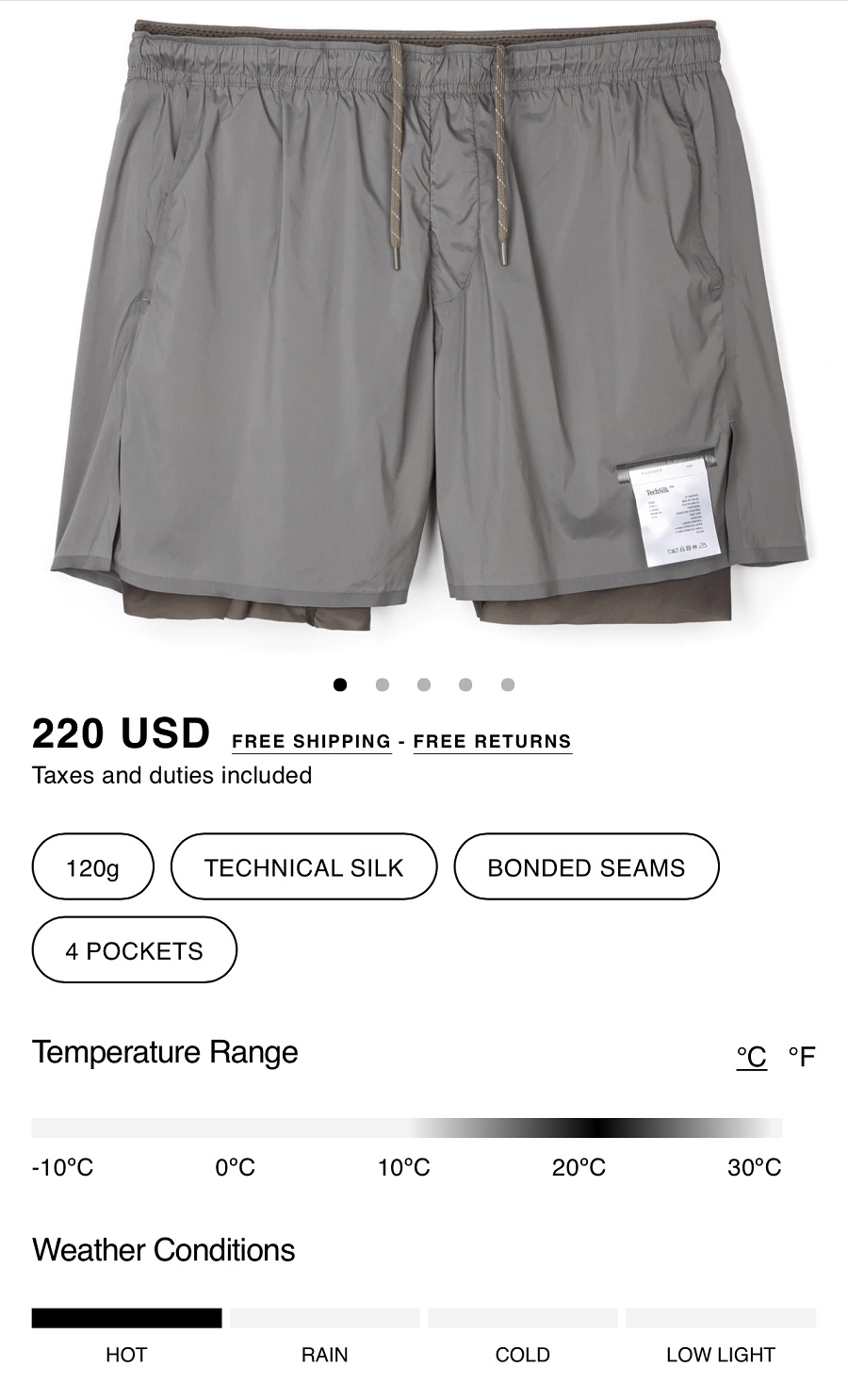
This pair from Satisfy costs $270 because they’ve really zeroed in on the intense, long-distance runners’ user experience.


Private Label Activewear Vendors +FREE Product Development Guide | Product World


So, how do you take a short and customize it to be effective for a target niche?


Creating the Perfect Private Label Activewear Brand

This comes down to the user experience for exactly the sport or whatever active lifestyle element that your customer is looking for. So, what Satisfy has done is to make all of these little features that are perfect for the long-distance runner.


Private Label Activewear Vendors +FREE Product Development Guide | Product World


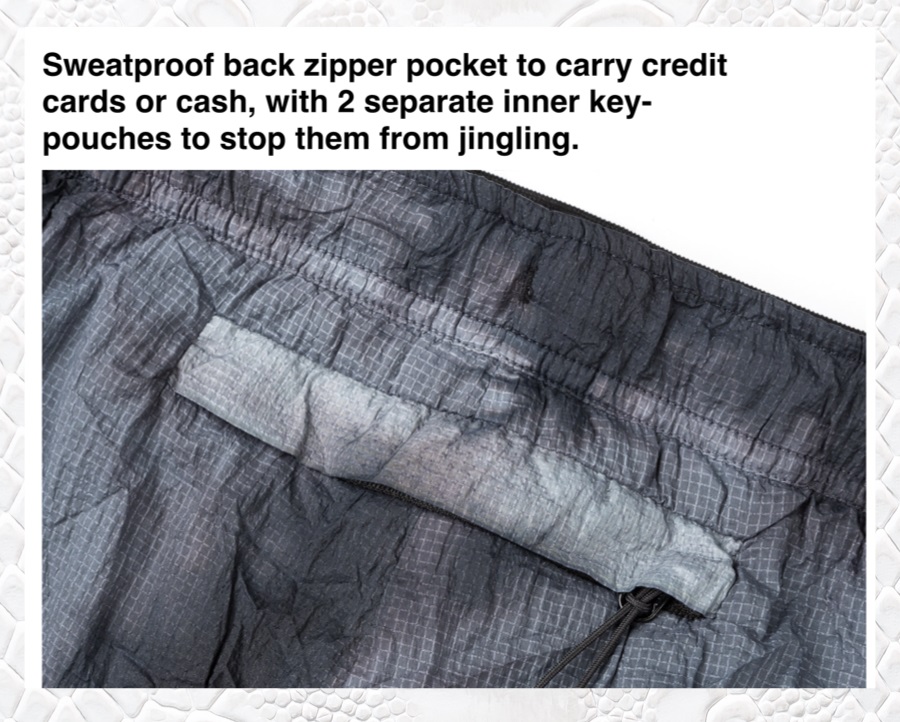
These features include things like this sweatproof back zipper pocket so you can carry your credit cards and cash with you. It also has inner key pouches to stop your keys from jingling in your pockets as you run.

As any long-distance runner knows, these are really annoying things that you need to think about while you’re running.

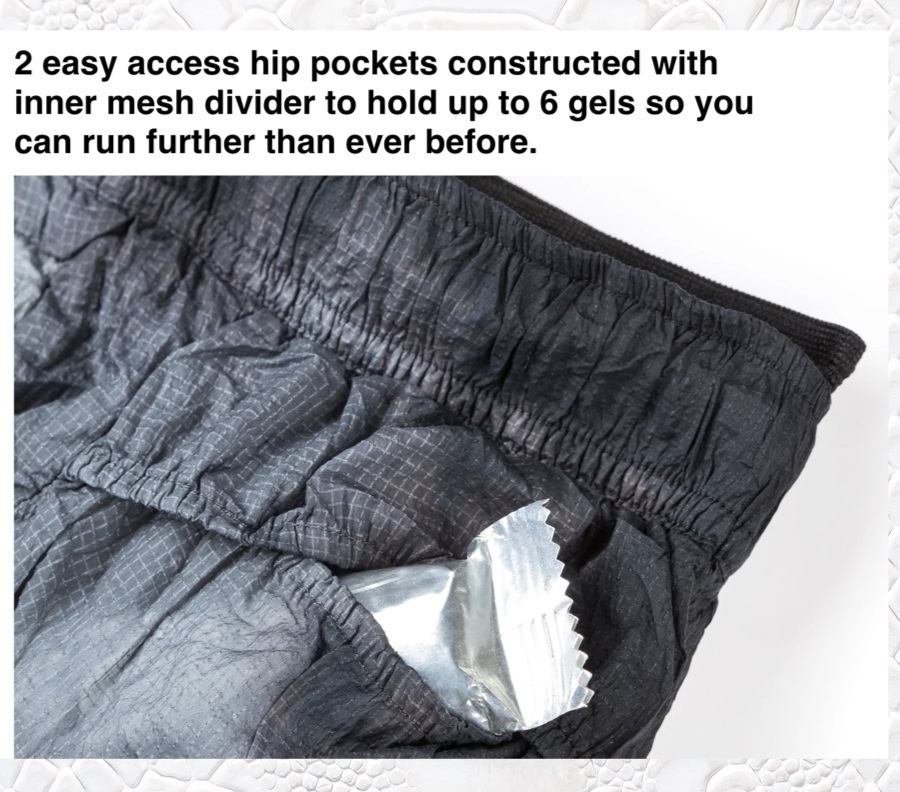
Follow this up with hip pockets that carry the gels you use to hydrate and get fuel in on a 10+ mile run.


Private Label Activewear Vendors +FREE Product Development Guide | Product World


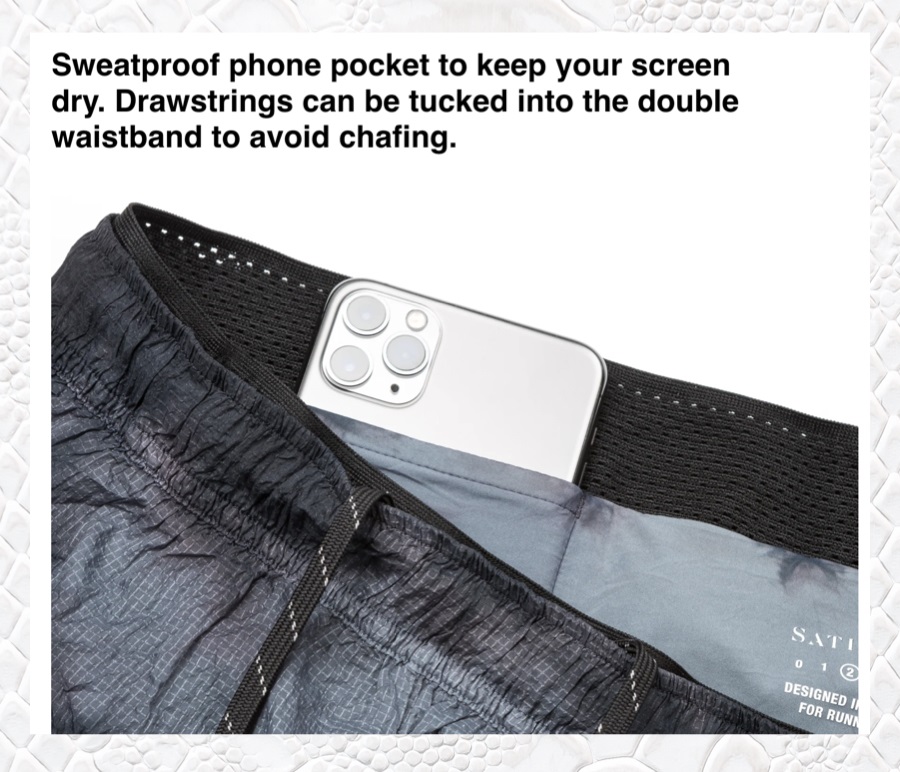
There’s also a sweatproof phone pocket that’ll keep your screen dry. The pocket is on the inside (not the outside) which is key for running.


Private Label Activewear Vendors +FREE Product Development Guide | Product World


The drawstrings tuck into the double waistband to avoid chafing, and also so you don’t have them just flying around while you run. A great addition is the mini carabiner you can use to clip in valuables or jewelry while you run, which can also be stashed in the double waistband.

All of these visible benefits add up to the perfect user experience while you’re running.

So, if you’re designing activewear for a specific niche like yoga, baseball, lacrosse, etc., how can you find all these little details and add to the base short so your customer feels your product is speaking directly to them?

As a distance runner, I’d look at this product and think, “Okay. I’m about to run a marathon. I’m going to be wearing these because they have the perfect user elements for what I need as a distance runner.”

Now, how can you achieve that in your target niche?


RELATED READING:
How to Build a Brand in Activewear and Supplements


Using Style and Design as Differentiators

In this cheetah print (that I love, by the way!), you’ll see the detachable care label. I don’t have to remove the tag to avoid chafing, but the option is there if I want it. There’s also the unique style and design of it to consider, as well.


Private Label Activewear Vendors +FREE Product Development Guide | Product World


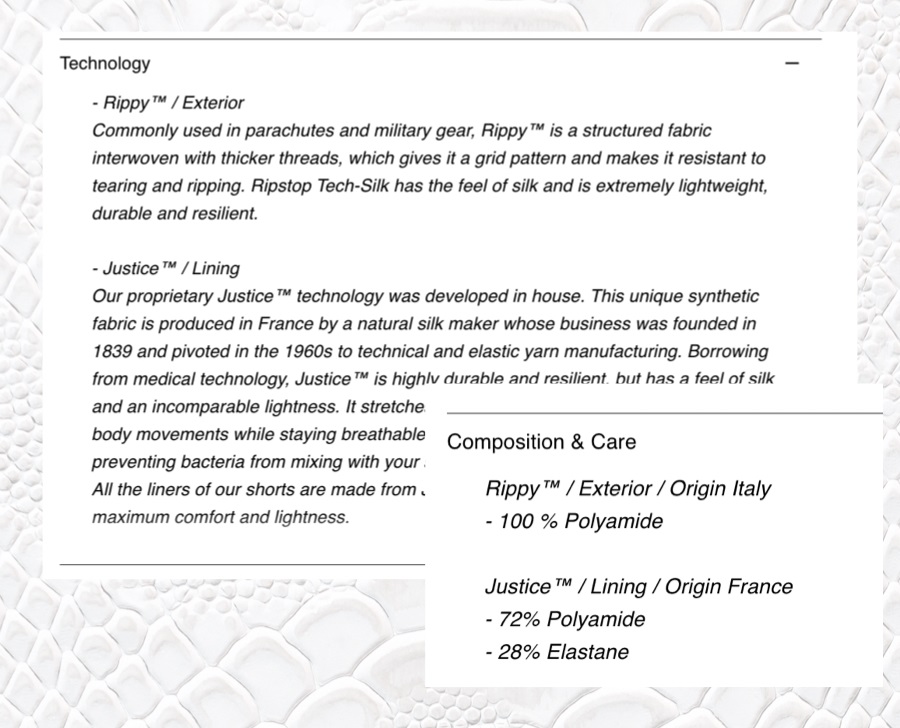
A super-crucial thing to consider is materials. All of those Satisfy designs are using 100% polyamide, or 72% polyamide and 28% elastane blends, which they’ve actually created themselves as part of their process.

All the shorts I’ve shown you are usually going to start off as polyester, but what you’re going to want to do is identify other high quality products and ask your vendor if they can find similar materials or things that will produce a similar effect.

Polyester really isn’t a great material, and I believe there could be a great opportunity to offer these shorts in linen and some other, more-natural fabrics. Either way, experiment with this, look at what the blends are (because they’re listed on almost any product listing these days) and then ask your vendor for what that better material is. That’s going to be the big thing that sets your product apart.

Hope this introduction to private label activewear was helpful for your product ideation. Let’s take a look at product development next.


Private Label Activewear Product Development Guide

So, what separates one product from another larger, more successful product is:

  • a great supplier
  • innovative designs
  • brand authenticity
  • a sense of community
  • and content.

I’m breaking this down with a particular emphasis on activewear. The factory link below is the perfect vendor to get started with your own private label activewear brand.


I break all of this down in my TikTok short on product development for private label activewear brands, using Satisfy products to guide you. Watch it now or scroll to keep reading here on the blog:


@orenmeetsworld

If you want to start an activewear brand, heres things to consider #fashionbrand #clothingbrand #fitnessbrand #sportswearbrand #activewear #ecommercetips #ecommercebusiness @orenmeetsworld

♬ original sound – Oren John


This is a $220 pair of running shorts from Satisfy Running, a cult brand who makes super performance items for specific sport niches.


Private Label Activewear Vendors +FREE Product Development Guide | Product World


Here’s where the real brand advantage is:

  • take a specific niche (like running) and create the highest end product you possibly can
  • add every little user experience detail you can think of to your design (like pockets, pain point solutions, etc.)
  • now charge a premium for it.

This is a pretty extreme example of a premium for a pair of running shorts, but this is an activewear vendor from Alibaba. Most of the scaled activewear is made in Vietnam or Cambodia (not China) and you can get some pretty decent, high quality stuff on the platform.

You’re looking at $7.74 at scale for those. They’re also a blend in a similar way, featuring customized pockets, etc. While they’re not quite as customized as Satisfy is, you can still take a vendor like this and work with them.


Differentiating Your Product From Other Activewear Brands

One of the key things in your design that’s a major differentiator is materials. That’s also definitely one of Satisfy’s key differentiators, and that’s because they’re made of 72% polyamide and 28% elastane.


Private Label Activewear Vendors +FREE Product Development Guide | Product World


There’s a significant difference between these and say, a typical polyester short. The blend is definitely of better, more-durable, and longer-wearing quality than plain polyester is, for instance, in the long-distance running niche.

You can take information like this and approach manufacturers to find out of they can replicate it. Send them links to the shorts, or better yet, send them a sample of the shorts and ask if they can improve on the materials, design, or user experience.

There is currently a big, untapped advantage in linen or non-polyester/non-poly-based activewear, really. There are so many runners and athletes getting into the idea that comfortable may not always be good for you line of thinking, and that includes their clothing.

The big opportunity is to niche-down in this, and here’s what I would do:

  • find a vendor that’s already “invented the wheel” (like Satisfy) for what you’re trying to create
  • make a list of similar vendors you can approach that are more affordable yet can also solve the specific user problems your product will offer
  • reach out to bridge the gap of how you can create your own material blends and designs that solve those problems for a niche sport.

This is a great approach to get you started on building an activewear brand of your own.

If you’re looking for a vendor to do it with, I recommend Guangzhou Jinfeng Clothing Co., Ltd.

Their designs have been featured here in some of the images above. They also have a bunch of ongoing sales and lots of existing styles to choose from.

Talk to them and work with them on what you can customize. Let me know how it’s going in the comments below or anywhere you see my tips and tools.

My newsletter drops with more like this. Sign up now and be first in the know.


You’ve got this!

– Oren


FOLLOW ME ON SOCIAL MEDIA:


If you’ve traveled a ways down the road with me on any of my blogs, the one consistent thing you’ll hear me say is that there’s never been a better time to start your own business than now. C’mon… you just can’t fail in a market as ripe for new business as this post-pandemic market is. This is even more true when you start a business without much money.

The lower your investment, the lower your risk. And the more niche your innovative business ideas are, the higher your chances of success.

Why do I say this? Surely the smaller your market is, the less money you’ll make in return?

Well, no. Spoiled for choice, many consumers will shop at the cheapest place they can find what they’re looking for. With little or no choice in suppliers, customers with niche needs spend all their money at one specific place.

But just how niche do you need to be? Here are 5 examples of niche blogs that followed 15 simple steps to success…


By the way, if you missed my TikTok on this, you can catch it below, or scroll to keep reading here on the blog:


@orenmeetsworld

If you want to start a business without much money, i would start a niche content site you can grow and then sell on sites like Microacquire or Flippa #websiteflipping #blogger #creatoreconomy #ecommercetips #entrepreneurtok @orenmeetsworld

♬ original sound – Oren John


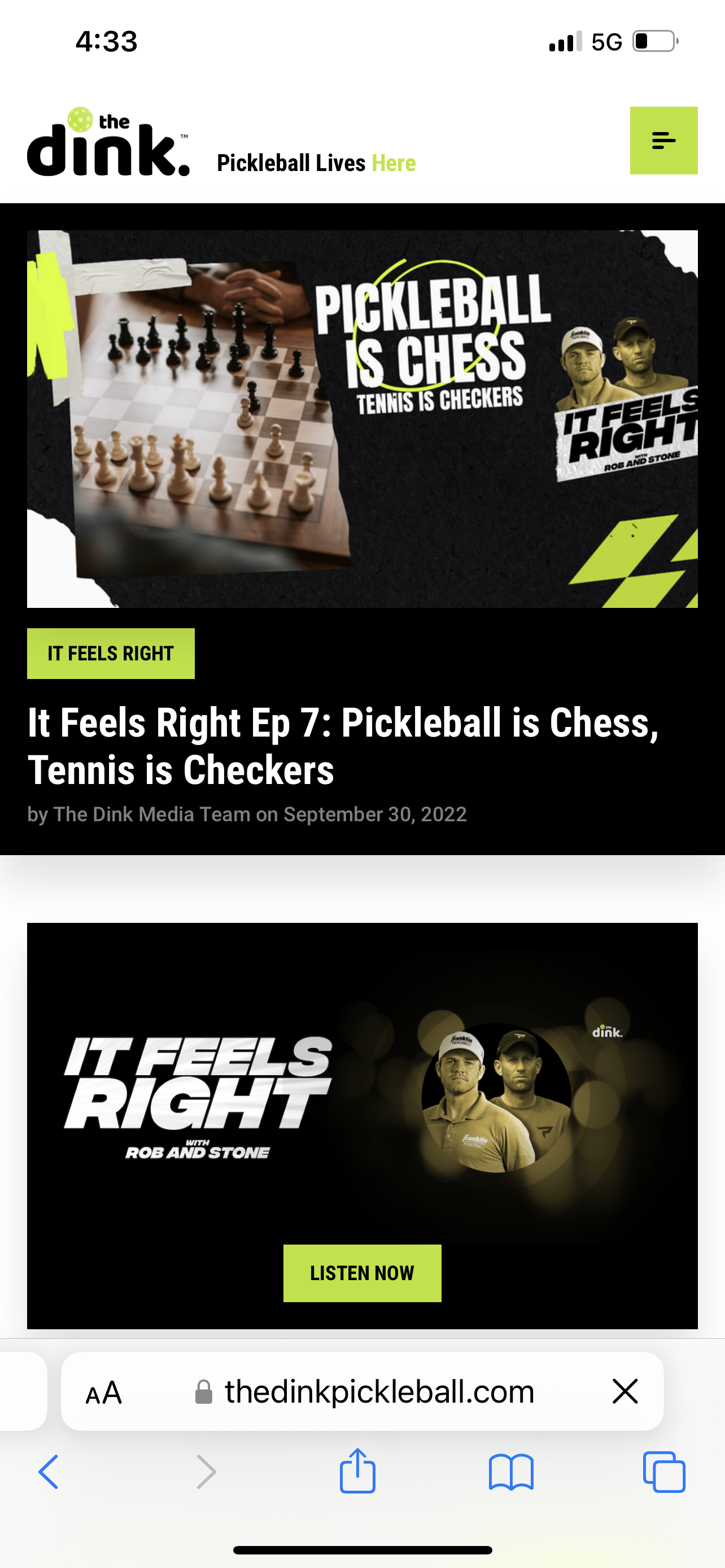
1. Pickleball Blog

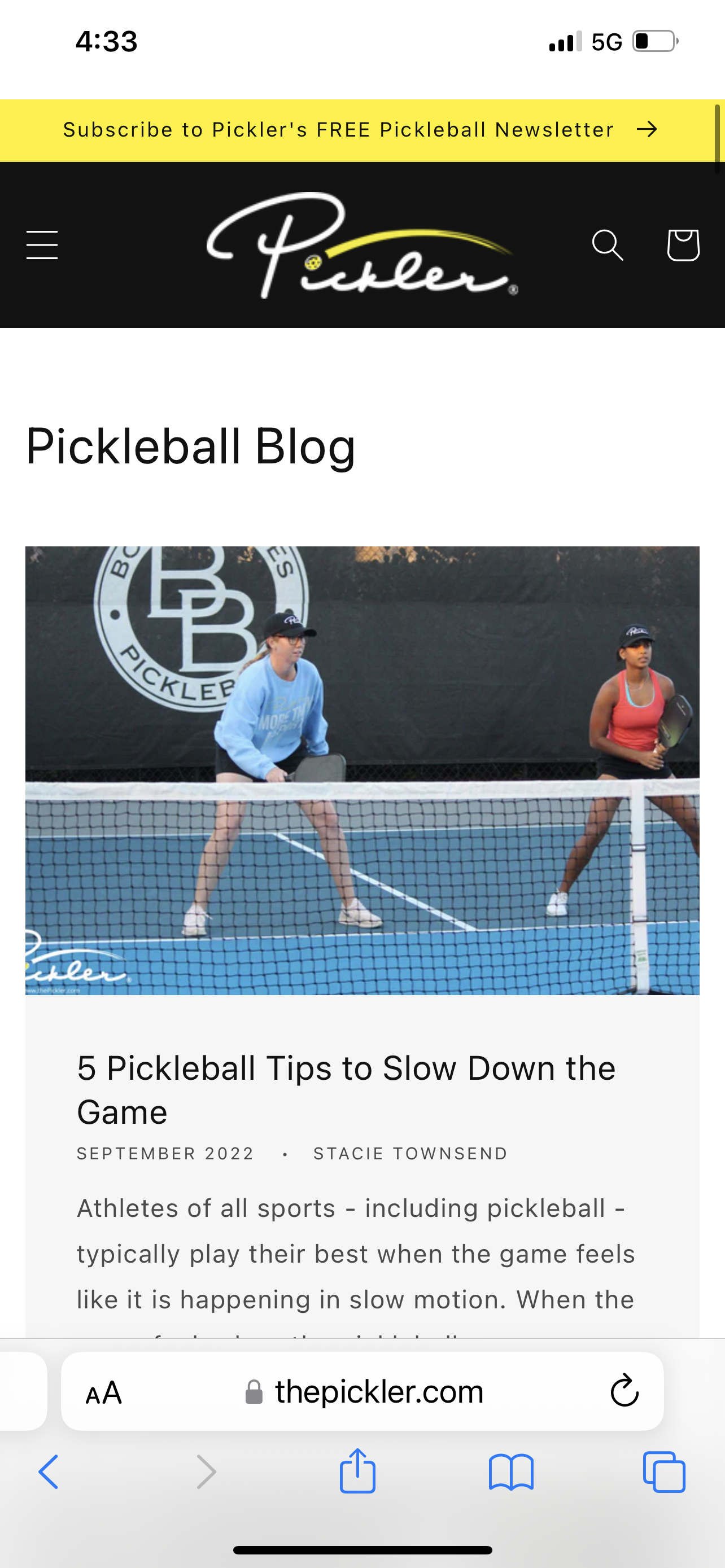
So If I didn’t have much money and was starting a business today, the thing I would do – absolutely hands down – is start a niche content site like this Pickleball Blog. Being so narrowed in niche, the site enjoys first place in SEO search results for “pickleball blog”.


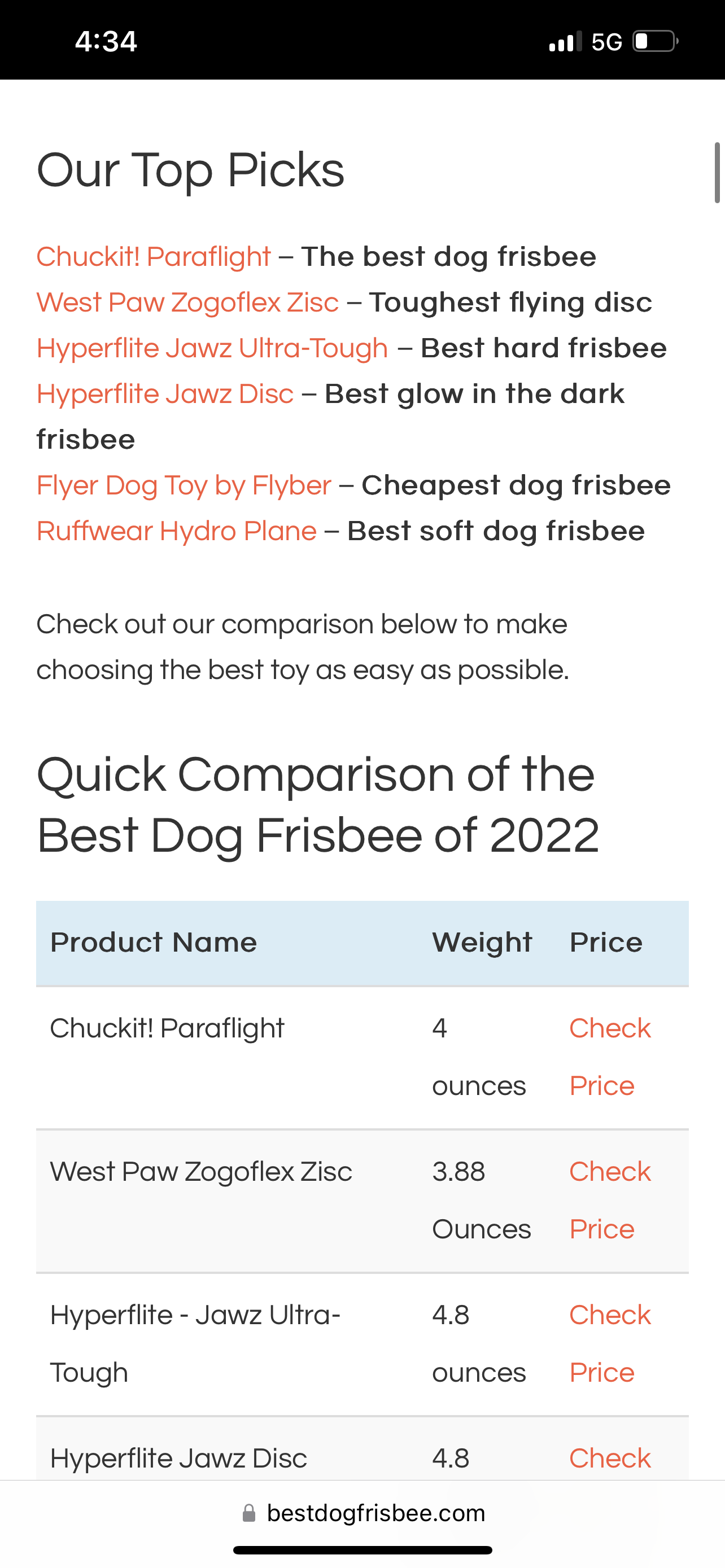
2. Best Dog Frisbee

If you’re an online content producer, writer, or blogger, how do you actually make money on your work? Here’s an example from a site a friend of mine, James Camp, actually built and sold.

The site is called bestdogfrisbee.com and what you’ll see here are a few review articles about the best dog frisbee out there, with links to said frisbee. Each of these links redirect to Amazon, and every purchase made through that results in a small commission for sales made.

By earning a percentage on sales, James had monetized his site. So when someone purchased that website from him, they did it because they said : “Hey, this website already has money, and we can likely make more of it if we improve the site and grow it further.”


But back to Pickleball…


3. The Dink Pickleball

When you start a niche content site, you’ll want to set up for a series of ongoing content where you write likely everyday or two-to-three times a week. Choose topics you find interesting or you think people are searching for that can add value.

You can use tools like AnswerThePublic or various SEO tools to help you think intelligently about the best topics for your niche. Use social media to your advantage by posting shorts on TikTok or YouTube, tweeting about your niche, or starting a podcast. 


Make friends everywhere you go and let this activity grow your audience through your social media networks.


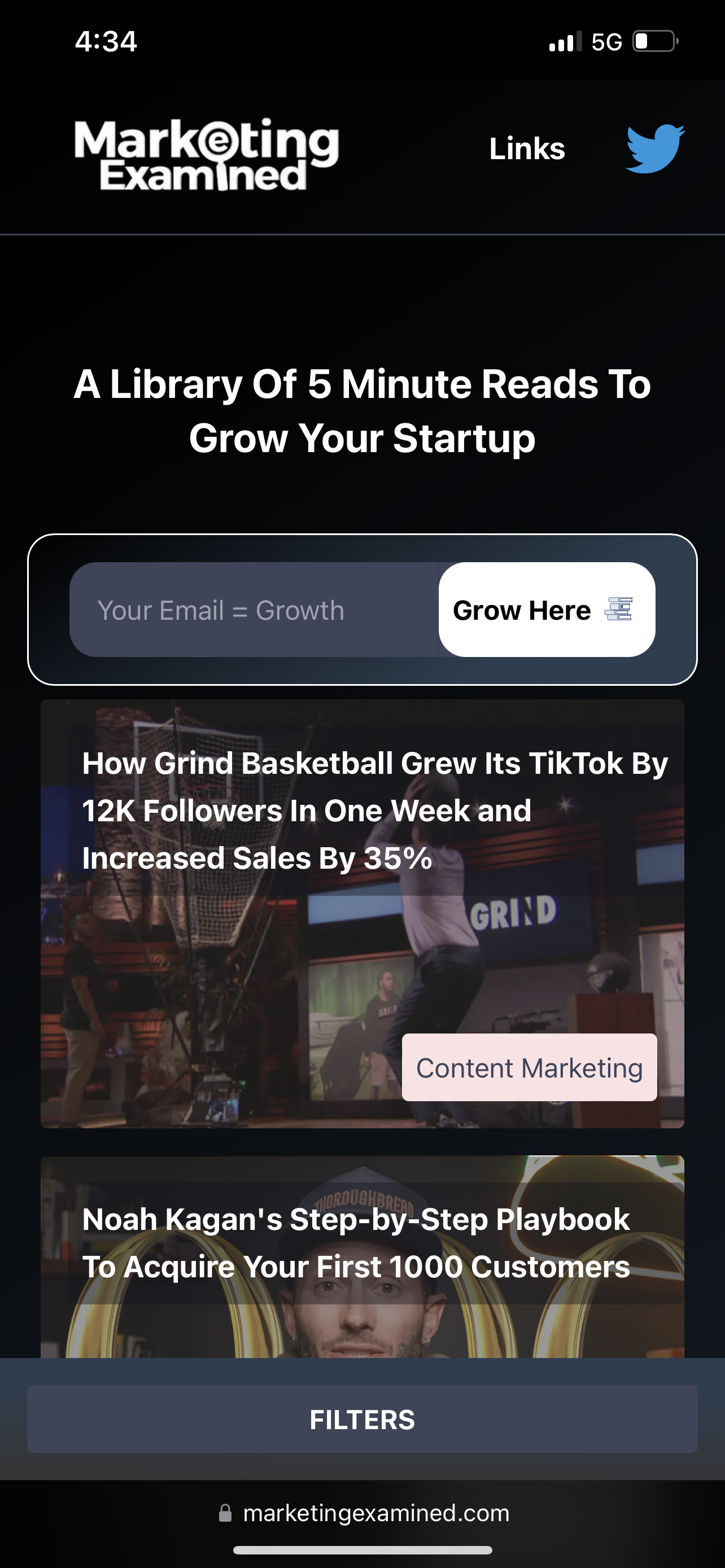
4. Marketing Examined

Marketing Examined is a niche content blog from my good friend, Alex Garcia, who writes about all things marketing. He does case studies where he actually goes in-depth with individual marketers about things that have a lot of value to the niche.

What’s nice about these sites is that you can also build email lists around them and people would either pay you for sponsorship of this email newsletter, or when you go to package your content site to sell because people do buy these sites on platforms like MicroAquire and Flippa. Here, the general concensus is that the site already comes with X amount of traffic, X amount of email subscribers, X amount of social media followers, etc.

When people are starting a business, or want to expand traffic to their existing business, they look to content sites and social media things like this. They specifically search for sites that are easily packable with lots of statistics and Google analytics. In this way, it’s easy to increase their own traffic, to sell the things they’re trying to sell, or to get the impressions they want for themselves for advertising. 


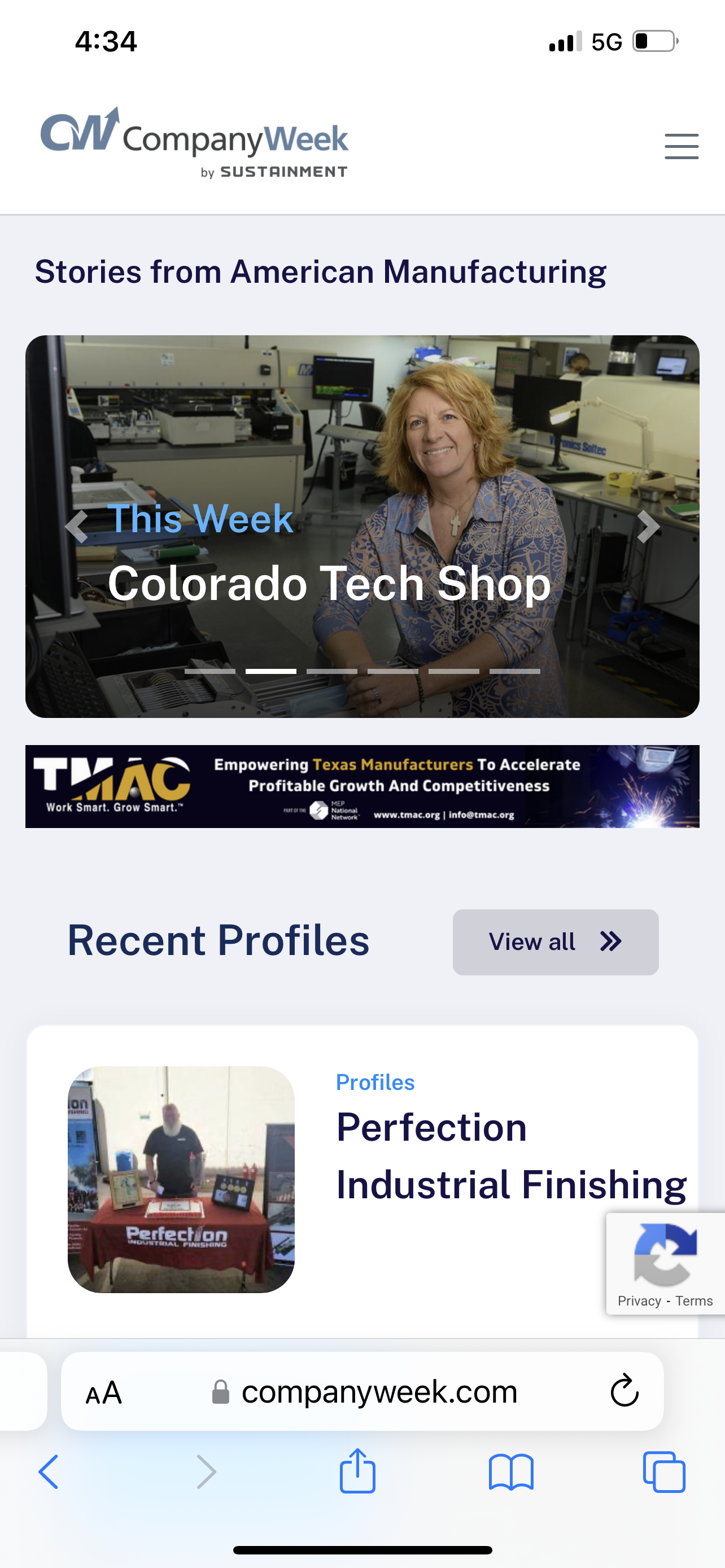
5. Company Week

It doesn’t have to be just writing and blogging about your own story; you could write others’ stories, too. Take Company Week, a site that was recently bought by the niche tech company Sustainment.

Company Week survived by interviewing American manufactures and placing their profiles and interviews online so those manufacturers’ profiles could be found. The resulting traffic had tremendous value when they started working within that niche, ultimately resulting in their site being found and the eventual acquisition by Sustainment.

Similar to listings, Company Week also offered ad space on their site that generated revenue for their business. 


So, how do you start a business like these guys did, when you don’t have much money  to work with then?


15 Steps to Start a Business Without Much Money

Overall, if you’re short on cash but have tons of time, this is the ultimate 15-step guide on how to start a business without much money:

1. Pick something you love, can live with, or have a lot of experience in. This is your niche.

2. Look up topics in this niche you feel you could write about regularly.

3. Choose a domain name that reflects your niche or target market needs. BestDogFrisbee mentioned above is a good example of this.

4. Do your SEO research with tools like Ahrefs and AnswerThePublic so you have clear ideas on what topics will suit your niche best.

5. Use a simple CMS (content management system) with a blog option like WordPress.

6. Install a service like IONOS, which costs 50c a month to host your site.

7. Design some logos with Canva’s free options.

8. Find stock photos from free sites like Unsplash, Pexels, FreePik, etc.

9. Pay a little more for a service like Envato Elements.

10. Write everyday about your niche topic.

11. SEO and optimize your content for readability and searchability.

12. Share that content on social media and build a community.

13. Create an email newsletter that builds your following, but also generates clickable leads.

14. Wait about a year or two until you’ve built enough traffic, and you’ll be able to sell that site for lucrative money.

15. Take that money and fund a more interesting and larger scale project than the last one.


The only difference between having money and not having much of it when you use this 15-step approach is that you either do it yourself, or you hire someone to help you do it. It’s that simple. The process remains the same, whether you have money or not.

Yes, it’s going to take a little longer if you’re doing it all yourself, but search engine algorithms have pretty much leveled the playing field these days. You stand as good a chance as anyone else to be at the #1 search result organically… What are you waiting for?


RELATED CONTENT
This is your sign to start a supplements brand


Thanks for reading. I regularly break down sourcing and developing different products to 4800+ entrepreneurs on my Product People newsletter. You should join me there.

– Oren


FOLLOW ME ON SOCIAL MEDIA:

Sign up today for more content like this!


Frazer Kinsley chats to us on the best ways to scale logistics for a products-based brand, in an effort to help shed some light on how to approach these more complex parts of a product-based business.

One of the biggest concerns new entrepreneurs have is how to handle logistics for their new business. Shipping, warehousing, supply chain, forecasting… its a LOT to understand. This is therefore a must-read for really understanding the basics of logistics for your products business.


Tell us a bit about your background

I’m the Co-founder and Managing Partner of Kinsley Partners, a seed/early stage venture firm focused on CPG, and industry-adjacent investments and consulting.

My family has been involved in E-commerce since the early days, when my parents were some of the top resellers of Swatch watches in the world. This was during the “Swatch Watch craze” of the 1980s/90s. I had no intention of getting into e-comm/supply chain originally, though.

My dream was to be a Navy SEAL but I suffered a career-ending injury during that training that put me out of contention. I didn’t really have a plan after that, so I went to work in an entry-level ops job at a supply chain/procurement tech startup in New York City, USA, to get my foot back in the door.

During that time, I started Kinsley Partners with my brother, Jake. Kinsley Partners was a way to invest in early-stage consumer brands.

Fast-forward a few years and I started a 3PL called Hook Logistics with two other guys, which I exited last year.

I currently work in a few roles at a few different companies, but my overarching focus has been – and continues to be – in supply chain management within the consumer goods space. My scope ranges from SMB, all the way up to publicly-traded companies.


Talk to us about logistics… what are some key terms and ideas new product creators should know?

Let’s face it: you hear the words ‘logistics’ or ‘supply chain’ and you either get bored, pissed off, or both. I find that often when a brand’s supply chain and logistics aren’t in order, it’s due to a lack of knowledge that leads to inaction, more than anything. But, it doesn’t have to be that way!

When you’re first starting out, you’ll have input from 100+ directions on how to ship, warehouse, fulfill, distribute, replenish, etc. all of your products and product lines. My advice across the board is: keep it simple.

This will remain true as you grow, but is especially important in the early days. Other than that, constantly look to evaluate your supply chain. Like marketing, there are tons of cost levers that you can pull on at various points in your product journey to help manage costs.

As far as terminology goes, you could probably write an entire dictionary on all of them. It may sound silly, but for creators starting out, Google will always be your best friend. My recommendation for newer operators is to speak to as many non-vendors (or potential vendors) as possible. Whenever someone mentions a term you don’t know, write it down and Google what it means after the call. Sounds rudimentary, but you’ll be surprised how quickly you’ll pick things up.

There are also tons of blogs and guides out there that shed light on basic terminology and strategy for newer brands. You can find a free version on my Gumroad page if you’re looking for a place to start.


Get the comprehensive Kinsley Partners Supply Chain Playbook for every new DTC, CPG, and apparel brand… tested, implemented, retested, and refined.


What do you look for when evaluating a 3PL partner for a scaling brand?

There are myriad factors that go into evaluating a 3PL on the brand side, but there are some foundational questions that every brand should be asking themselves and prospective service providers:

  • What type of product are you selling? Some 3PLs are better suited for low cost, high volume. Others the opposite. Totally depends on that 3PL’s expertise.
  • Do you have any special needs (temp/climate control, specific storage method, perishable)? Not everyone can offer what you need for your product. Just because a founder-friend who owns a cosmetics line recommended a 3PL, doesn’t mean it will be a good fit for your food+bev brand.
  • How big are your products? That’s great that the folks at Burrow recommended their 3PL, but if you’re selling headphones, that might not be the 3PL for you. Moreover, if you’re selling couches, some 3PLs don’t want the space taken up.
  • Do you require kitting? Subscription/sub box management? If you have multi-step kitting or boxing requirements, some 3PLs are better suited for that high touch service than a strict volume player.
  • What’s your [projected] throughput? Let’s face it: the less volume you do, the less options you have. The deal they gave the $50M company probably won’t be extended to the pre-launch brand. Some 3PLs also have higher monthly minimums that won’t work for emerging/nascent brands.
  • What channels are you selling through? Do you require EDI compliance? FBA prep? FOB into distribution? Not every 3PL serves the same markets. Some focus strictly on e-commerce while others focus on distribution, FBA, and FOB, while others can handle omnichannel.

Ultimately, your 3PL is not just your service provider, they’re your closest business partner. Their success is largely dependent on yours, so they have skin in the game, too. Aligning incentives as both a provider and as a customer can ensure a long-term and effective partnership.


How has the logistics behind scaling warehousing and delivery changed over the last few years?

The industry seemingly changes everyday, but some of the biggest changes that I’ve seen recently is the modernization of the 3PL fulfillment model.

Historically, warehousing and fulfillment has been a black hole where brands are pretty much forced to choose the “best, worst option” of a few conglomerates and send their goods to a random warehouse that they can’t even get an email response from.

In the past few years however, there’s been a democratization of sorts in the industry with a rise in boutique, local, regional, and specialty 3PLs. While certain industry names tend to dominate the conversation, there are way more and way better options these days, especially for emerging brands.

Simply put, the scale and service that were previously reserved for larger brands, are now more accessible to emerging brands.


Any essential software or subscriptions you recommend to entrepreneurs in this space?

This is where I differ from most, but it’s really going to depend on your situation. I see a lot of “must-have tech stacks for $X million brands”, but I’ve worked with $50M brands that run their ops on a Google Sheet.

Is it scalable? Most times, no.

However, I think your tech stack should ultimately fit what you need and provide a foundation for scale. That being said, I believe every brand needs:

  • Some sort of accounting software (I like Quickbooks the best).
  • A way to track inventory. Some do this in Quickbooks, some in a spreadsheet, some in a bonafide ERP or IMS [Inventory Management System] in which case I’d go with Skubana.
  • A way to track orders. If you’re going single channel to start, you’ll be fine with managing this in your Shopify or Amazon account. As you scale up and/or add channels though, a proper OMS [Order Management System] becomes more necessary. In that case, there’s no alternative to PrettyDamnQuick in my opinion. I’m an advisor there, but hold firm that it blows other OMS’ like ShipStation out of the water.
  • A way to manage customer service. Of the four areas on this list, this is the area I would never skimp on, whereas the others are all technically replaceable. Make sure you’re using a system that works specifically for ecom. If your systems don’t “talk” to each other, they just become clunky and useless. Kustomer and Gorgias are the two options I’d recommend here.


Any thoughts on DTC vs retail vs Amazon for new brands?

There’s a lot of noise on this topic, but I go back to, “What works best for you will ultimately be your best path”. DTC is great for increased margin control and customer interactions/insights. Retail is great for product exposure and cheaper customer acquisition. Amazon provides a turnkey solution and a marketplace setting with millions of MAUs.

IMO, 95% of roads lead to omnichannel, so there’s a good chance that most brands end up selling through all three of these channels eventually, anyway.

On a fundamental level, the question I ask is “Where can I best meet my customers where they’re at?” Customers may be looking for less expensive commodity items on Amazon, their favorite influencer’s makeup on their Shopify store, and their favorite regional cheese at their local Erewhon.

It’s about meeting your customers where they’re at, however that ends up looking for you.


What should new brands consider or make sure they learn about as they go into retail?

I think the biggest one is by far the financial implications. Retail is a great flywheel, but there are some hefty startup and maintenance costs that can be barriers for entry. Having an airtight command of your cashflow, unit economics, gross margin, etc. are absolute non-negotiables. Without an idea of your financials, you’re jonesing for a world of hurt.

Net 30/60/90 day terms are not uncommon in retail, and while you may be ripping the cover off the ball in stores, that cashflow conversion rate can be a killer. Additionally, a lot of folks bemoan the margin creep that can happen in retail.

The fact of the matter is, a lot of those silent killers can be mitigated by an understanding of your cost to serve and target/actual gross margin.

Beware of “retailer/distributor mandated” processes as well. For instance, I have near-daily conversations with founders that didn’t realize they could switch their UNFI/KeHe freight off of FOB and save 10-20% on transportation costs.

If you don’t ask, you don’t get. If the deal isn’t what you want it to be, ask for a concession. Never hurts to try.


Any tips or tricks for long term success in the space based on your experience?

Be you and put the blinders on. Our industry is like any other one: infinite streams of information, drama, this vs. that, “who’s who” – it’s all bullsh*t. Define what success means for your business and have a single-track focus each day to do things that get you closer to success.

The next biggest thing is to value [real] relationships in this industry. I’m convinced we have some of the smartest, most talented, and most generous people in the world in this industry. You either contribute to that sentiment, or detract from it. Here, the winners are always the ones that do right by their vendors and their colleagues; full stop.


What innovations or technology would you like to see come to DTC business operations?

I think we’re already starting to see it, but I love how forward-thinking the marketing community in DTC has been with dashboards and data aggregation. I always joke that DTC is a data scientist’s paradise with all the inputs and outputs, so it’s great to see that portion of the industry hit the mainstream.

I’d been working on a pet project with some others in the industry a few months back, but a Triplewhale/Northbeam style ops control tower is something we had in mind, and would be a great addition, IMO. We used to offer this in the form of PowerBI/Metabase dashboards to some of our customers, but a more robust and interactive layer would be great for operators, especially in the early stages.


What are you working on next?

Aside from my core work, my side project for the past year or so has been on a concept called ‘Linkt’. The idea spawned out of the early days of sourcing and distributing PPE during COVID for smaller hospitals and healthcare clinics that didn’t have access to the emergency stockpiles that larger institutions did.

Since then, we’ve sort of discreetly worked on projects ranging from establishing oxygen concentrator and respirator supply chains in rural India for the government’s Delta variant response, to our most recent project where we set up the first wholly civilian supply line directly into Ukraine and raised $1.5M in donations for displaced citizens.

The goal with Linkt in 2023 is to formalize this disaster relief and austere supply chain planning into a bonafide foundation.


This interview forms part of a series of interviews with brand specialists and product strategists. See other interviews here.


PRODUCT PEOPLE – LEARN HOW TO BRING PRODUCTS TO LIFE!

There has never been a better time to launch your own product. Learn more about logistics and supply chain management today.

Join 6,200+ happy subscribers on my Product People email list. Access product playbooks, factory links, and insights for running your own brand direct in your inbox, FREE. Subscribe now.