The secret to success with your own supplement brand is finding the right white label partner. Here’s a list of the best supplement vendors out there:

SETTING THE STAGE

The market is ripe for individualized sports performance and supplement brands:

  • Big players are losing market share
  • Aggregators like GNC don’t have the power they once had and
  • Consumers are looking for specifics – organic, vegan, key ingredients, etc. 


We all see the noise around Athletic Greens. There’s 50 similar products on the shelves at your local Sprouts–they stood out with value proposition, audience, and tenacity over time. 

This isn’t about knocking off popular products; Everything about supplements is commoditized. It’s about who consumers trust to buy from and what added-value you can give them (bundle with info products, tests to help find the right fit, sustainable approaches, etc). 


SUPLIFUL

The most interesting white label supplement to watch is Supliful, who focus on making products for creators and those with a personal brand who want to leverage their audience (versus helping an entrepreneur launch a brand). They make it dead-easy across categories, including:

  • coffee
  • sports nutrition
  • health
  • nootropics
  • and superfoods

Using Supliful, you never touch a product or inventory, and just see the net profit. Set up a connected store, and customize product with their product catalog. The main value proposition for Supliful is if you have an existing audience, launch in 7 days or less for only $149.

Hat tip to @JamesonCamp who mentioned this on last week’s Tab Talk podcast:


JW NUTRITIONAL

Next up is JW Nutritional, known for protein blends and in particular, those with plenty of other options like vitamins, probiotics, etc. They drop-ship as well, which makes them a great one-stop-shop if you don’t want to hold inventory. 


VITALABS

Vitalabs is great because they have a wide variety of niches already laid out to work from – including halal certified, vegan, etc. Their portfolio spans:

  • vitamins
  • amino acids
  • minerals
  • probiotics
  • and sports nutrition


TRU BODY WELLNESS

Tru Body Wellness is an awesome low minimum order quantity (MOQ) option. Starting at 500 units for custom formulations or 100 units for their existing products, with a large catalog of options. 

There are plenty of providers out there, make sure yours has a GMP facility and FDA certification, and the more services they offer (dropshipping, labels, packaging) the better for ease. If you want to get more margin in exchange for your work, you can handle the logistics.


Thanks for reading. Let me know in the comments below how your brand has been doing, or if you think there’s any private label supplement suppliers that should be on this list.

– Oren


FOLLOW ME ON SOCIAL MEDIA:


READ NEXT:
The Essential Private Label Coffee Suppliers Guide


SUBSCRIBE FOR MORE:


Private label manufacturers in the beauty industry make all of your favorite skin, hair, bath and cosmetic products. They’re also the secret to unlocking a high-margin e-commerce business.

Here’s 8 of the best manufacturers out there, to help get you started.


How to Start Private Label Manufacturing in the Beauty Industry

First— where’s the alpha? Anyone with the gumption and funds can kick off a product in skincare and cosmetics, but to stand out you need:

  • Audience
  • Niche
  • Connections
  • Speed to trend

Speed to trend is the biggest advantage.  Matcha tea, collagen, CBD, charcoal, mushrooms, adaptogens… If you’re early in the wave of incorporating something new into your products, and savvy with search, paid media, or Tik Tok you can make a super successful lean business.

80%+ of the products you see online or in department stores are made by the same 10 or so factories that private label. Basically, factories are taking popular bases of things like makeup, soaps, or shampoos and working with clients to make it just a little bit custom.

This used to mean that you’d simply change an essential oil blend and try new packaging. However, today it can mean incorporating all kinds of experimental new products and fancy custom formulations. 

The supplements world functions the same way…


Partner Brand Options for Manufacturers in the Beauty Industry

Here’s a run down on partner brand options:

YG Labs: An established partner for building an entire brand.
Voyant Beauty: A great solution  for private label hair care.
Mana: Not just a white labeller, but also a brand accelerator that specializes in fast projects for emerging brands. 
Radical Cosmetics: Cosmetics focused, with an emphasis on health conscious and clean beauty products.
Essential Wholesale: A versatile provider, lots of products with custom formulations and modifiable stock.
Smith & Vandiver: Best for skincare and bath with mass production.
Englewood Lab: A high end formulator that’s built for scale – dedicated regulatory compliance and QC teams help their partners go global
Mansfied King: Known for  high end personal care formulations, and offers dedicated multi-cultural options


Hope you found this useful! Let me know in the comments below, or connect with me across social media channels for more like this.

– Oren


READ NEXT:
How to Create A Robust Product Development Strategy


I write a weekly email newsletter of bringing products to life. Follow me on Twitter at

and subscribe via the link below!


84% of customers won’t come back after just one bad shipping experience. 3rd Party Logistics solve this for scaling businesses…


Warehousing and shipping your products is a time suck as a small team, and rarely efficient as companies grow. Luckily, there’s 3rd Party Logistics (or 3PLs) with professional support domestically and globally to tap into.

Here’s how they work and a list of 3PL options for businesses of all sizes.


3PLs Fulfilment Strategies

3PLs focus on fulfilment by sending products ordered via e-commerce to end customers. They also store products related to shorter term periods of time that line up with fulfilment demand.

3PLs aren’t “warehousing” solutions – warehousing refers to longer term storage, without fulfilment. Where warehousing comes into play is if you have way more quantities of a product than you ship out via fulfilment. 3PLs will store product, but not months and months worth.


How do 3PLs typically charge?

  • Per shipment to process
  • Per cubic foot of storage over time
  • Per pallet or by the hour to intake/accept
    + the actual shipping costs


How do you know your business is ready for a 3PL?

If you order and ship out multiple pallets worth a month, that’s the minimum worth considering. If you’re doing containers full of product… it’s very likely time.

So what solutions should you consider? I’ve got a wide list below.

No matter who you choose
– Check to make sure you’re aware of all fees (setup, storage etc)
– Make sure you understand how issues are resolved
– Check reviews and ask for references from businesses your size


OTW
Lots of integrations, plus kitting and customization, from online entrepreneurs who know what you’re going for. 

PACKDASH
Packdash is a common starting point, know for their transparent, no-fee structure. A great option for smaller business starting out.

BOXTROT
Boxtrot is another good starting option, focused on low cost. 1000+ shipments a month goes down to 1 dollar each. As of now, looks like its waitlist only to join.

ATOMIX LOGISTICS
A unique solution, especially for smaller footprint products is Atomix Logistics, who use 500sq ft “micro-pods” and dedicated fulfillment managers for brands to keep customer experience streamlined.

SHIPBOB & SHIPMONK
If you’re needs are starting to get more complex, for instance you need to integrate into inventory software, deal with extensive customs or duties issues, and integrate selling through marketplaces, you’ll need a more robust solution like the popular ShipMonk and Shipbob.

ShipBob offers dedicated support for transitioning 3PLs, which I’ve heard is a great selling point for their service to scaling businesses, as those transitions can often be taxing on small businesses scaling.

SHIPPING TREE
Focused on the US and looking for same day delivery for a tailored experience? Shipping Tree is an interesting option for businesses that are looking for those specifics.

SHIP HERO
Ship Hero is another interesting option, specifically if you operated an internal operation and have insights on the fulfillment process, or want to focus on optimizing the fulfillment experience with your input. They offer real time monitoring and extensive efficiency reports.


Hope you found this useful! Let me know in the comments below, or connect with me across social media channels for more like this.

– Oren


READ NEXT:
Top 8 Private Label Manufacturers in the Beauty Industry


I write a weekly email newsletter that helps my clients bring their products to life. Follow me on Twitter at

and subscribe via the link below!


“You’re not charging enough. You need to charge more for your business.” I say this to businesses constantly, but most are afraid to raise their price.

And even though I talk about pricing in the context of buying an online e-commerce business, it still rings true for services businesses, as well. There is likely much more you can do with price.

Here’s six ways to justify your higher price… The top things that allow you to charge more:

  • Experience
  • Presentation
  • Values
  • Convenience
  • Extras
  • Customer support


Using Experience to Charge More For Your Business

Is your product or item simply better than the rest?

This is the best way to justify price, especially if it’s backed by user reviews. 

I pay more for my Whoop than I ever did for a FitBit or Apple watch, because it’s that much better!


Using Presentation to Charge More For Your Business

If you do have any eye for brand or packaging and can follow through, you can differentiate sheerly through presentation:

  • How does your product look on the shelf or online?
  • Is the unboxing experience premium?
  • Is your brand that much better?


Using Values to Charge More For Your Business

This is the hardest to succeed in, but resonates more and more every year. Sustainability, ethical sourcing, American-made, these are all reasons to justify price, but you have to tell the story first.


Using Convenience to Charge More For Your Business

Next day shipping, assisted setup, and anything else you can think of to make your buyers’ lives easier is reason to justify a higher cost.


Using Extras to Charge More For Your Business

This is very underrated. Anything you sell is essentially an “offer”… so what can you bundle with it to justify the extra cost? Think free downloads, video content, extras, and samples that helps stop customer objections and make their life easier.


Using Customer Support to Charge More For Your Business

You can’t charge more just for having it, but you can for having it be amazing. 24/7, right away, real humans in chats, emails, or calls… If it stands out enough now, that helps justify price.


Thanks for reading. I write a weekly email newsletter of bringing products to life. Follow me on Twitter at @orenmeetsworld and subscribe via the link below!

– Oren


READ NEXT:
Direct Mail Marketing in 2022


A product development strategy is a business process that includes ongoing market and consumer research to:

  • launch a new product into a new or existing market, or
  • introduce an existing product to a new market

There’s strength in combining ideas and process into something repeatable in your business.

To examine this, we’re going to look closely at an electronics design and innovation legend: Dyson. And while the Dyson product development strategy might not be perfect for your business, it’s certainly worth looking at as a framework to develop your own.

The Dyson Product Development Strategy

Dyson uses a six-step design philosophy to create objects that change how we perceive and experience common household items. Here’s a breakdown of their products and product design philosophy that helped them hit $8.2B in sales last year!

Each Dyson product goes through the following rigorous steps before hitting consumer shelves:

  • Specify
  • Plan
  • Design*
  • Build
  • Test
  • Analyze

*This isn’t always a seamless process. It took James Dyson 5,127 tries to get the first vacuum right!

So… how does Dyson do it?

Specify

Dyson says that every product starts with a problem to solve and that when designing a product their engineers consider the following 8 elements:

  • Aesthetics
  • Cost
  • Customer
  • Environment
  • Function
  • Materials
  • Safety and
  • Size

Plan

Dyson projects run on a tight schedule and there is time built in for the product to be tested and improved again and again. They know they won’t get it right on the first try and build in time for the product to fail and improve as they go.

Design

Dyson Engineers work in teams, brainstorming solutions. There are no bad ideas, and everything is written down.

Then they work on sketching out the design together. Sketching helps them figure out how each of the parts will fit together.

Build

Dyson engineers make 3D prototypes right away during their design process. They often start with crude cardboard prototypes and then move towards Computer Aided Design (CAD) and later to 3D printing.

Test

Dyson engineers often test their prototypes into destruction. They want to not only test their design specs but to make sure the product will survive use at home.

After products are tested, they will be rebuilt and tested again repeatedly until the engineers are satisfied.

Analyze

Once Dyson engineers are confident in the design of the machine, it goes into manufacturing. Once again, it will be put through a rigorous testing phase.

It’s inevitable that the product will fail at some point, but the engineers will analyze this data for improvement.

Products

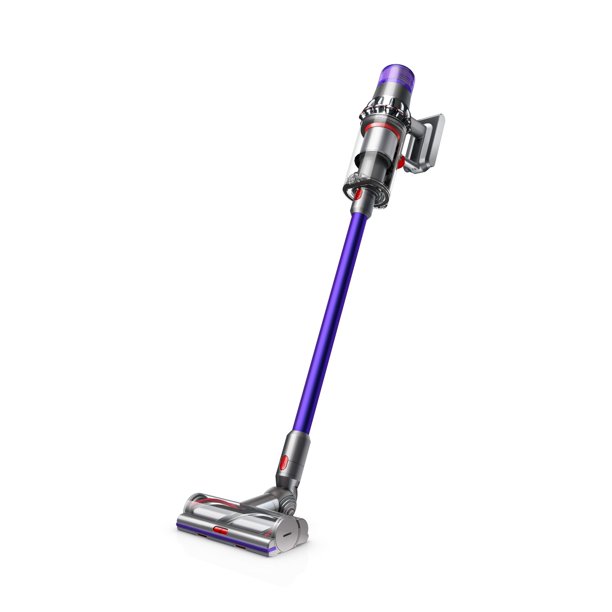
1. Dyson V11 Animal Cordless Vacuum

Powerful enough to vacuum up pony beads, this iteration of the classic Dyson cordless vacuum has a motor that runs at 125,000 rpm and an LCD screen that allows you to toggle between Eco, Auto and Boost modes.

Bonus: Up to an hour of Eco vacuum time.


Dyson V11 Cordless Vacuum | How to Create A Robust Product Development Strategy | Product World

2. Dyson Airwrap Styler

The most cutting-edge tech in the hairstyling market. Even after 3 years on the market, the air-fuelled curling and straightening tool is still consistently sold out.

With detachable heads, barrels, and brushes, get a salon-style blowout at home.Dyson Airwrap Styler | How to Create A Robust Product Development Strategy | Product World


3. Dyson Supersonic

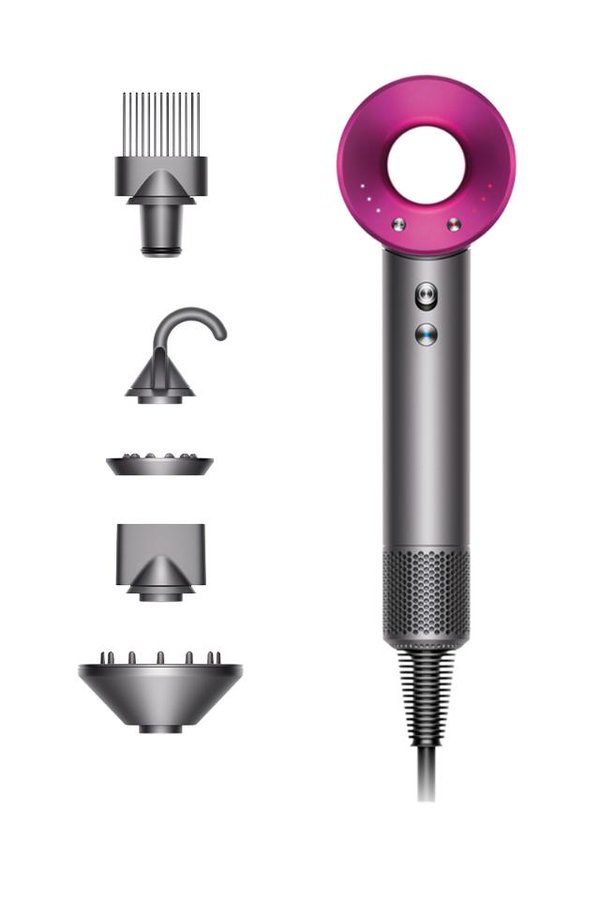
The Dyson Supersonic was the first product in their haircare line. It’s $400 but it’s quieter than any other hairdryer and it’s less damaging to hair.

Bonus: the vent is at the bottom of the hairdryer which means that your hair won’t get caught in it while drying and styling.

Dyson Supersonic | How to Create A Robust Product Development Strategy | Product World

4. Dyson Air Purifier and Humidifier

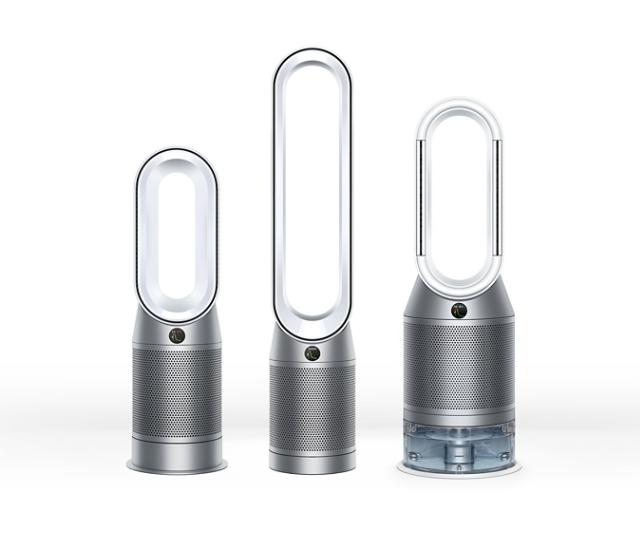
Expensive but so easy to clean! The first humidifier to be certified by the National Psoriasis Institute.

Dyson’s Pure Humidify+Cool is a 3-in-1 purifier, humidifier and cooling system. With a long list of skin, hair, and lung benefits.

Dyson Air Purifier and Humidifier | How to Create A Robust Product Development Strategy | Product World


Thanks for reading. See the original Dyson Twitter thread here.

– Oren


READ NEXT:
Best Domestic and International Clothing Product Vendors


I write a weekly email newsletter of bringing products to life. Follow me on Twitter at

and subscribe via the link below!


It’s a golden age for selling your own products and services. Understanding good-better-best pricing will help you develop strategies around your prices, and position you to win… consistently!

What is the Good-Better-Best Pricing Model?

Have you ever been to a Best Buy and noticed how they always seem to have three of something in every category? This is part of their retail mix strategy — picking products to sell that appeal to a wide range of consumers with an even wider set of expectations.

Understanding Good-Better-Best Pricing for Products | Product World


Understanding why retailers price this way and what consumers buy will help you further understand which category is crucial for your business. 

Good, better, best is exactly what it sounds like:

  • Good products offer value, with acceptable quality. They have the lowest price. 
  • Better products are more expensive than good ones but are not the most expensive.
  • Best products are the most expensive in their category and tend to have higher quality and/or brand equity attached.

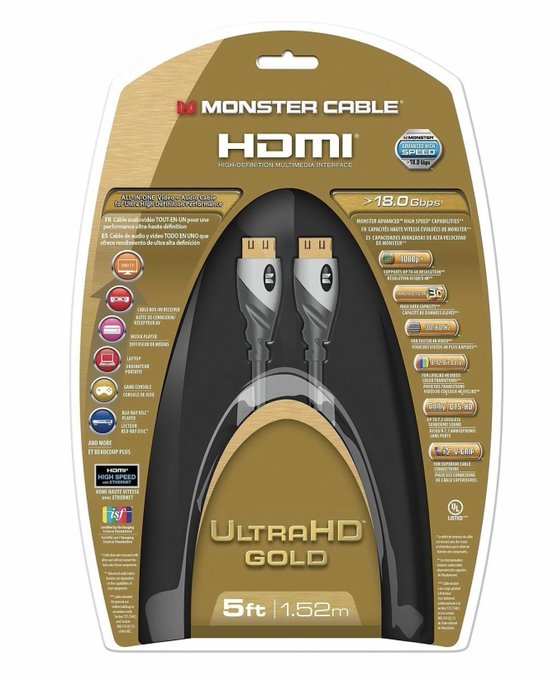
Cables are a great example:

  • You can buy a cheap, generic cable with no branding. It’s “good”.
  • You can buy a gold Monster cable with a ton of certifications and strange stamps that sound serious for 4x the price. This is “best”.


Understanding Good-Better-Best Pricing for Products | Product World


And… then there’s a product that looks like the Monster cable but doesn’t have the brand name, with a price point in the middle.

Consumers act accordingly:

  • Some always buy the cheapest thing.  
  • Others opt for the middle because they believe paying a little bit more will get them the kind of quality that lasts. This user’s purchases tend to vary from product to product.
  • And then there are people that will always pay for the best.

There are benefits to each category. If you’re in the “good” category and have the lowest price in your offering, and you have good distribution to ensure your product is seen… you WILL make sales. Lots of them.  Low price is always a strategy that works for sales.

The downsides of the low price?

  • Building the brand often falls to the wayside (there are success stories though — like Arizona Iced Tea).
  • Margins are much lower.
  • Customer loyalty is fickle.
  • Someone can steal your category from your partners and customers just by pricing even lower.

Medium price is tough. It’s cut-throat:

  • A lot of products end up here because they want more margin than a value product, but don’t have the acumen to build a premium brand. 
  • This category tends to be ultra-crowded — many are forced into it, and I always avoid it.
  • The way to win in medium/better is to really lock in a niche that others don’t have or execute top-tier marketing to drive sales. 

It’s a grind at this level. The medium niche is where the soda wars happen:

  • Stores sell their “good” products as default branded sodas.  
  • Coke and Pepsi compete over “better” with massive marketing fights.
  • Boutique brands in glass or natural sodas get the “best” category.

“Best” products price at the highest level. Way more people choose this category than you’d think, especially in the social media era where “best” brands are statements.

The challenge is… the quality needs to match and stay at that quality, and the brand has to be excellent.

To succeed at the “best” category everything about the product and brand needs to be perfect… this is an extremely tall order. Customer service, packaging, product experience, in-store displays… everything must be the best.

Lessons Learned About Good-Better-Best Pricing

– If you’re a retailer or selling other products, this is an excellent, tried-and-true method for building out your product mix. Also, having all three options is proven to sell more across the board!

– If you’re starting your brand or have a product in the market, you need to pick a niche you feel you can survive in.

– Once your brand is considered on one end of the spectrum, it takes an act of god to move it across categories (although tiers and offshoots can work well).

Remember….

If you want to be the cheapest, be prepared to keep that up and keep lowering as completion comes in. It’s your only moat.

If you want to be in the middle, you better believe your marketing can dominate the competition, or help you carve out a direct niche or demographic different than others.

If you want to be the best… you need to have that experience around every aspect of your company… and you can NEVER let your standards fall.


Hope this post helped with understanding good-better-best pricing. If you’re interested in modern brand building, looking for inspiration, or are interested in supply chain content, shoot me a follow @orenmeetsworld

– Oren


READ NEXT:
How To Customize A Point-Of-Sale Display


SUBSCRIBE FOR MORE:


Frazer Kinsley chats to us on the best ways to scale logistics for a products-based brand, in an effort to help shed some light on how to approach these more complex parts of a product-based business.

One of the biggest concerns new entrepreneurs have is how to handle logistics for their new business. Shipping, warehousing, supply chain, forecasting… its a LOT to understand. This is therefore a must-read for really understanding the basics of logistics for your products business.


Tell us a bit about your background

I’m the Co-founder and Managing Partner of Kinsley Partners, a seed/early stage venture firm focused on CPG, and industry-adjacent investments and consulting.

My family has been involved in E-commerce since the early days, when my parents were some of the top resellers of Swatch watches in the world. This was during the “Swatch Watch craze” of the 1980s/90s. I had no intention of getting into e-comm/supply chain originally, though.

My dream was to be a Navy SEAL but I suffered a career-ending injury during that training that put me out of contention. I didn’t really have a plan after that, so I went to work in an entry-level ops job at a supply chain/procurement tech startup in New York City, USA, to get my foot back in the door.

During that time, I started Kinsley Partners with my brother, Jake. Kinsley Partners was a way to invest in early-stage consumer brands.

Fast-forward a few years and I started a 3PL called Hook Logistics with two other guys, which I exited last year.

I currently work in a few roles at a few different companies, but my overarching focus has been – and continues to be – in supply chain management within the consumer goods space. My scope ranges from SMB, all the way up to publicly-traded companies.


Talk to us about logistics… what are some key terms and ideas new product creators should know?

Let’s face it: you hear the words ‘logistics’ or ‘supply chain’ and you either get bored, pissed off, or both. I find that often when a brand’s supply chain and logistics aren’t in order, it’s due to a lack of knowledge that leads to inaction, more than anything. But, it doesn’t have to be that way!

When you’re first starting out, you’ll have input from 100+ directions on how to ship, warehouse, fulfill, distribute, replenish, etc. all of your products and product lines. My advice across the board is: keep it simple.

This will remain true as you grow, but is especially important in the early days. Other than that, constantly look to evaluate your supply chain. Like marketing, there are tons of cost levers that you can pull on at various points in your product journey to help manage costs.

As far as terminology goes, you could probably write an entire dictionary on all of them. It may sound silly, but for creators starting out, Google will always be your best friend. My recommendation for newer operators is to speak to as many non-vendors (or potential vendors) as possible. Whenever someone mentions a term you don’t know, write it down and Google what it means after the call. Sounds rudimentary, but you’ll be surprised how quickly you’ll pick things up.

There are also tons of blogs and guides out there that shed light on basic terminology and strategy for newer brands. You can find a free version on my Gumroad page if you’re looking for a place to start.


Get the comprehensive Kinsley Partners Supply Chain Playbook for every new DTC, CPG, and apparel brand… tested, implemented, retested, and refined.


What do you look for when evaluating a 3PL partner for a scaling brand?

There are myriad factors that go into evaluating a 3PL on the brand side, but there are some foundational questions that every brand should be asking themselves and prospective service providers:

  • What type of product are you selling? Some 3PLs are better suited for low cost, high volume. Others the opposite. Totally depends on that 3PL’s expertise.
  • Do you have any special needs (temp/climate control, specific storage method, perishable)? Not everyone can offer what you need for your product. Just because a founder-friend who owns a cosmetics line recommended a 3PL, doesn’t mean it will be a good fit for your food+bev brand.
  • How big are your products? That’s great that the folks at Burrow recommended their 3PL, but if you’re selling headphones, that might not be the 3PL for you. Moreover, if you’re selling couches, some 3PLs don’t want the space taken up.
  • Do you require kitting? Subscription/sub box management? If you have multi-step kitting or boxing requirements, some 3PLs are better suited for that high touch service than a strict volume player.
  • What’s your [projected] throughput? Let’s face it: the less volume you do, the less options you have. The deal they gave the $50M company probably won’t be extended to the pre-launch brand. Some 3PLs also have higher monthly minimums that won’t work for emerging/nascent brands.
  • What channels are you selling through? Do you require EDI compliance? FBA prep? FOB into distribution? Not every 3PL serves the same markets. Some focus strictly on e-commerce while others focus on distribution, FBA, and FOB, while others can handle omnichannel.

Ultimately, your 3PL is not just your service provider, they’re your closest business partner. Their success is largely dependent on yours, so they have skin in the game, too. Aligning incentives as both a provider and as a customer can ensure a long-term and effective partnership.


How has the logistics behind scaling warehousing and delivery changed over the last few years?

The industry seemingly changes everyday, but some of the biggest changes that I’ve seen recently is the modernization of the 3PL fulfillment model.

Historically, warehousing and fulfillment has been a black hole where brands are pretty much forced to choose the “best, worst option” of a few conglomerates and send their goods to a random warehouse that they can’t even get an email response from.

In the past few years however, there’s been a democratization of sorts in the industry with a rise in boutique, local, regional, and specialty 3PLs. While certain industry names tend to dominate the conversation, there are way more and way better options these days, especially for emerging brands.

Simply put, the scale and service that were previously reserved for larger brands, are now more accessible to emerging brands.


Any essential software or subscriptions you recommend to entrepreneurs in this space?

This is where I differ from most, but it’s really going to depend on your situation. I see a lot of “must-have tech stacks for $X million brands”, but I’ve worked with $50M brands that run their ops on a Google Sheet.

Is it scalable? Most times, no.

However, I think your tech stack should ultimately fit what you need and provide a foundation for scale. That being said, I believe every brand needs:

  • Some sort of accounting software (I like Quickbooks the best).
  • A way to track inventory. Some do this in Quickbooks, some in a spreadsheet, some in a bonafide ERP or IMS [Inventory Management System] in which case I’d go with Skubana.
  • A way to track orders. If you’re going single channel to start, you’ll be fine with managing this in your Shopify or Amazon account. As you scale up and/or add channels though, a proper OMS [Order Management System] becomes more necessary. In that case, there’s no alternative to PrettyDamnQuick in my opinion. I’m an advisor there, but hold firm that it blows other OMS’ like ShipStation out of the water.
  • A way to manage customer service. Of the four areas on this list, this is the area I would never skimp on, whereas the others are all technically replaceable. Make sure you’re using a system that works specifically for ecom. If your systems don’t “talk” to each other, they just become clunky and useless. Kustomer and Gorgias are the two options I’d recommend here.


Any thoughts on DTC vs retail vs Amazon for new brands?

There’s a lot of noise on this topic, but I go back to, “What works best for you will ultimately be your best path”. DTC is great for increased margin control and customer interactions/insights. Retail is great for product exposure and cheaper customer acquisition. Amazon provides a turnkey solution and a marketplace setting with millions of MAUs.

IMO, 95% of roads lead to omnichannel, so there’s a good chance that most brands end up selling through all three of these channels eventually, anyway.

On a fundamental level, the question I ask is “Where can I best meet my customers where they’re at?” Customers may be looking for less expensive commodity items on Amazon, their favorite influencer’s makeup on their Shopify store, and their favorite regional cheese at their local Erewhon.

It’s about meeting your customers where they’re at, however that ends up looking for you.


What should new brands consider or make sure they learn about as they go into retail?

I think the biggest one is by far the financial implications. Retail is a great flywheel, but there are some hefty startup and maintenance costs that can be barriers for entry. Having an airtight command of your cashflow, unit economics, gross margin, etc. are absolute non-negotiables. Without an idea of your financials, you’re jonesing for a world of hurt.

Net 30/60/90 day terms are not uncommon in retail, and while you may be ripping the cover off the ball in stores, that cashflow conversion rate can be a killer. Additionally, a lot of folks bemoan the margin creep that can happen in retail.

The fact of the matter is, a lot of those silent killers can be mitigated by an understanding of your cost to serve and target/actual gross margin.

Beware of “retailer/distributor mandated” processes as well. For instance, I have near-daily conversations with founders that didn’t realize they could switch their UNFI/KeHe freight off of FOB and save 10-20% on transportation costs.

If you don’t ask, you don’t get. If the deal isn’t what you want it to be, ask for a concession. Never hurts to try.


Any tips or tricks for long term success in the space based on your experience?

Be you and put the blinders on. Our industry is like any other one: infinite streams of information, drama, this vs. that, “who’s who” – it’s all bullsh*t. Define what success means for your business and have a single-track focus each day to do things that get you closer to success.

The next biggest thing is to value [real] relationships in this industry. I’m convinced we have some of the smartest, most talented, and most generous people in the world in this industry. You either contribute to that sentiment, or detract from it. Here, the winners are always the ones that do right by their vendors and their colleagues; full stop.


What innovations or technology would you like to see come to DTC business operations?

I think we’re already starting to see it, but I love how forward-thinking the marketing community in DTC has been with dashboards and data aggregation. I always joke that DTC is a data scientist’s paradise with all the inputs and outputs, so it’s great to see that portion of the industry hit the mainstream.

I’d been working on a pet project with some others in the industry a few months back, but a Triplewhale/Northbeam style ops control tower is something we had in mind, and would be a great addition, IMO. We used to offer this in the form of PowerBI/Metabase dashboards to some of our customers, but a more robust and interactive layer would be great for operators, especially in the early stages.


What are you working on next?

Aside from my core work, my side project for the past year or so has been on a concept called ‘Linkt’. The idea spawned out of the early days of sourcing and distributing PPE during COVID for smaller hospitals and healthcare clinics that didn’t have access to the emergency stockpiles that larger institutions did.

Since then, we’ve sort of discreetly worked on projects ranging from establishing oxygen concentrator and respirator supply chains in rural India for the government’s Delta variant response, to our most recent project where we set up the first wholly civilian supply line directly into Ukraine and raised $1.5M in donations for displaced citizens.

The goal with Linkt in 2023 is to formalize this disaster relief and austere supply chain planning into a bonafide foundation.


This interview forms part of a series of interviews with brand specialists and product strategists. See other interviews here.


PRODUCT PEOPLE – LEARN HOW TO BRING PRODUCTS TO LIFE!

There has never been a better time to launch your own product. Learn more about logistics and supply chain management today.

Join 6,200+ happy subscribers on my Product People email list. Access product playbooks, factory links, and insights for running your own brand direct in your inbox, FREE. Subscribe now.