
If you missed my TikTok video about wholesale replicas, you’ll have missed the whole intro to this topic. I highly recommend you give this a quick watch before reading any further...
@orenmeetsworld Rep products are so good experts cant tell the difference, what do we do with this scenario? #repsneaker #sneakerhead #fashiontiktok #fashionindustry
Now, here’s some background to the problem…
Bootleg items, fashion bags, sneakers, and watches are ripped off at such high quality that most experts can’t tell them apart anymore. The massive price difference between a knock-off and a genuine item obviously has a lot to do with it, so what can luxury brands do to mitigate the piracy and risk to their brand?
In the video you watched above, I brought up Telfar as seen here modelled by Dua Lipa, the artist. This bag has been making waves amongst celebrities for a couple of years now, and I can see why.

But what you may not know about Telfar or their unique strategy is that they seem to have found a way to combat this replica-piracy action. And they’ve done it in a way that makes their luxury brand affordable to the everyday person (not just the celebrities out there). All while still providing a positive customer experience.
Let me explain…
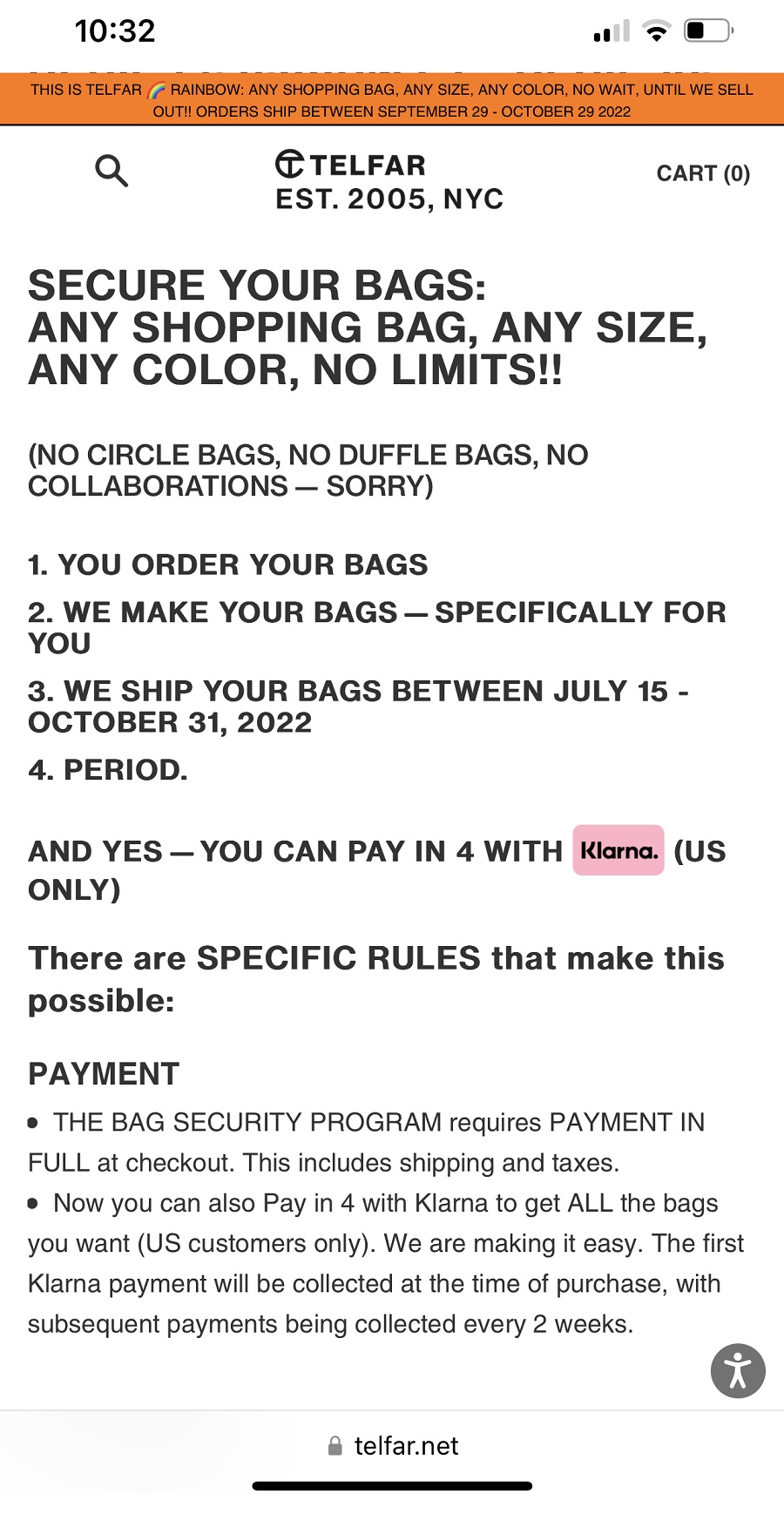
Very much aware of the brand risk around replicas and knock-offs, Telfar began offering a really unique program where initially, they actually had standard bags that would go and sell out. To be more accessible to the average Joe (or Jane) – while also keeping the brand standards high – Telfar introduced their bag security program.
In what can only be described as a major marketing feat and a brilliant way to increase desirability for the brand itself, Telfar opened up specific days in a month where anyone can order any one or more of a limited range of Telfar bags. They’ll make it on demand based on the order quantities, and ship that order to you.
And this kind of “democratizes” luxury so everyone can have some. Currently, everyone wants only one line from a specific collection (like Louis Vuitton and Nike’s “Air Force 1” by Virgil Abloh) but there’s only X many made so they sell like hot cakes for $18,000 a pop.
Now, instead of that scenario… if a consumer really wants one, they’re going to have to deal with the resellers. Or, as long as they can pay in full and are willing wait a few weeks to get it made, they will get one.
This is Telfar Rainbow.
This is how the majority of releases should go. We’ve over-hyped exclusivity with brands through limiting factors like member-only sneaker apps, etc. This is just one example, but there are a lot of new releases from the fashion houses, such as with watches, that have basically cloned this scenario for a lot of retailers and made it almost impossible for the average person out there to acquire a piece of luxury.
Telfar Rainbow changes all that. And the same strategy can change it for your brand, too.
Luxury is not a price-based commodity; It’s a quality-based, accessible product for the discerning customer.
Let’s give consumers what they want. Put parameters on it, sure, but make it so they can tell their friends, “Hey, we went shopping in this two-hour window where we still have to use this app (or whatever it is), but we got what we want.”
If someone wants something and they’re willing to pay the right price for it, why not make it and give it to them? That’s a superior customer experience, and you can do this in a luxury way as Telfar has done.
You need to really be considering this kind of strategy for your brand, especially as replicas become more and more prominent. It’s not going to hurt your brand. In fact, it’s going to grow and strengthen your brand.
Why? Because people would not purchase replica versions at a much lower price if the resale price wasn’t so high and inaccessible to them. Make sure they can buy from your brand reasonably and fairly like everybody else can. 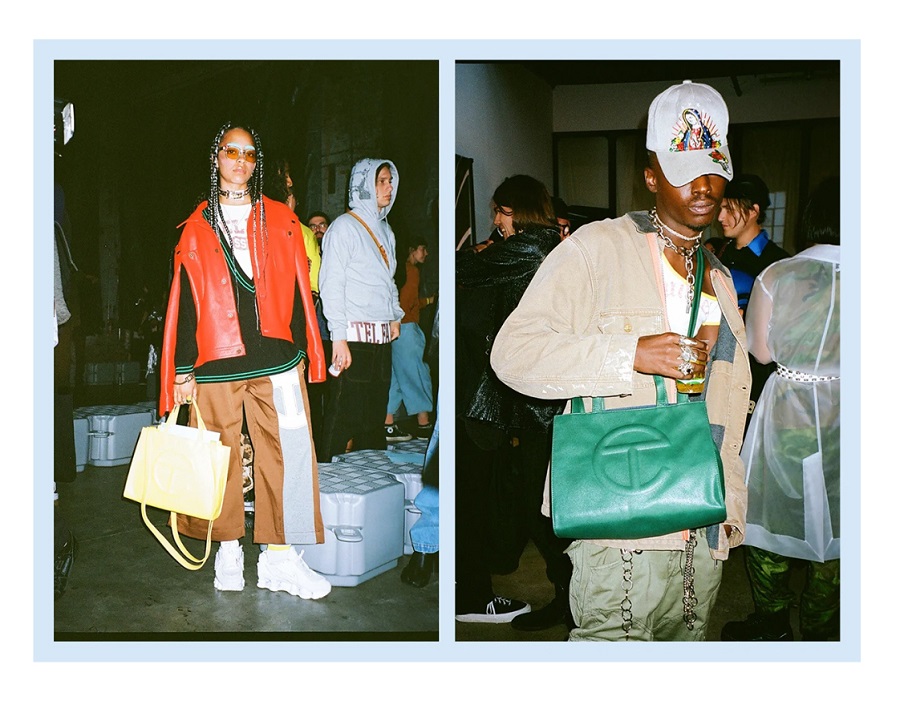
For those who think that Telfar’s brand strategy is not worthy of emulating, consider that the same celebrities that wear Louis Vuitton, Nike, and other well-known brands also use Telfar bags. Some examples are the Queen Bey and Zoe Kravitz, pictured here with their various Telfar versions, showing just how deep the brand has permeated our culture.
I hope you enjoyed reading this. Check out my TikTok short discussing this topic:
@orenmeetsworld Replying to @ladiarchitect4eal i believe the Telfar bag security program offers a way better customer experience for luxury brands and it should be widely adopted #telfar #telfarbag #telfarcollection #luxurybrand #luxurybrands #trends #luxuryfashion #greenscreen
I regularly break down sourcing and developing different products to 5,000+ entrepreneurs on my Product People newsletter. You should join me there.
– Oren
RELATED CONTENT
15 Steps to Start a Business Without Much Money
FOLLOW ME ON SOCIAL MEDIA:
Twitter: http://www.twitter.com/orenmeetsworld
LinkedIn: http://www.linkedin.com/in/orenj/
TikTok: https://www.tiktok.com/@orenmeetsworld
Check out 2 newsletters from my best friends, James & Colin:
NanoFlips –Learn the art of buying, growing, and selling websites with James Camp:
https://www.nanoflips.com/
Free Smoke – A Cannabis business newsletter by Colin Landforce:
https://freesmoke.xyz/
Sign up today for more content like this!
Opening a luxury brand is one of the hardest things that you can do in the brand creation space. My secret luxury brand playbook breaks down all the components that make up a luxury brand, including where the difficulties are and how to have them all work in harmony to get to a success level.
Let’s do this.
@orenmeetsworld The luxury brand playbook Pt. 1 #luxurybrand #luxurybrands #luxuryfashiontiktok #brandingtips #marketingtips @orenmeetsworld #greenscreen
♬ ASTRO Trap Beat – Hip Hop Instrumental – AfterInfinityMusic
The single, most discerning, and most important thing for any luxury brand is going to be quality. No matter what, if the actual quality of the user experience isn’t there, people just aren’t going to pay the premium it takes to be able to execute luxury at a high level.
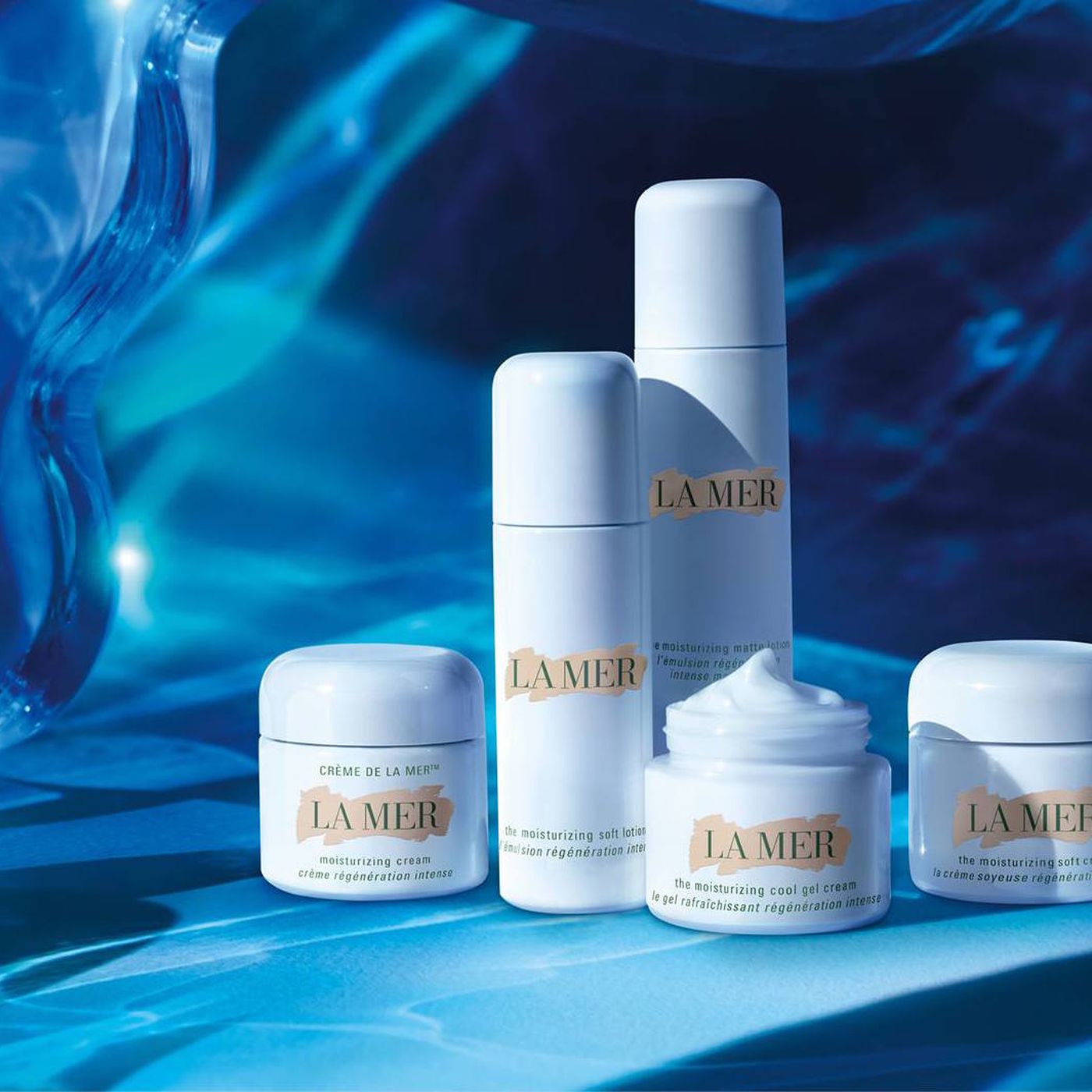
Take La Mer, for example. This is a go-to product for Dwayne “The Rock” Johnson and used daily in his skincare routine.
While it’s possible he’s been paid handsomely to say so, it goes without saying that one of the world’s most iconic faces wouldn’t put anything of doubtful quality on his heavily-insured body!
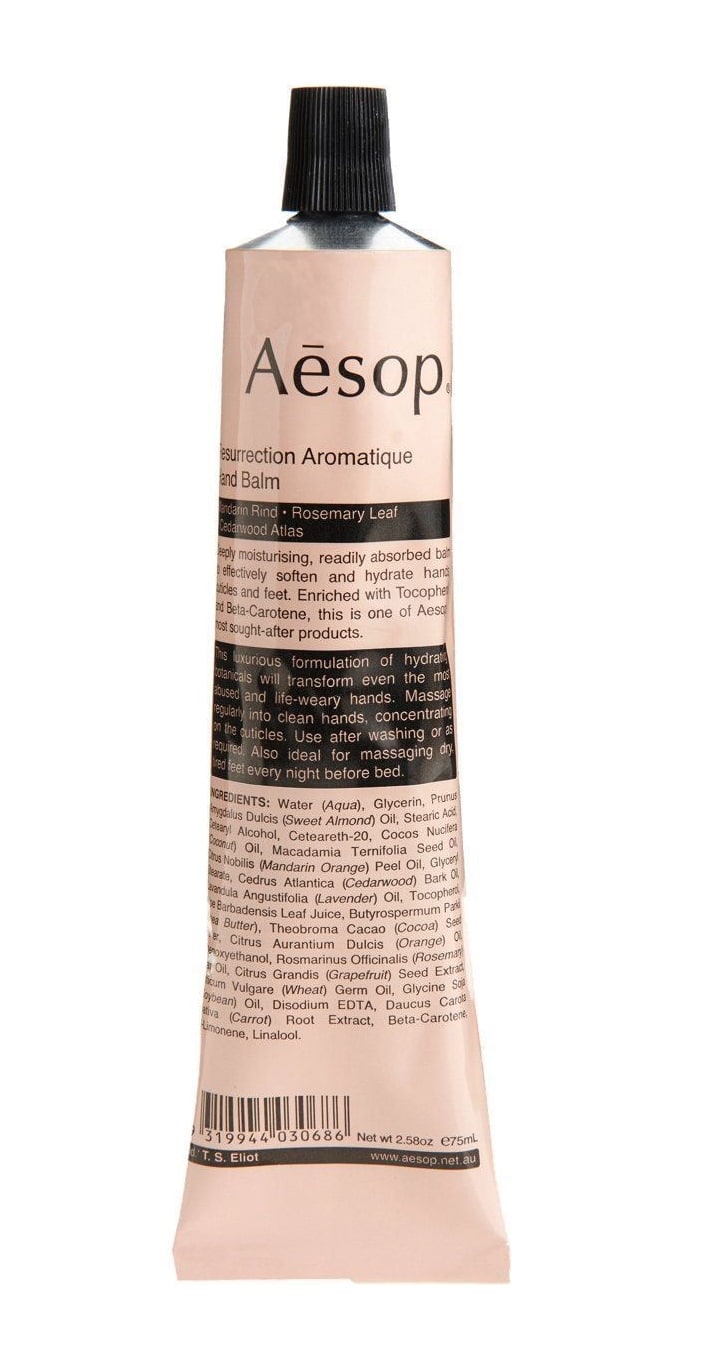
Aesop is a great example. I’m not going to pay $40 for just any soap, but I’ll pay that for Aesop.
The extra margin that brands get from selling it at a higher price point helps them trend-set. That means:
What luxury brand playbook would be complete without fashion icons? Louis Vuitton’s a perfect example of how to use the extra margin to chase or create trends.
They’ve been a top brand in the world for so long, so it’s no wonder they continuously invest in trendsetting, perfecting their craft, and improving or adding to their extensive product line-up across existing operations.
LV is also well-known for collaborating with industry icons like the late Virgil Abloh and new creative directors and involvers in the brand to make it popular and keep it trending.
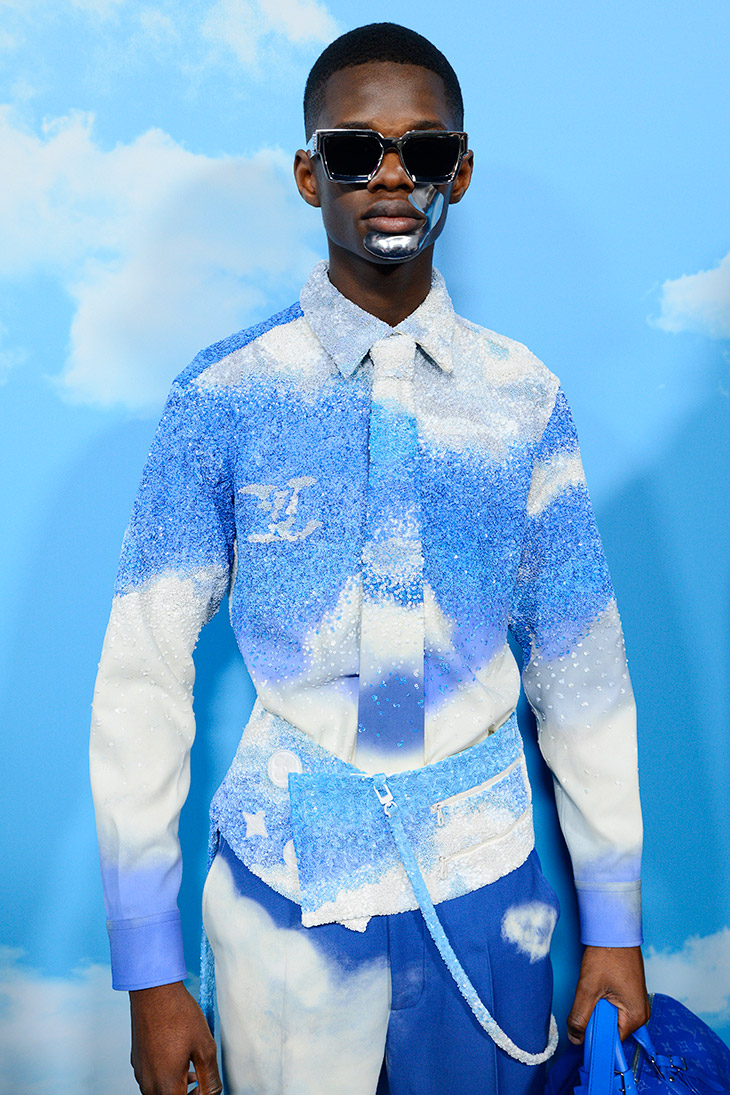
But you can’t just chase trends; You also have to develop things that are timeless, that people will use again and again until it becomes recognizable as a luxury brand.
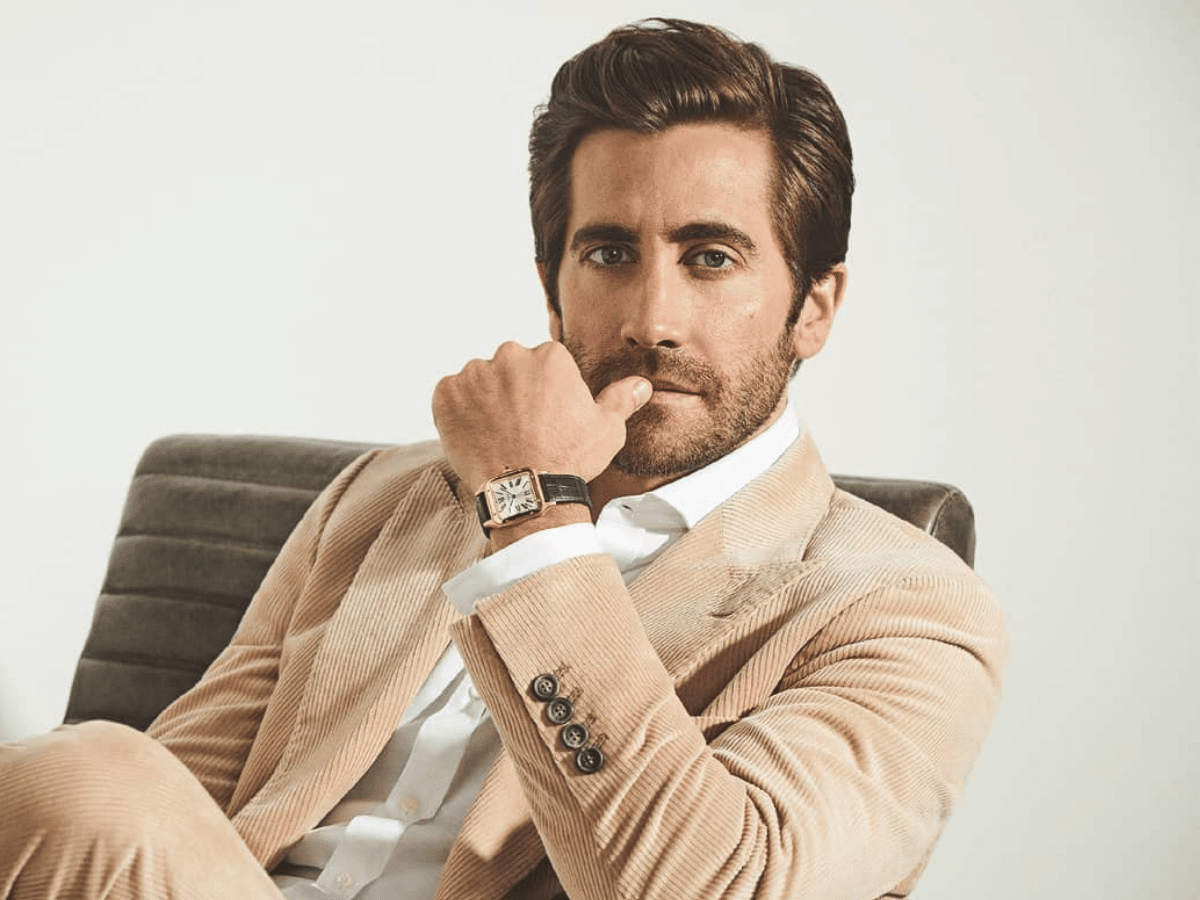
Cartier is my favorite luxury watch brand. The Cartier worn by Jake Gyllenhall here is an absolutely timeless wristwatch, and a brand that never lost its cool by doing something completely out of whack with trends at the time. Whether 20 years ago or 100 years from now, Cartier hot the sweet spot with this one.
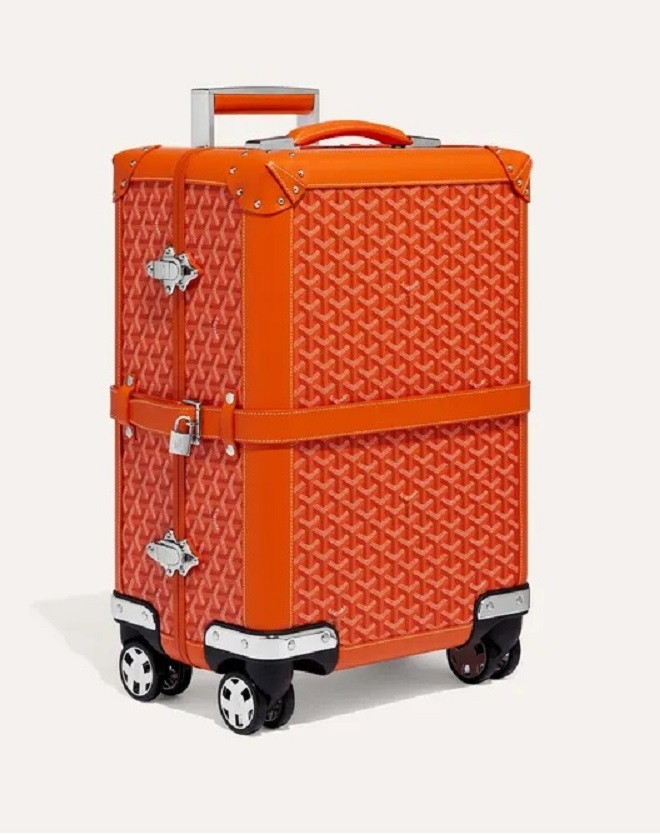
Desirability is another one, if people don’t actually want it and want to have it, its not going to be a luxury brand. Its just going to sit there on the shelf.
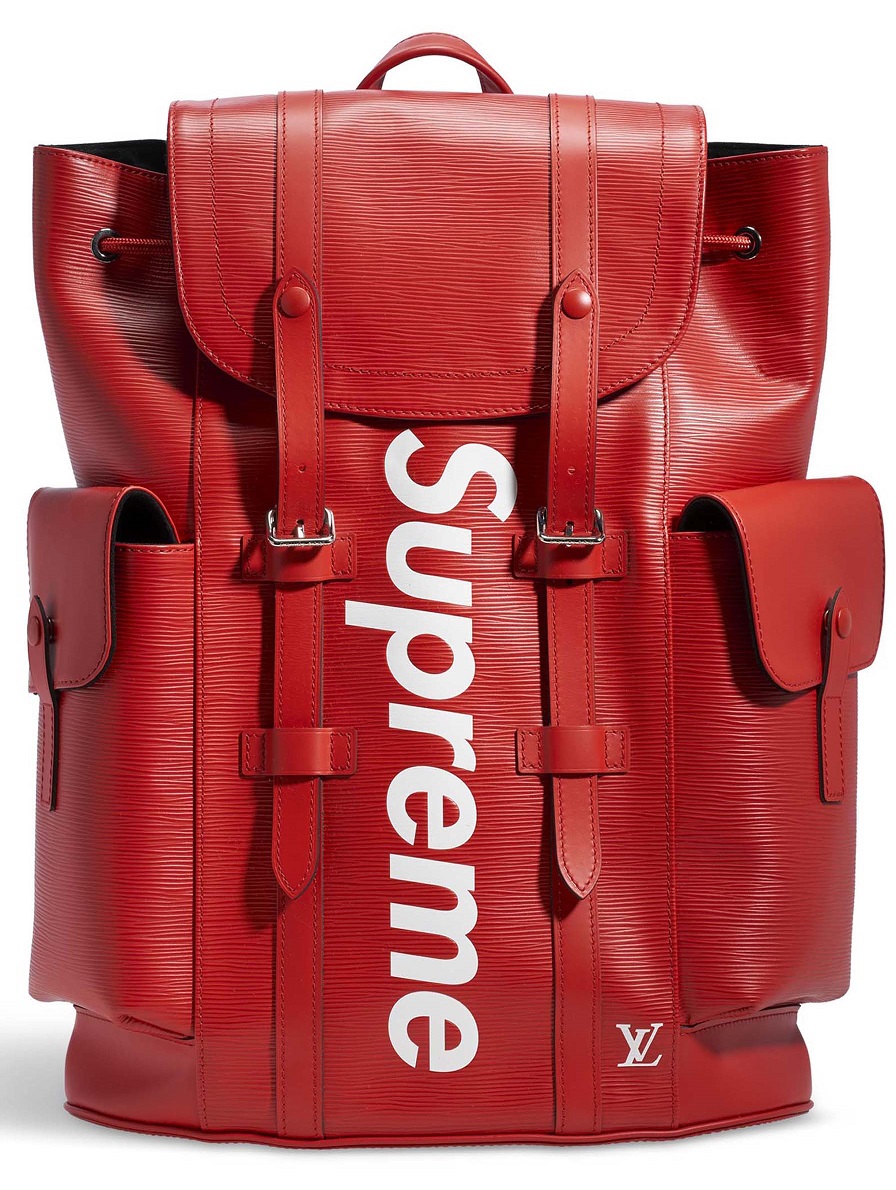
Which leads us to retail value. Luxury brands always have to be able to keep up with the least of relatively close-to-market resale value to show that the desire exists for their products. This lets customers know they’re making an investment, not just buying another product off the shelf.
There’s a lot of high quality interesting brands that you can purchase but you’re not going to be able to resell it on another market. Luxury customers look at almost everything they buy as something they can resell at the same rate or higher later on.
There’s also a degree of lore and storytelling inside each luxury brand, both in the previously published narrative and the narrative that’s been written currently.
A perfect example of this is La Mer’s mythical background story also goes a long way in the marketing division and part of what’s helped position the brand to be such an exclusive luxury powerhouse inside the cosmetics and skin-care space.
One of the hardest things to process for new entrepreneurs in the luxury space is that building a luxury brand takes time. Longevity is huge… You can have a really cool brand for 5 or 10 years, but luxury is built over decades.
If you’re not thinking of your brand from a decades-long stand point, then you’re not building for the true luxury experience.

Brands like Telfar have done a great job at matching some old democratization and exclusivity in the things that they’ve released so they’re more approachable, but overall… Your luxury brand needs to have something that people want to do, see, be known for, yet not just anyone can own that exclusivity.

Thanks for tuning in and reading to the end. If you’d like to see more like this, check out my TikTok channel (link below) and be sure to subscribe for early access to Part 2 of the Luxury Brand Playbook.
– Oren
Twitter: http://www.twitter.com/orenmeetsworld
LinkedIn: http://www.linkedin.com/in/orenj/
TikTok: https://www.tiktok.com/@orenmeetsworld
Check out 2 newsletters from my best friends, James & Colin
NanoFlips – Learn the art of buying, growing and selling websites:
https://www.nanoflips.com/Free Smoke – A Cannabis Business newsletter by Colin Landforce:
https://freesmoke.xyz/
READ NEXT:
How To Build Long-Term Value (for Agency Owners)
I write about tools and ideas to bring winning physical products to life. Whether you have a brand or want to build one in the future, I highly recommend joining the 3000+ happy subscribers on my Product People newsletter!
The fastest-growing app of 2020, TikTok hit the app stores of every operating system and was an instant success. Currently enjoying an engagement rate that’s at least 15% stronger than any other social media platform, using TikTok for brand growth is definitely an underrated (and underused) marketing strategy.
In a recent independent study conducted by neuro-analytics and -marketing firm Neuro-Insight, brands are seeing higher levels of receptiveness to their messaging, calls-to-action, and ad breakthroughs.
“TikTok’s unique engagement signature gives it an edge to be able to deliver ads and branded content in a way and at a moment when consumers are most open to receiving that messaging – and while all such signatures change over time, it is a golden opportunity for brands to use TikTok to their advantage right now.”
– Pranav Yadav, US & Europe CEO, Neuro-Insight
The advantages of using TikTok for brand growth just seem to be piling up. Thanks to the platform’s unique algorithms, TikTok is just literally built for engagement.
As an entrepreneur and a brand builder myself, the challenge was hard to ignore. I realized the time had come to take my personal brand (that means me) onto TikTok to see how I could leverage the platform for growth.
These are my stats after 45 days of taking TikTok seriously:
– 1 video at 300k+ views = 6,500+ views per day (of just one video!)
– 10 videos at 10k+ views = 1,000 views of each per day (on average)
– Most remaining videos at 2k+ views = 45 views of each per day.
It helps being super-focused on my niche, just like I am on Twitter… What also helps is not looking for 200k followers to build your brand on TikTok.
Staying in my niche means I’m looking for people who want to build product-based brands and are on the lookout for advice, tips, links to manufacturers and suppliers, and a real support base.
Guess what? I am definitely finding them!
RELATED READING:
The Weird World of TikTok Live
Prep your brand for Black Friday | Cyber Monday
There are definitely some noob mistakes you’ll want to avoid. Luckily, I’ve made already them so you don’t have to:
Read about my 45-day TikTok learning journey on Twitter, or continue scrolling…
45 days of taking TikTok seriously:
– 4500 followers
– One video at 300k+
– 10 at 10kish
– Most 2k+I am focused in on a niche, just like I am on twitter, I'm not looking for 200k followers, I want people who want to build products. I am def finding them.
What I'm learning: pic.twitter.com/0t3nLDaX48
— Oren John (@orenmeetsworld) September 27, 2022
The most constructive, personally usable tip I got was about how I project myself on screen. “Be hotter” was the best piece of advice.
“Talk slower” was another. All that high energy bursting out on a user’s screen is great… but TikTok does not have a half-speed option like Spotify does. Make sure you get your message across clearly and coherently.
Let me know in the comments down below or on my Twitter thread for this post how that’s all working for you 😉
The top technical tips I got that were correct and really helped me along the way:
What really worked with the content for my niche?
I’ve noticed that while my big-play videos get lots of followers, it’s the little ones that add up to a connected and engaged audience. This is why it’s important to not focus on number of followers, but rather on number of engaged users (likes, comments, shares).
This engagement is the driving force behind TikTok’s algorithms, and determines what users want to see. That’s how you end up in TikTok’s “golden circle”, the For You page. This is where users spend the majority of their time when on TikTok, and it’s where you need to be to get found.
RECOMMENDED READING:
The Ultimate Guide to TikTok SEO
Find actionable ways to really crush those TikTok algorithms
So, is TikTok a search engine? No yet,,, or at least, not officially. Be that as it may, the functionality is there and I’ve started using TikTok for all kinds of things on a search level:
This app is… amazing? It’s obvious that I respect and trust the platform after my 45-day journey.
Reason’s I’m not much bigger already?
I have been very mid at this. I think someone savvy can come in and hit 10k in the first week or two by:
I’m realizing even though my goal was to stay niche, I’m going to end up getting broad followers just by how the algorithm works, and I’m pivoting my content to take that into consideration. If I decide I want to go bigger versus more niche I’ll lean in heavier to personality.
BONUS MATERIAL!
Catch the Builders.Build podcast with my best friends, Colin and James, to discover more about our individual TikTok perspectives and journeys.
Thanks for reading. These are just my learnings from a 45-day journey to leverage TikTok for brand growth and increase my visibility on the world’s leading platform right now. While I’m no expert at this, I am having fun with it. I encourage you to give it a try!
Twitter: http://www.twitter.com/orenmeetsworld
LinkedIn: http://www.linkedin.com/in/orenj/
TikTok: https://www.tiktok.com/@orenmeetsworld
Check out 2 newsletters from James & Colin
NanoFlips –Learn the art of buying, growing and selling websites with @JamesonCamp:
https://www.nanoflips.com/
Free Smoke – A Cannabis Business newsletter by Colin @Landforce:
https://freesmoke.xyz/
I write about tools and ideas to bring winning physical products to life.
Whether you have a brand or want to build one in the future, I highly recommend joining the 4500+ happy subscribers on my Product People newsletter!
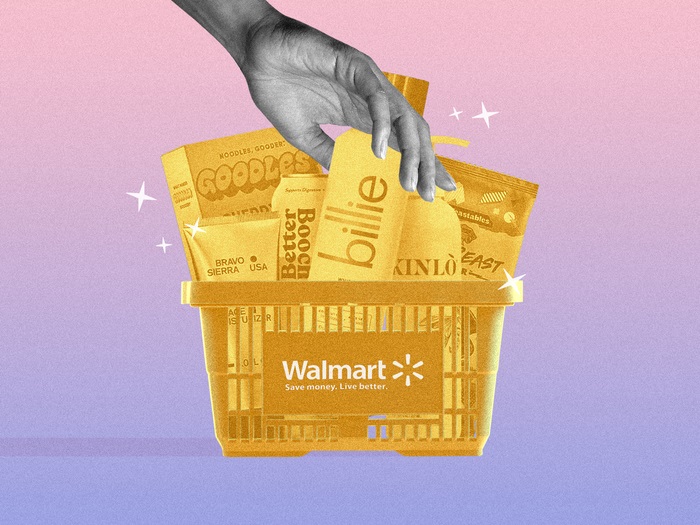
So many DTC (direct-to-consumer) brands are trying to get into retail right now, like Walmart and Target, for example. I’m going to break down why you should start a brand, or act as a brand, not a DTC brand and just how important all these retail channels are.
Let’s do this.
@orenmeetsworld Lets talk about DTC brands going into retail #dtc #retailmarketing #trends #directtoconsumer #ecommercetips #ecommercebusiness @orenmeetsworld #greenscreen
Judging by this Census data, only 14.5% of sales happen online!

Granted, this is way bigger than it was a decade ago but it’s still fractional compared to how much physically happens in the world.
So, if you start your business and you don’t have a plan to attack physical retail, you’re leaving this huge market on the table.
A lot of brands also don’t want to sell on Amazon, but guess what? If you see a product on Tiktok, and then you want to go buy it, I would imagine 50% of the people are going to search to buy it on Amazon.
If you’re not there, you’re missing out on a lot of sales because people often take that second step – the purchase decision – when they find what they’re looking for.
In addition, you can’t always control the results about what’s on Amazon if you’re not on there.
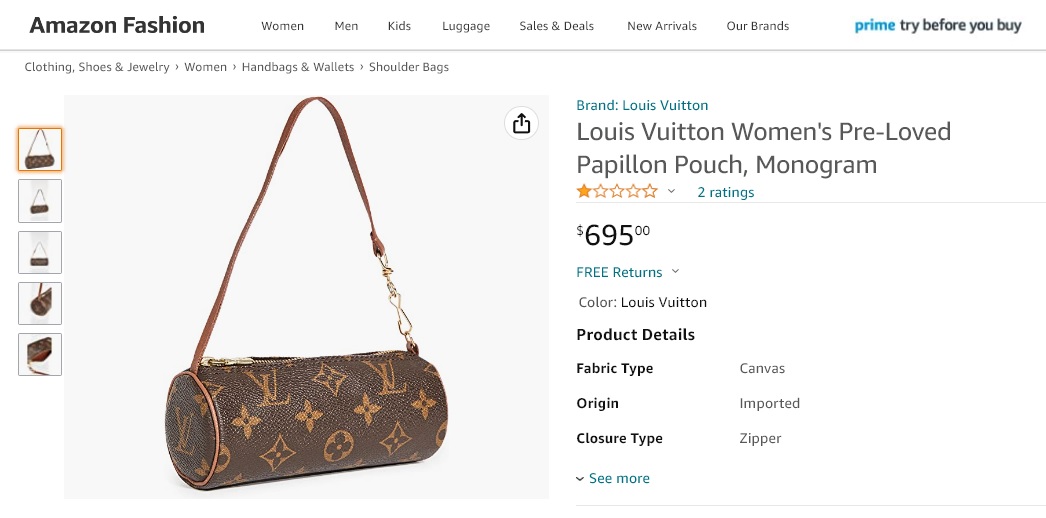
This is a fake Louis Vuitton bag with two reviews saying it’s fake showing up at Prime shipping on top of the page in the first results for Louis Vuitton.
If they had a better strategy to engage this channel, then they’d be able to prevent this. These are things you should think about for your brand as well.

With Rimowa and their high-end luggage which people might want to buy on the spur of the moment for a trip, there’s nothing available on Prime.
Some cases don’t even have a price, and their resellers are getting all the margin that comes from approaching it on Amazon.
I’d like to start a brand that I want a strategy for:
Well, going into retail, you have to consider how your product is going to be presented physically. This retail display is known as an end cap.
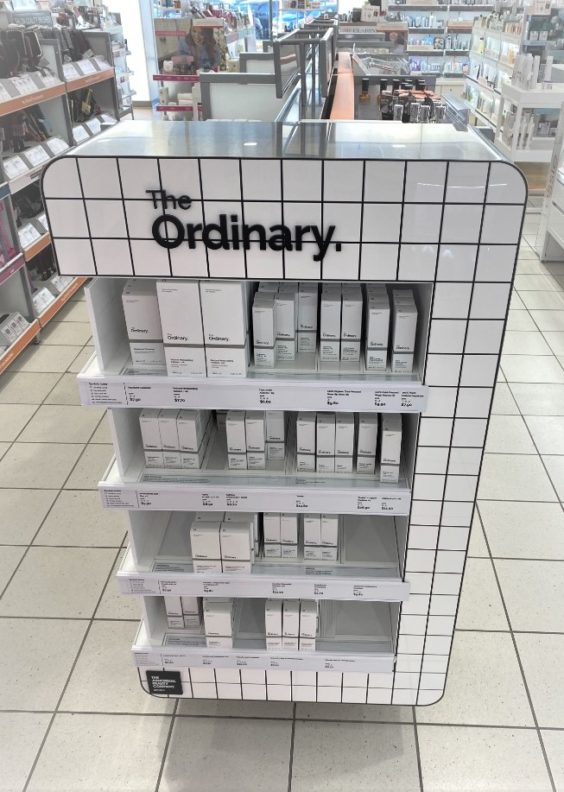
Not only do you have to produce these end caps or produce whatever your product is going to be on if it’s going to be displayed on the shelf.
A lot of vendors will charge you money or a percent of revenue to get that level of featured space.
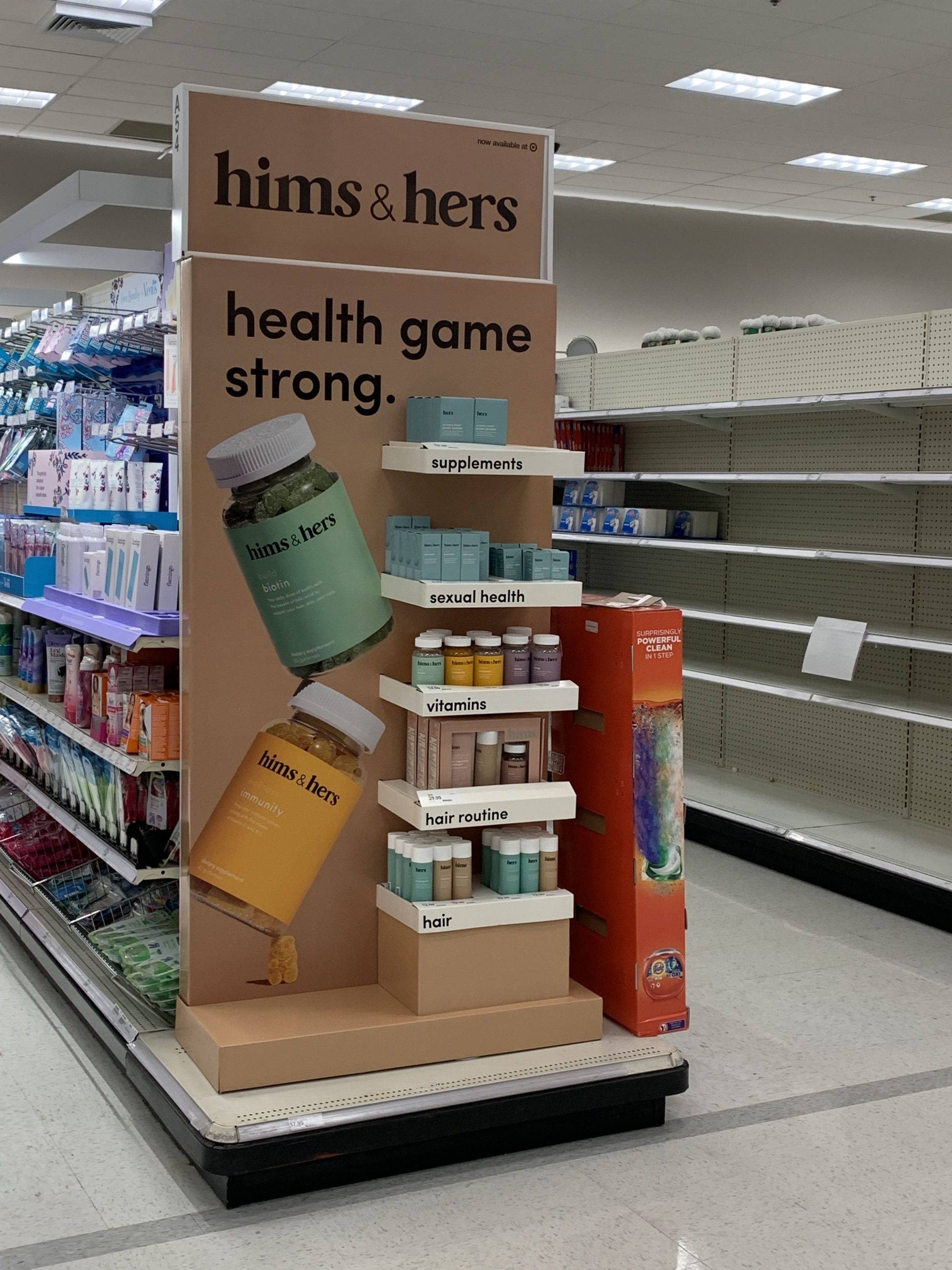
Hims definitely paid a significant amount of money to get this those pharmacies, to be able to push this in front of new consumers… and they paid the money to fabricate all these things.
You don’t have to stoop to that level though, but you do need to think about what your merchandising looks like. Is it just your products on the shelf, or do you need a display unit like cosmetics use?
(I like to reference the cosmetics industry because their point-of-sale marketing is extremely refined.)
In addition to what it physically looks like in retail on a point of sale, you need the logistics of shipping, margin, and returns. you also need to think about MDF (or marketing development funds), which is what a lot of these existing retailers ask for to be able to push your product out there.
Either way – because of the size and breadth of the market, and the level of competition – if you’re starting a brand today, you need to think of it as a brand across retail, online and Amazon, not just DTC.
Strategize accordingly!
– Oren
Twitter: http://www.twitter.com/orenmeetsworld
LinkedIn: http://www.linkedin.com/in/orenj/
TikTok: https://www.tiktok.com/@orenmeetsworld
Check out 2 newsletters from my best friends, James & Colin
Free Smoke – A Cannabis Business newsletter by Colin Landforce:
https://freesmoke.xyz/
NanoFlips – Learn the art of buying, growing and selling websites:
https://www.nanoflips.com/
READ NEXT:
9 Secret Luxury Brand Playbook Tips (Part 1)
I write about tools and ideas to bring winning physical products to life.
Whether you have a brand or want to build one in the future, I highly recommend joining the 3000+ happy subscribers on my Product People newsletter!
This is your sign to start a supplements brand.
Seriously.
It’s high margin, you don’t need to touch inventory, and there’s a massive consumer base.
Here’s exactly how it works PLUS the best manufacturers who offer fulfillment the way you want it.
Let’s go.
This is your sign to start a supplements brand.
It's high margin, you don't need to touch inventory and there's a massive consumer base.
Here’s exactly how it works + the best manufacturers who offer fulfillment.
Lets go 👇🏼 pic.twitter.com/R25VAO7rEM
— Oren John (@orenmeetsworld) October 2, 2022
If you’re any of the below
– a creator
– a fitness influencer
– an amazon seller
– a performance marketer
– a social media marketer
– a good salesperson
You should have your own brand.
You have the tools, you just need a product to own equity in.
Supplements is an amazing category because:
– Entrenched players don’t care about their consumers and have outdated marketing
– Amazon is full of shady knockoff products
– New trends are always coming, and can blow up
– Consumers buy off social media marketing, constantly
I think the opportunity is
– high quality, organic supplements
– unique blends and combinations for increasingly experimental consumers
– made locally (US for US customer, Europe for Europe etc)
Paired with
– money back guarantees
– great customer service
– lots of content
I’ve included all domestic factory options below, because I believe customers right now want (and deserve) US-made products of high quality.
My vetted list for overseas suppliers is …
in my email list autoresponder, you can grab that here:
Product People – Learn How to Bring Products to Life – Revue
Get free access to factory links, product playbooks, and step by step guides to sourcing products, launching and growing your own brand.
US based and:
Here’s their MOQs:

Supliful is a truly no-touch solution to leverage an audience:
… and you’re running – they do it all.
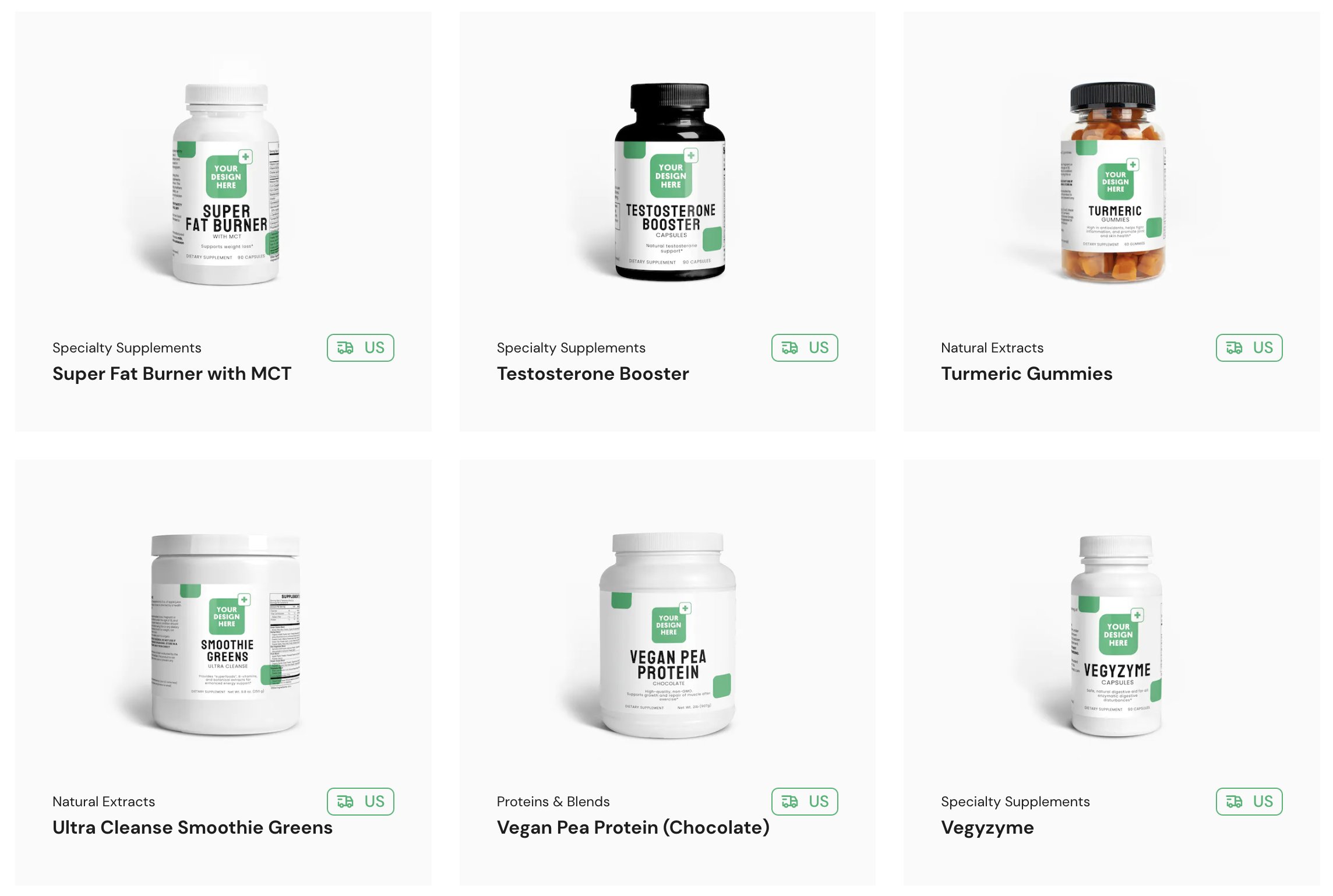
Truly the easiest way to start selling… and they have a wide option set. Worth noting that Supliful are US only.
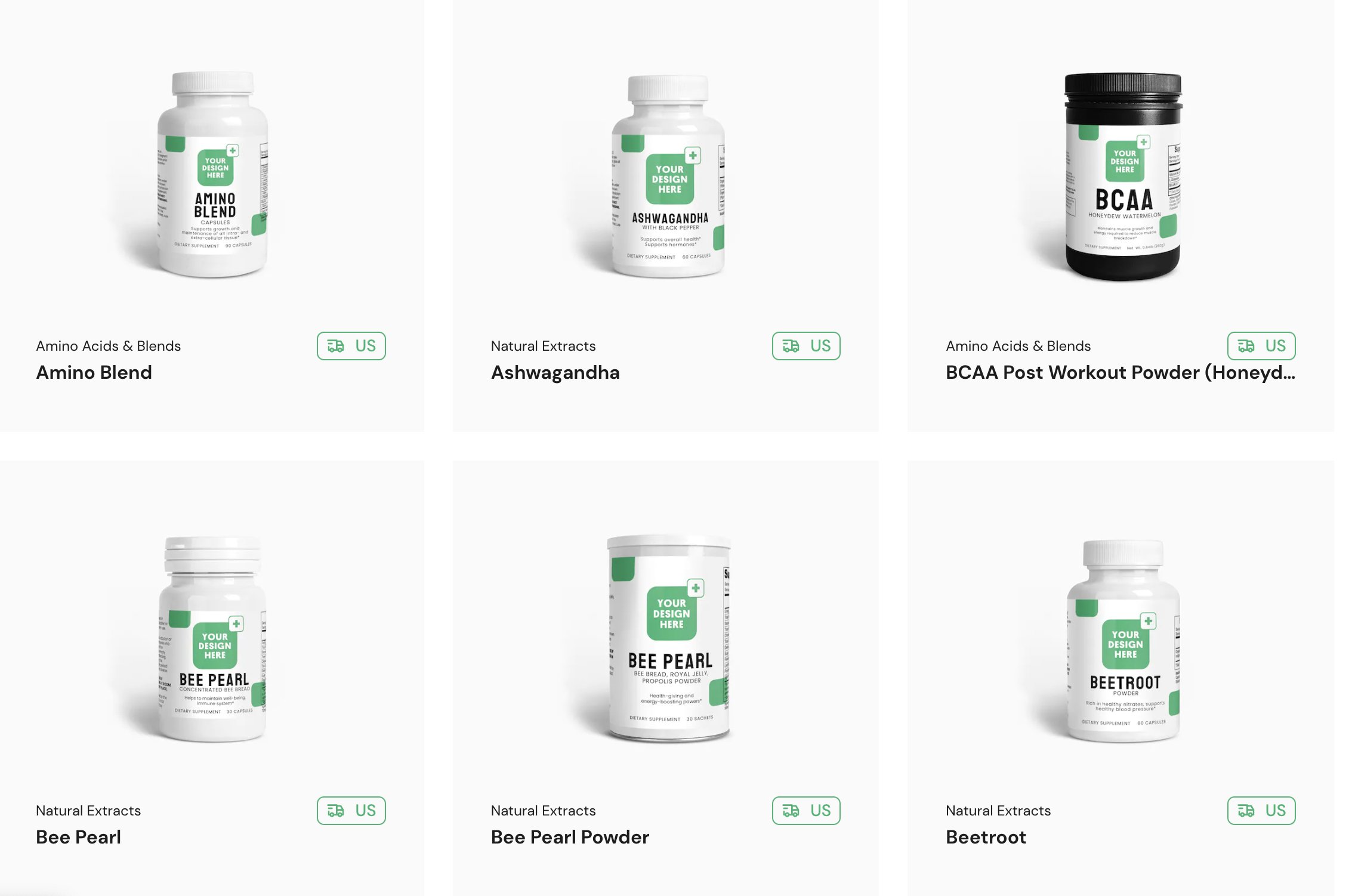
If you want to:
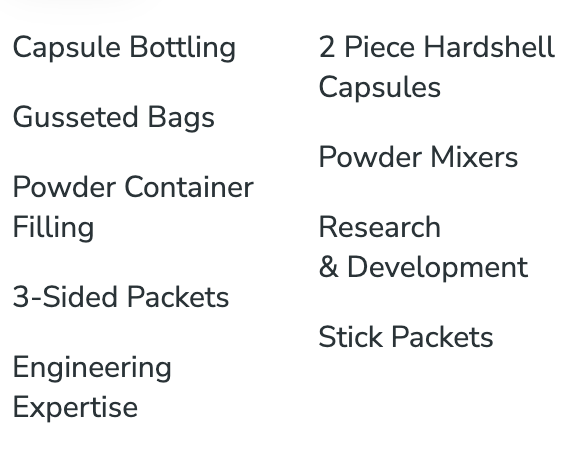
Pietra is completely full service, and they make sourcing very easy on their Priority Support tier.
Here’s what they can make and the packaging types they can fill.
Highly recommended!
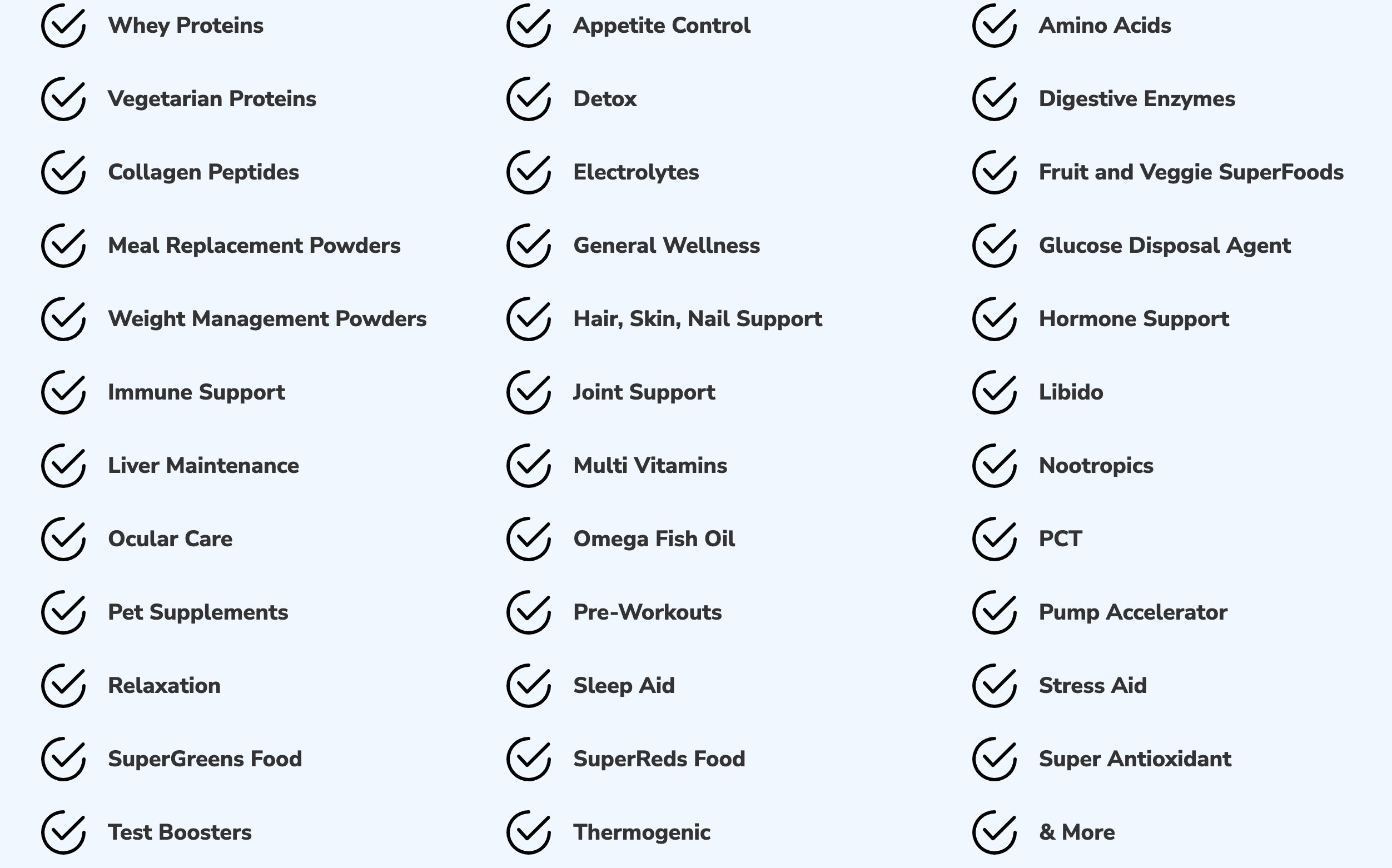
I’ve sent a lot of people here who praise their responsiveness, as well.
The gift and the curse of this industry is how trend-based it is… think how over the last year we’ve seen massive runs for:
On this list, ONLY charcoal has peaked.
My secret source for what’s new and weird in vitamins and supplements?
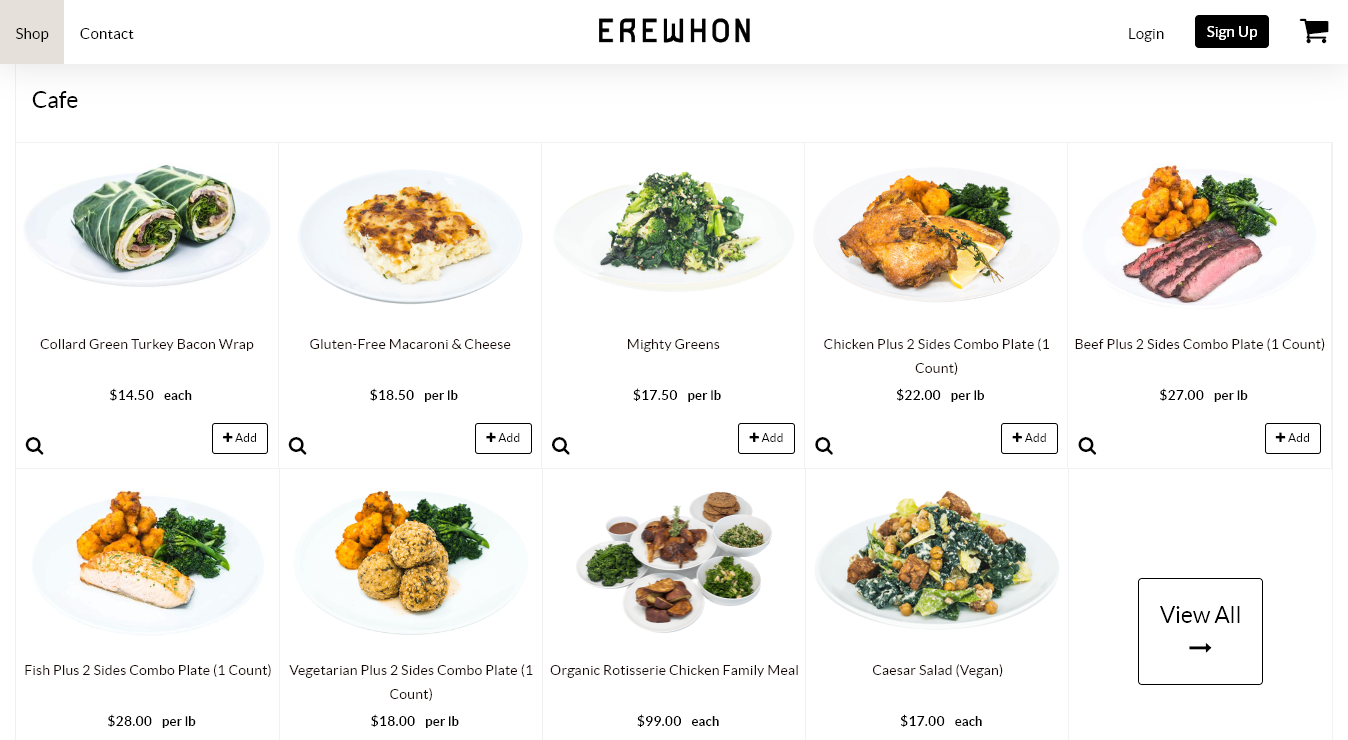
Shop Erewhon’s full menu of supplements online, and monitor to see what’s new. If it’s hot… rest assured they’re testing it…
Also, check out their organic grocer & Cafe:
Use Answer the Public and enter your target category to see what people are searching.
I did this for protein powder and found a lot more people are into caramel flavor than there are options on the market.
There’s plenty of opportunities if you put in the work.
First and foremost – going cheap on your manufacturer. There are tons of wacky supplements, there are less great ones. Also:
There has never been a better time to launch your own product! Here’s my thread on the formula for launching a brand in 2023.
Appreciate you reading this!
– Oren
Get more ecommerce and branding breakdowns. I’m dropping product playbooks in different niches consistently here and on my Product People newsletter.
Twitter: http://www.twitter.com/orenmeetsworld
LinkedIn: http://www.linkedin.com/in/orenj/
TikTok: https://www.tiktok.com/@orenmeetsworld
Check out 2 newsletters from my best friends, James & Colin
Free Smoke – A Cannabis Business newsletter by Colin Landforce:
https://freesmoke.xyz/
NanoFlips –Learn the art of buying, growing and selling websites:
https://www.nanoflips.com/
READ NEXT:
How to Build a Brand in Activewear and Supplements
Join 4100+ on my Product People email list and get product playbooks, factory links, and insights for running your own brand direct in your inbox:
This is a super-interesting time to build a brand in activewear or the supplements industry. You can own this space, and it makes a lot of sense to start a niche brand here, especially now.
I’m going to break down why.
Grab the alpha – with visuals – in my TikTok short below, or scroll to keep reading:
@orenmeetsworld If you want to build a brand in activewear and supplements right now, here are some trends and ideas worth being aware of #clothingbrand #fitnessbrand #wellnessbrand #ecommercetips #activewear #supplementsthatwork @orenmeetsworld
While activewear as an industry or niche might seem to be more saturated than ever, niche brands are really focused on the UX (user experience) of their corner of the market to build cult-like brands. District Vision is a great example of this principle.
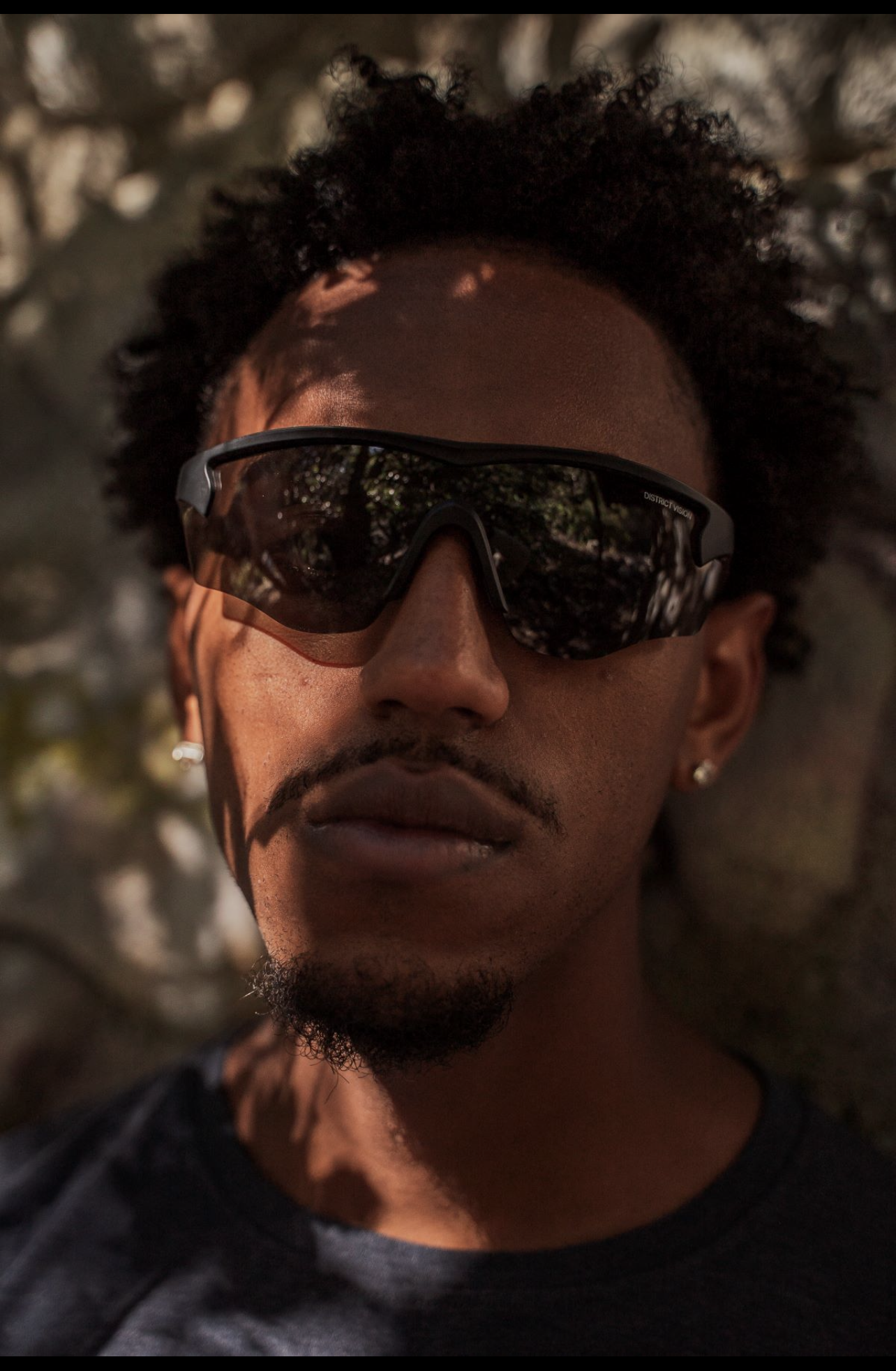
Other brands that use this strategy for the same reasons include:
And what these brands are saying is, “We’re going to take the user experience for this exact sport we’re in and make it perfect. Let’s build an amazing brand around it.”
This is just at the beginning of what that could look like for sports like lacrosse (similar to baggataway), golf, pickleball, baseball, soccer, or even basketball. Activewear brands tend to focus on one niche sport, or related niches.
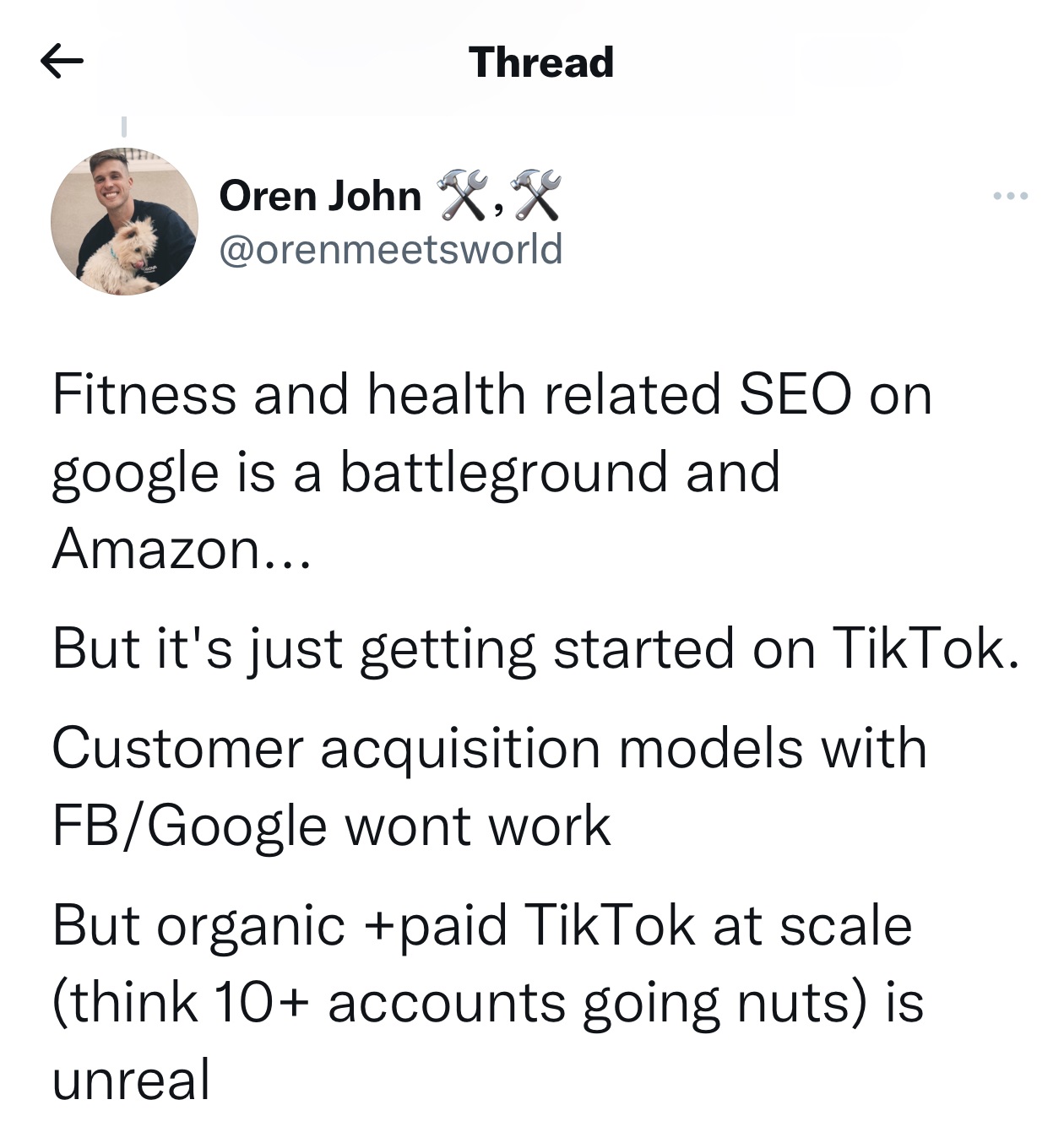
Now, if someone had told me they wanted to build a brand in activewear or the supplements market with traditional SEO and Facebook acquisition tactics, it just wouldn’t work. You could sure try, but the amount of effort required to really make it successful just wouldn’t be worth the nominal success it would bring.
What isn’t happening out there is brands taking advantage of that same kind of SEO on TikTok, and using the platform to scale organically. You can also increase your odds of success on TikTok by having multiple pages and multiple people working together as a team for your brand.
It cannot be stressed enough: influencers in fitness or wellness spaces should be working together in groups of 3 to 6 to execute their brands collectively, building on audiences rather than relying on their personal brand, their customer, their investors, or whatever it ends up being to really push their brands forward.
There has never been a better time to collaborate than now!
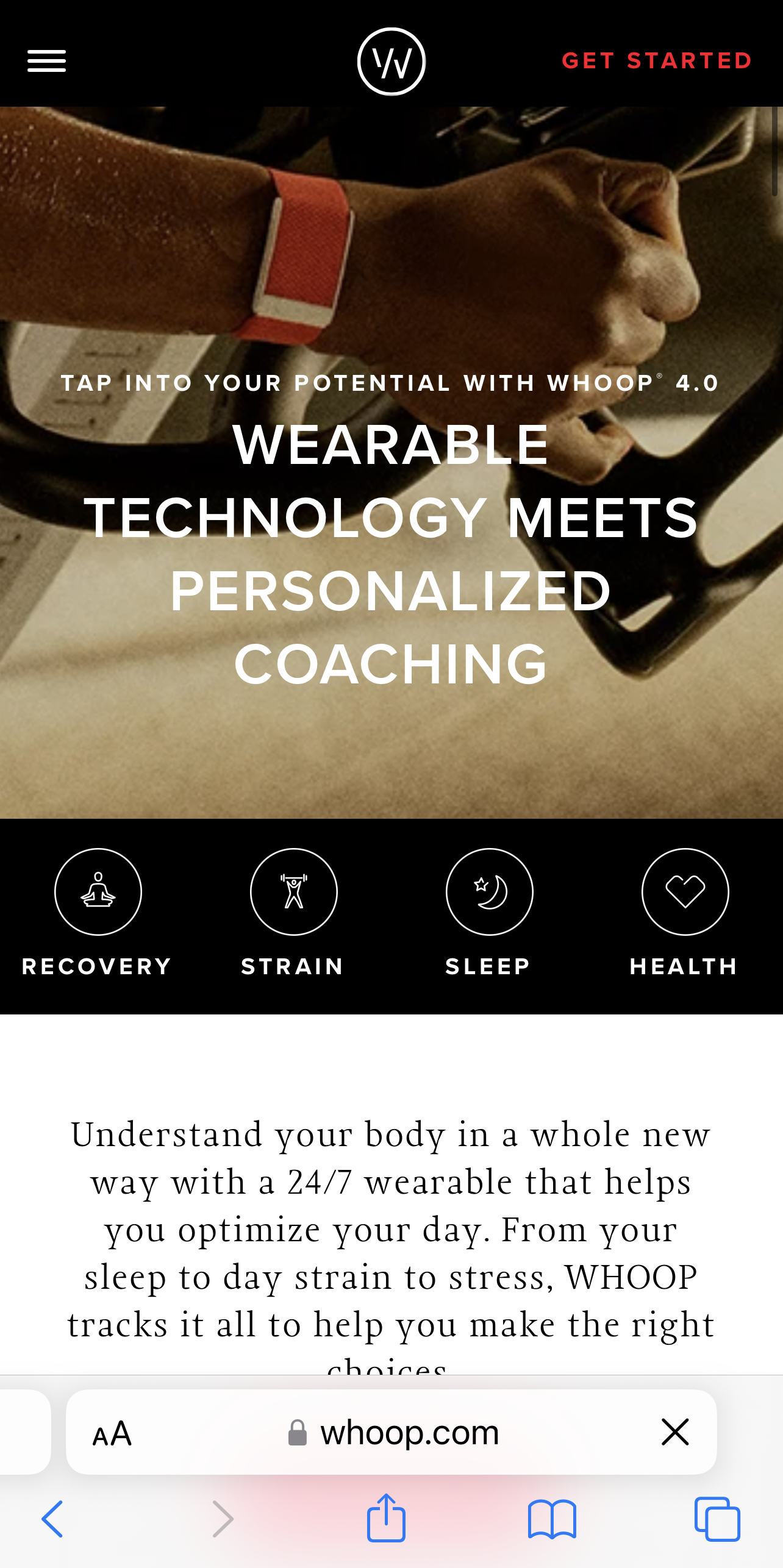
The supplement space is super interesting in the same way and a lot of it is because I believe that technology like the Whoop wristband pictured here has opened up the doors for those people who distrust the existing health and nutritional system. Technology like this helps people experiment, to learn about what makes them feel good, track their sleep, activity, and feelings.
Results and statistics can be used in journaling functions to actually test things that work for them – which will open up a whole new door for people. It’s also a great way to figure out if supplements may or may not work for them.
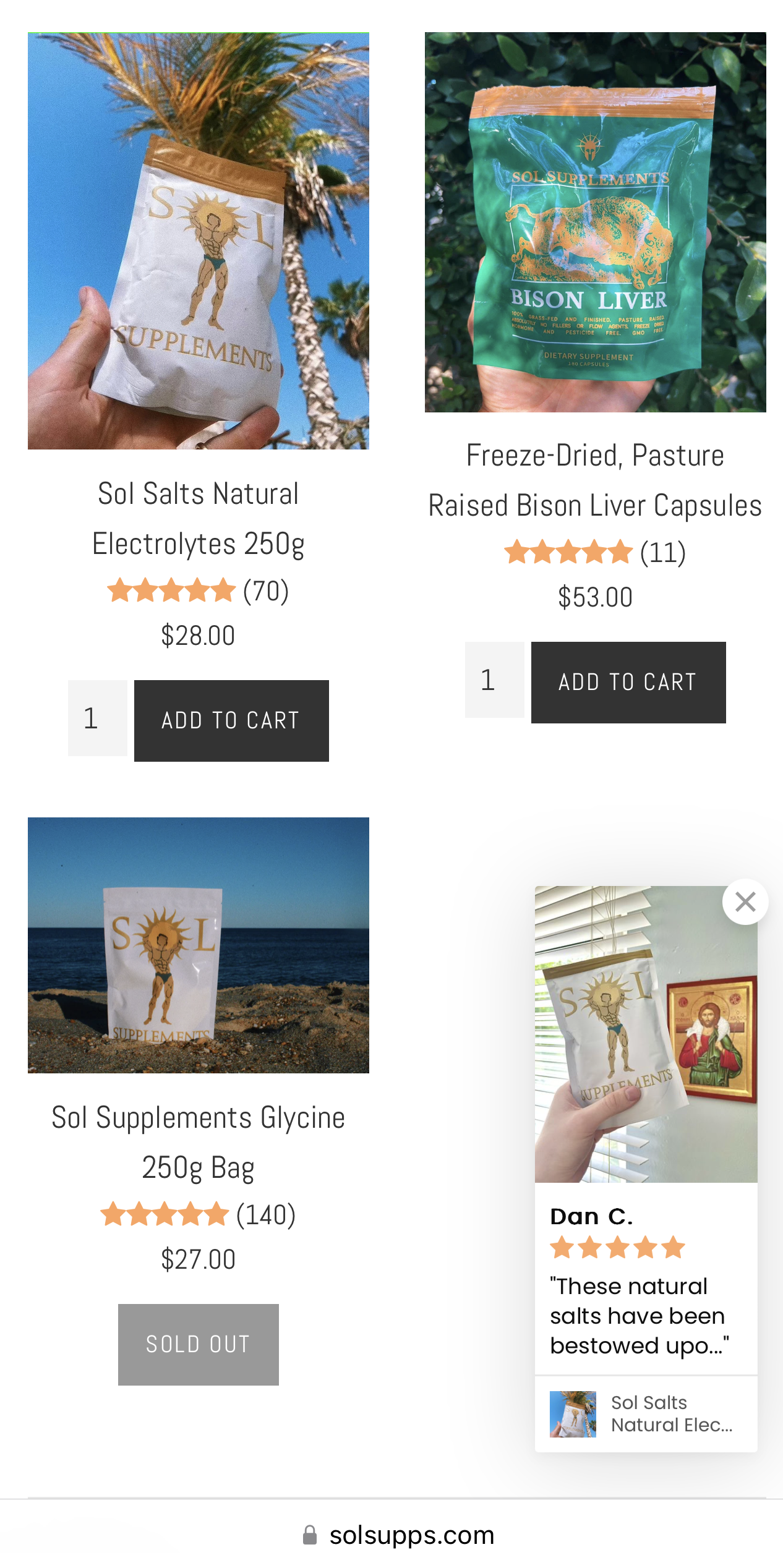
There’s also a growing movement for smaller brands like Sol Supps, brands who are super-focused on quality, organic, exactly-precise ingredients. These brands understand that to own a corner of the market – a niche – means that they understand what their consumers don’t want: weird protein shakes full of sugar and strange people dictating what goes into their supplements.
What consumers do want is things that just work, things that are built with passion. There’s an opportunity here across all existing supplement categories for newer protein brands to charge a couple of dollars more, understand their customers’ lifestyle, and really succeed.
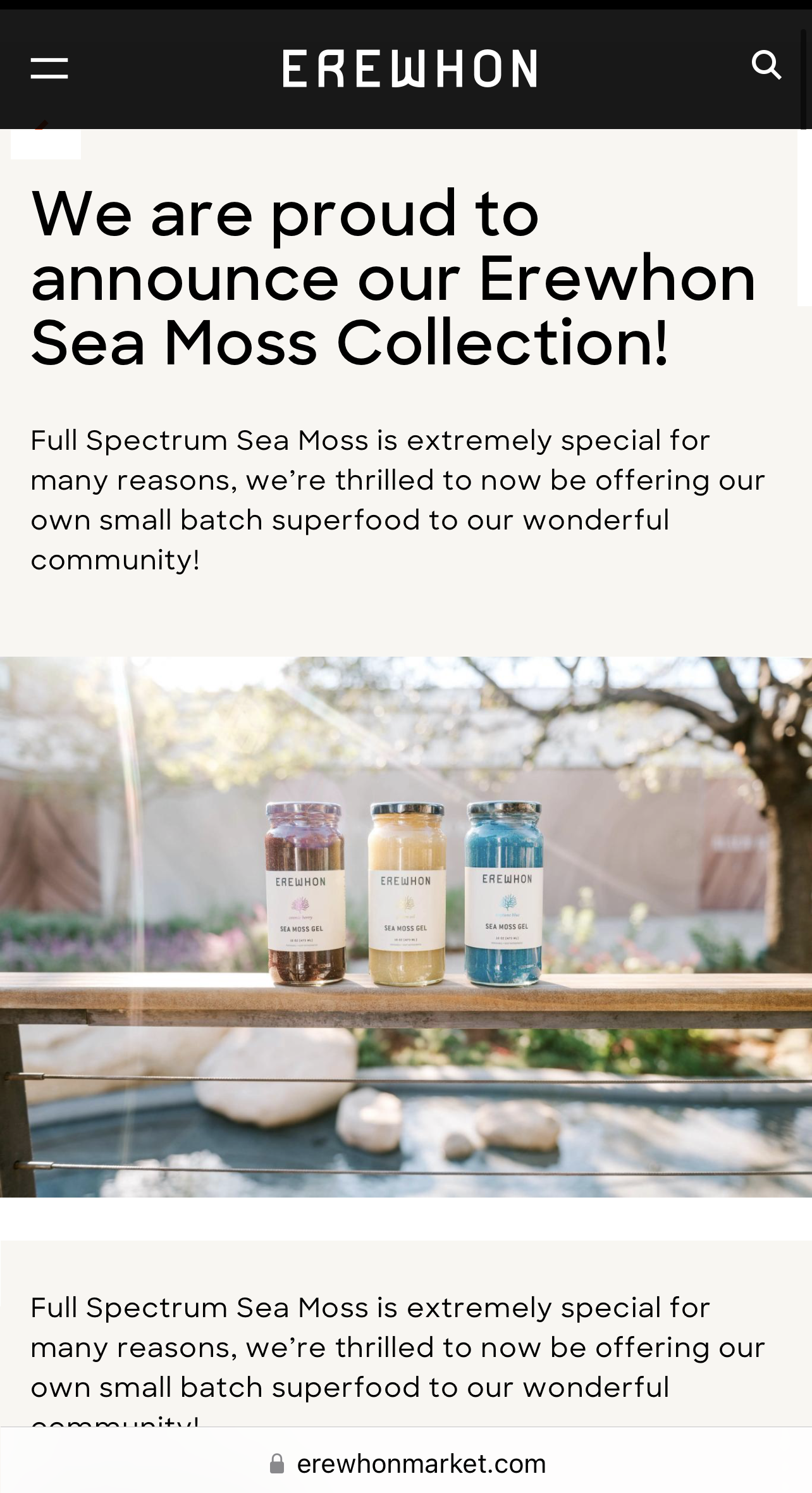
Not to mention, there’s a new era of specialty retailers who are doing things differently, like coming out with white label products. Erewhon (with their sea moss products) are part of this era, and they’re opening up brand new categories for discovery inside the communities they function in.
Best of all? They’re accesessing people who aren’t just totally online experimenting in this.
The most important takeaway you need here is to not let anyone tell you that this niche is saturated. You can do this!
– Oren
Twitter: http://www.twitter.com/orenmeetsworld
LinkedIn: http://www.linkedin.com/in/orenj/
TikTok: https://www.tiktok.com/@orenmeetsworld
Check out 2 newsletters from my best friends, James & Colin
NanoFlips –Learn the art of buying, growing and selling websites:
https://www.nanoflips.com/
Free Smoke – A Cannabis Business newsletter by Colin Landforce:
https://freesmoke.xyz/
READ NEXT:
Let’s Talk About DTC Brands Going Into Retail
I write about tools and ideas to bring winning physical products to life.
Whether you have a brand or want to build one in the future, I highly recommend joining the 4500+ happy subscribers on my Product People newsletter!
This is how you take a standard product and make it stand out. Satisfy Running is a great example of how to nail down on your customers’ user experiences, and create a fantastic product you can sell for a premium. There’s also my free product development guide on building a private label activewear brand in this niche.
Let’s do this.
By the way, if you missed my TikTok short on this, you can catch it below, or scroll to keep reading here on the blog.
@orenmeetsworld How do you take a basic product and make it work for your niche? Lets start with how to make a stsndout activewear product @orenmeetsworld #fashionbrand #fitnessbrand#activewear #productdevelopment #ecommercetips #trends
There are dozens of companies on Alibaba that offer basic polyester shorts for activewear. These designs are relatively well thought-through and modern, in an affordable price range.
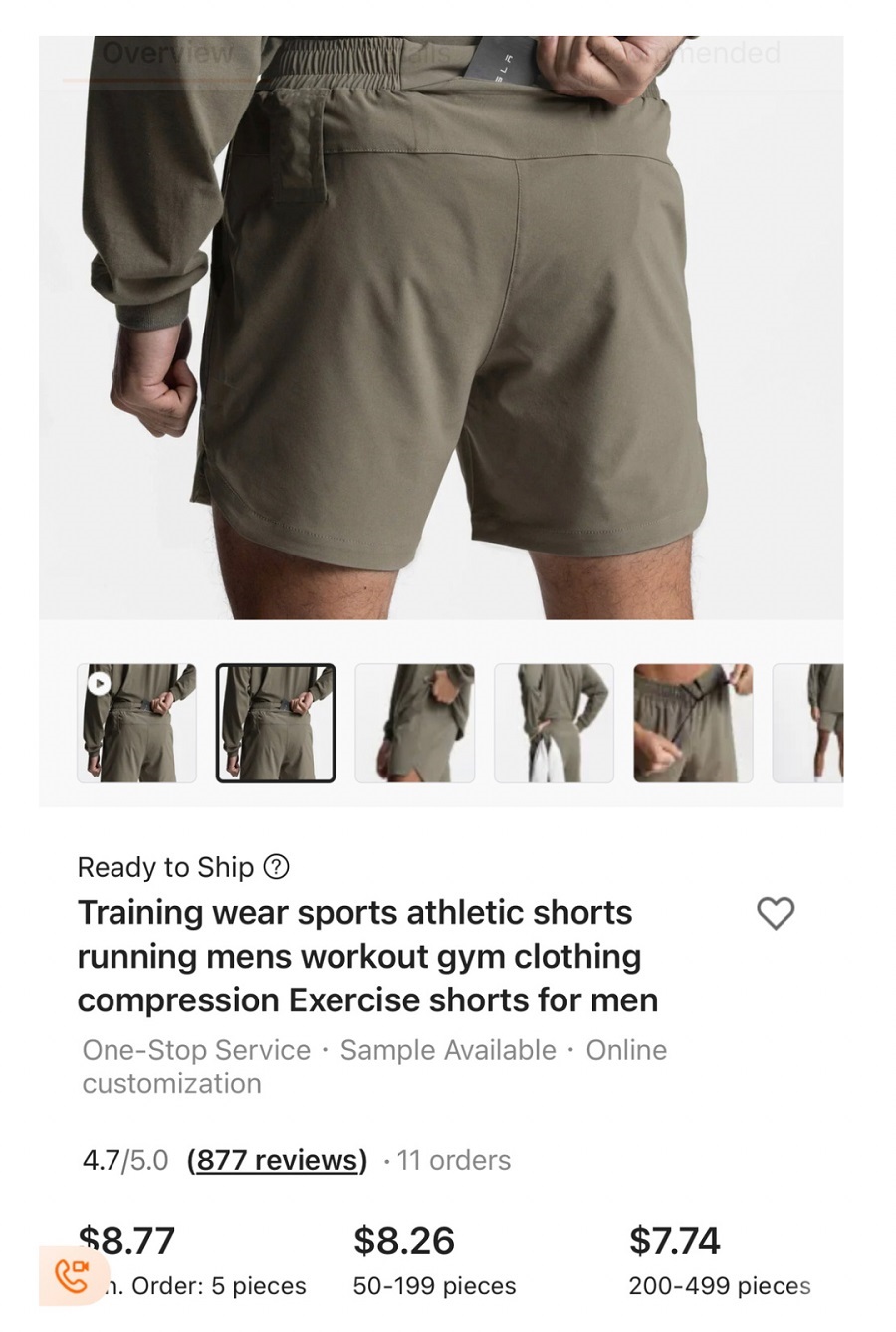
These above will run you about $7.75 each for 200 pairs.
This pair from Satisfy costs $270 because they’ve really zeroed in on the intense, long-distance runners’ user experience.
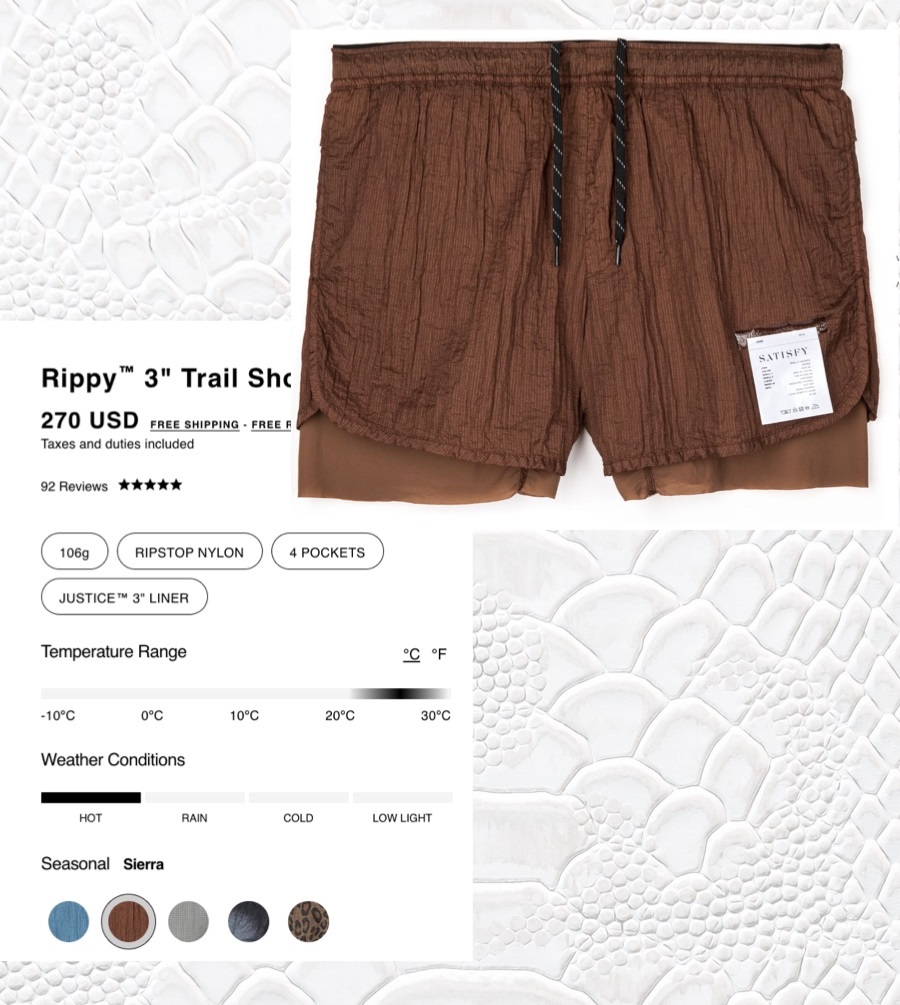
So, how do you take a short and customize it to be effective for a target niche?
This comes down to the user experience for exactly the sport or whatever active lifestyle element that your customer is looking for. So, what Satisfy has done is to make all of these little features that are perfect for the long-distance runner.
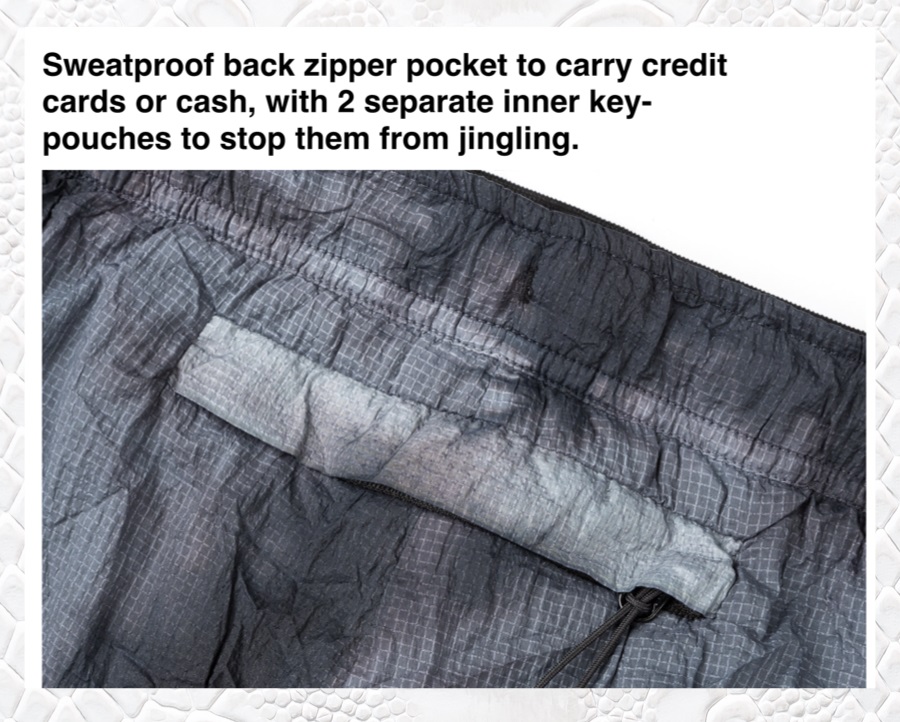
These features include things like this sweatproof back zipper pocket so you can carry your credit cards and cash with you. It also has inner key pouches to stop your keys from jingling in your pockets as you run.
As any long-distance runner knows, these are really annoying things that you need to think about while you’re running.
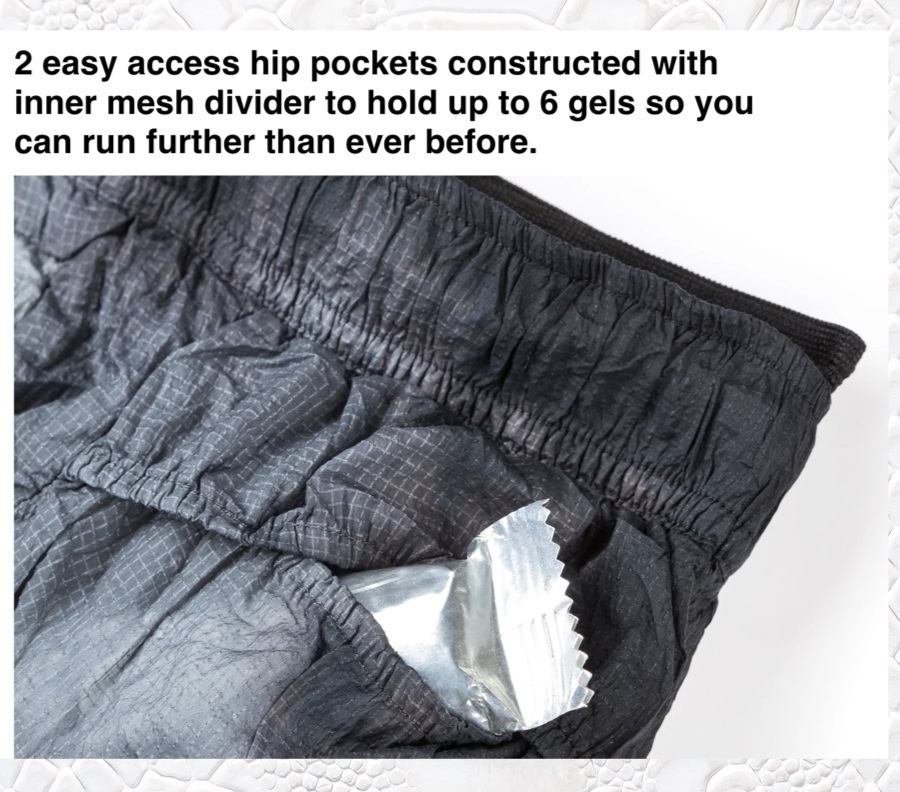
Follow this up with hip pockets that carry the gels you use to hydrate and get fuel in on a 10+ mile run.
There’s also a sweatproof phone pocket that’ll keep your screen dry. The pocket is on the inside (not the outside) which is key for running.
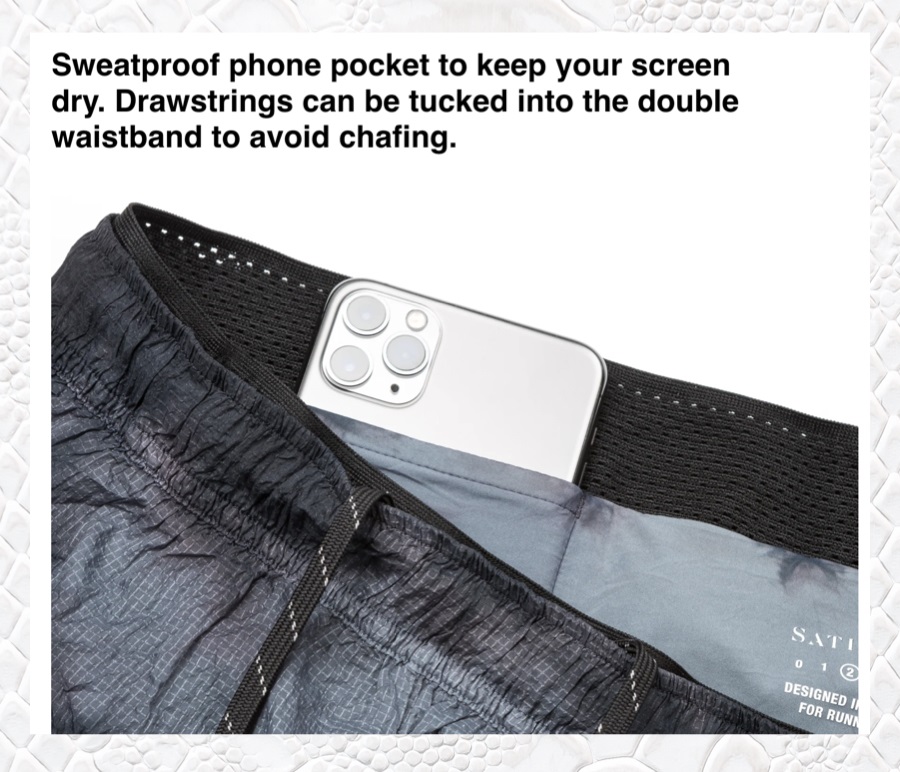
The drawstrings tuck into the double waistband to avoid chafing, and also so you don’t have them just flying around while you run. A great addition is the mini carabiner you can use to clip in valuables or jewelry while you run, which can also be stashed in the double waistband.
All of these visible benefits add up to the perfect user experience while you’re running.
So, if you’re designing activewear for a specific niche like yoga, baseball, lacrosse, etc., how can you find all these little details and add to the base short so your customer feels your product is speaking directly to them?
As a distance runner, I’d look at this product and think, “Okay. I’m about to run a marathon. I’m going to be wearing these because they have the perfect user elements for what I need as a distance runner.”
Now, how can you achieve that in your target niche?
RELATED READING:
How to Build a Brand in Activewear and Supplements
In this cheetah print (that I love, by the way!), you’ll see the detachable care label. I don’t have to remove the tag to avoid chafing, but the option is there if I want it. There’s also the unique style and design of it to consider, as well.

A super-crucial thing to consider is materials. All of those Satisfy designs are using 100% polyamide, or 72% polyamide and 28% elastane blends, which they’ve actually created themselves as part of their process.
All the shorts I’ve shown you are usually going to start off as polyester, but what you’re going to want to do is identify other high quality products and ask your vendor if they can find similar materials or things that will produce a similar effect.
Polyester really isn’t a great material, and I believe there could be a great opportunity to offer these shorts in linen and some other, more-natural fabrics. Either way, experiment with this, look at what the blends are (because they’re listed on almost any product listing these days) and then ask your vendor for what that better material is. That’s going to be the big thing that sets your product apart.
Hope this introduction to private label activewear was helpful for your product ideation. Let’s take a look at product development next.
So, what separates one product from another larger, more successful product is:
I’m breaking this down with a particular emphasis on activewear. The factory link below is the perfect vendor to get started with your own private label activewear brand.
I break all of this down in my TikTok short on product development for private label activewear brands, using Satisfy products to guide you. Watch it now or scroll to keep reading here on the blog:
@orenmeetsworld If you want to start an activewear brand, heres things to consider #fashionbrand #clothingbrand #fitnessbrand #sportswearbrand #activewear #ecommercetips #ecommercebusiness @orenmeetsworld
This is a $220 pair of running shorts from Satisfy Running, a cult brand who makes super performance items for specific sport niches.
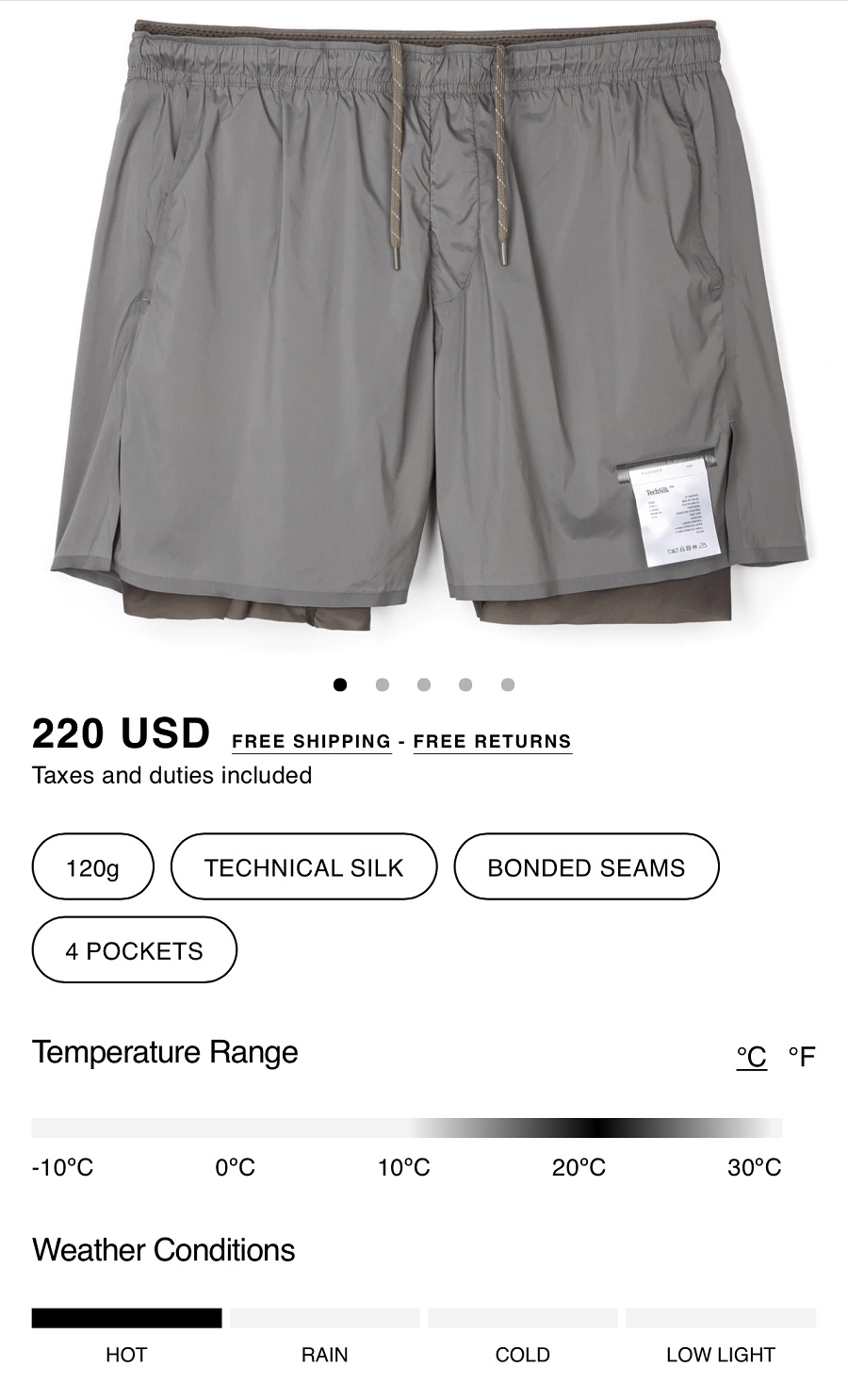
Here’s where the real brand advantage is:
This is a pretty extreme example of a premium for a pair of running shorts, but this is an activewear vendor from Alibaba. Most of the scaled activewear is made in Vietnam or Cambodia (not China) and you can get some pretty decent, high quality stuff on the platform.
You’re looking at $7.74 at scale for those. They’re also a blend in a similar way, featuring customized pockets, etc. While they’re not quite as customized as Satisfy is, you can still take a vendor like this and work with them.
One of the key things in your design that’s a major differentiator is materials. That’s also definitely one of Satisfy’s key differentiators, and that’s because they’re made of 72% polyamide and 28% elastane.
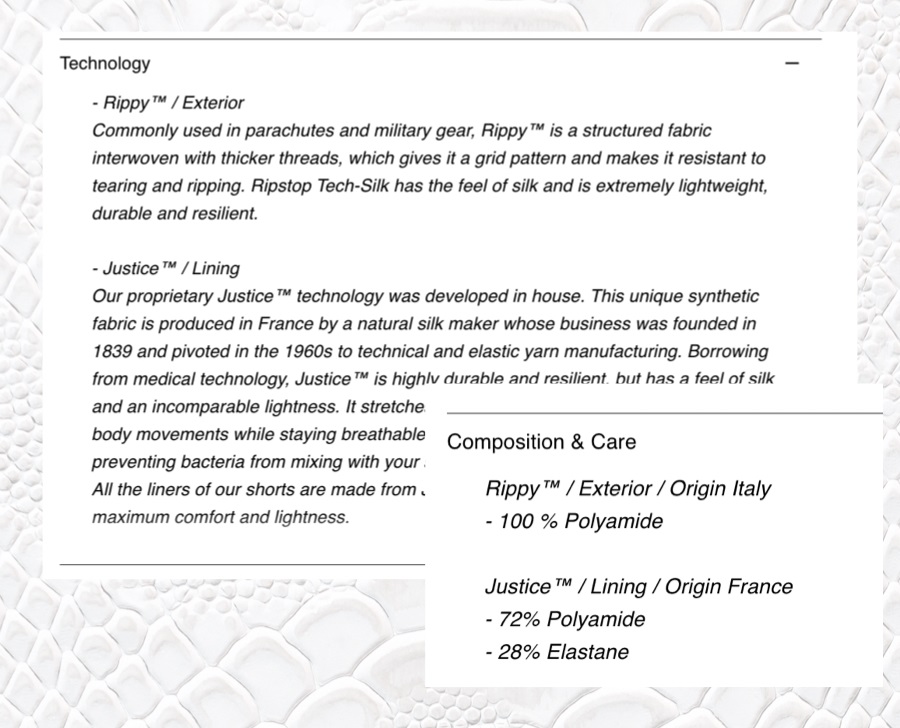
There’s a significant difference between these and say, a typical polyester short. The blend is definitely of better, more-durable, and longer-wearing quality than plain polyester is, for instance, in the long-distance running niche.
You can take information like this and approach manufacturers to find out of they can replicate it. Send them links to the shorts, or better yet, send them a sample of the shorts and ask if they can improve on the materials, design, or user experience.
There is currently a big, untapped advantage in linen or non-polyester/non-poly-based activewear, really. There are so many runners and athletes getting into the idea that comfortable may not always be good for you line of thinking, and that includes their clothing.
The big opportunity is to niche-down in this, and here’s what I would do:
This is a great approach to get you started on building an activewear brand of your own.
If you’re looking for a vendor to do it with, I recommend Guangzhou Jinfeng Clothing Co., Ltd.
Their designs have been featured here in some of the images above. They also have a bunch of ongoing sales and lots of existing styles to choose from.
Talk to them and work with them on what you can customize. Let me know how it’s going in the comments below or anywhere you see my tips and tools.
My newsletter drops with more like this. Sign up now and be first in the know.
You’ve got this!
– Oren
Twitter: http://www.twitter.com/orenmeetsworld
LinkedIn: http://www.linkedin.com/in/orenj/
TikTok: https://www.tiktok.com/@orenmeetsworld
Check out 2 newsletters from my best friends, James & Colin
Free Smoke – A Cannabis Business newsletter by Colin Landforce:
https://freesmoke.xyz/
NanoFlips – Learn the art of buying, growing and selling websites:
https://www.nanoflips.com/
READ NEXT:
Private Label Shoes and Sneakers Vendor Guide
I write about tools and ideas to bring winning physical products to life.
Whether you have a brand or want to build one in the future, I highly recommend joining the 6,500+ happy subscribers on my Product People newsletter!
There has never been a better time than NOW to start your own business. Launch a brand going into 2023, whether it’s a physical good/product, SaaS, or an info-product.
Let’s take a look.
Read this thread on Twitter now, or scroll to keep reading here on the blog
.
How to launch a brand going into 2023:
— Oren John (@orenmeetsworld) September 29, 2022
But this doesn’t need to be huge… a pet blog with a few thousand readers and followers sets you up for better success.
The most important part of the curation and building before launch part is piece of mind.
Take your time, and build organically.
If you don’t want to be a creator or build this audience… you can buy it.
Sign up with @JamesonCamp for more on this!
This is an essential concept for new brands:
If you missed my TikTok on this, you can catch it below:
@orenmeetsworld Storytelling and showing behind the scenes is a huge leg up for new brands #ecommercetips #brandingtips #marketingtips #fashionbrandcompany #fashionbrand @orenmeetsworld
♬ OCEAN DRIVE – HIGH ENERGY TROPICAL INSTRUMENTAL – Georgi Velichkov
Document the event and make sure you get content pieces out of the launch, as well.
Here’s examples of this video in different types of industries
Breakfast cereal: CrispyFantasyCereal on TikTok
Backpacks: BreviteBackpack son TikTok
Healthy Soda: DrinkPoppi on TikTok
Cocktail Cards: CocktailCards on TikTok
If this isn’t the content TikTok was built for, I don’t know what is!
Whether you are big or small, gather the stats from your launch – email opens, influencers that participated, video views, people on your Live, sales, website visits, whatever looks impressive, and put that in a presentation with your product info.
This is content for the deck you can use to:
Continue to add to this with all the brand milestones and achievements so you always have collateral handy.
Tell your story again and again in different ways.
This thread was all focused on launch. I heavily break down sourcing and developing different products to 4800+ entrepreneurs on my Product People newsletter.
– Oren
Twitter: http://www.twitter.com/orenmeetsworld
LinkedIn: http://www.linkedin.com/in/orenj/
TikTok: https://www.tiktok.com/@orenmeetsworld
Check out 2 newsletters from my best friends, James & Colin
NanoFlips –Learn the art of buying, growing, and selling websites with James Camp:
https://www.nanoflips.com/
Free Smoke – A Cannabis business newsletter by Colin Landforce:
https://freesmoke.xyz/
READ NEXT:
How to Build a Brand in Activewear and Supplements
Sign up today for more content like this!
If you’ve traveled a ways down the road with me on any of my blogs, the one consistent thing you’ll hear me say is that there’s never been a better time to start your own business than now. C’mon… you just can’t fail in a market as ripe for new business as this post-pandemic market is. This is even more true when you start a business without much money.
The lower your investment, the lower your risk. And the more niche your innovative business ideas are, the higher your chances of success.
Why do I say this? Surely the smaller your market is, the less money you’ll make in return?
Well, no. Spoiled for choice, many consumers will shop at the cheapest place they can find what they’re looking for. With little or no choice in suppliers, customers with niche needs spend all their money at one specific place.
But just how niche do you need to be? Here are 5 examples of niche blogs that followed 15 simple steps to success…
By the way, if you missed my TikTok on this, you can catch it below, or scroll to keep reading here on the blog:
@orenmeetsworld If you want to start a business without much money, i would start a niche content site you can grow and then sell on sites like Microacquire or Flippa #websiteflipping #blogger #creatoreconomy #ecommercetips #entrepreneurtok @orenmeetsworld
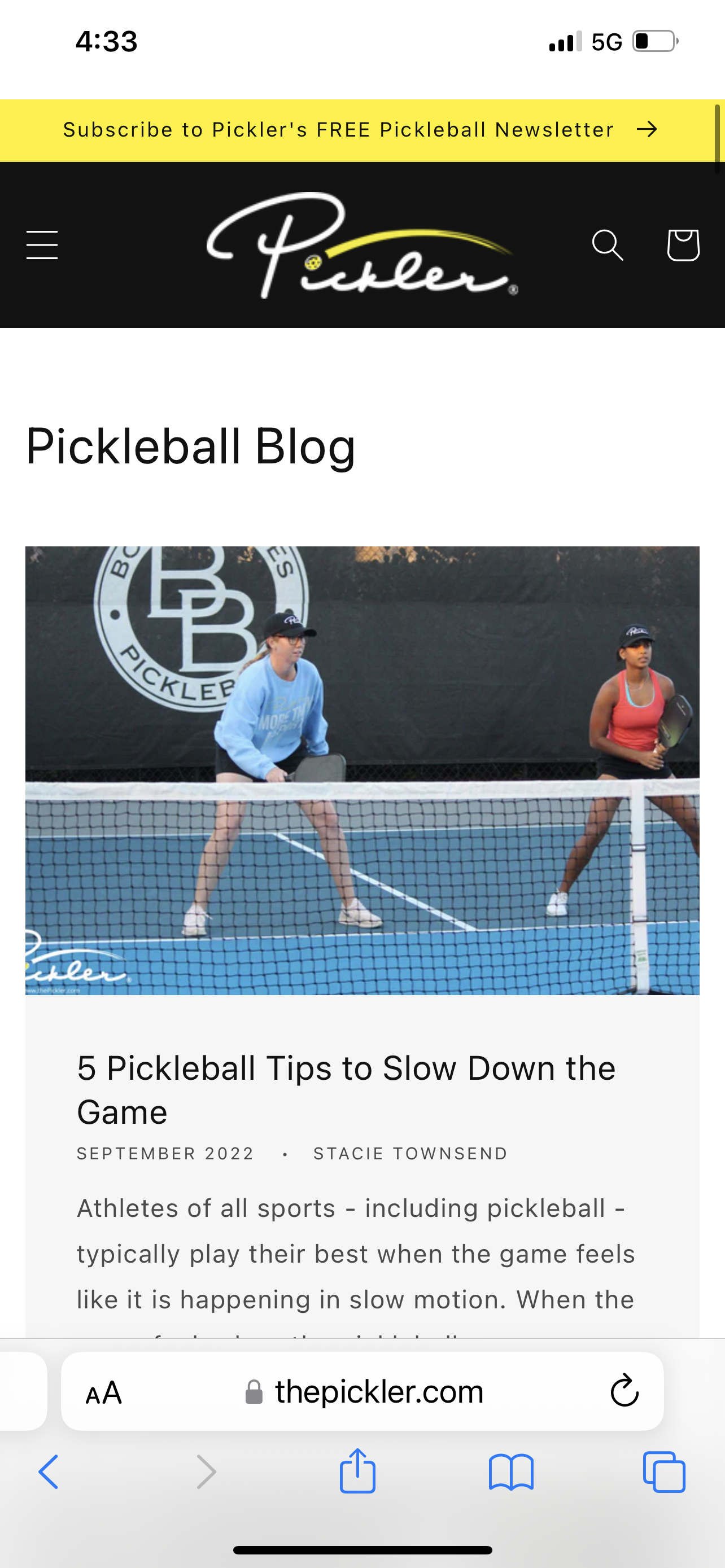
So If I didn’t have much money and was starting a business today, the thing I would do – absolutely hands down – is start a niche content site like this Pickleball Blog. Being so narrowed in niche, the site enjoys first place in SEO search results for “pickleball blog”.
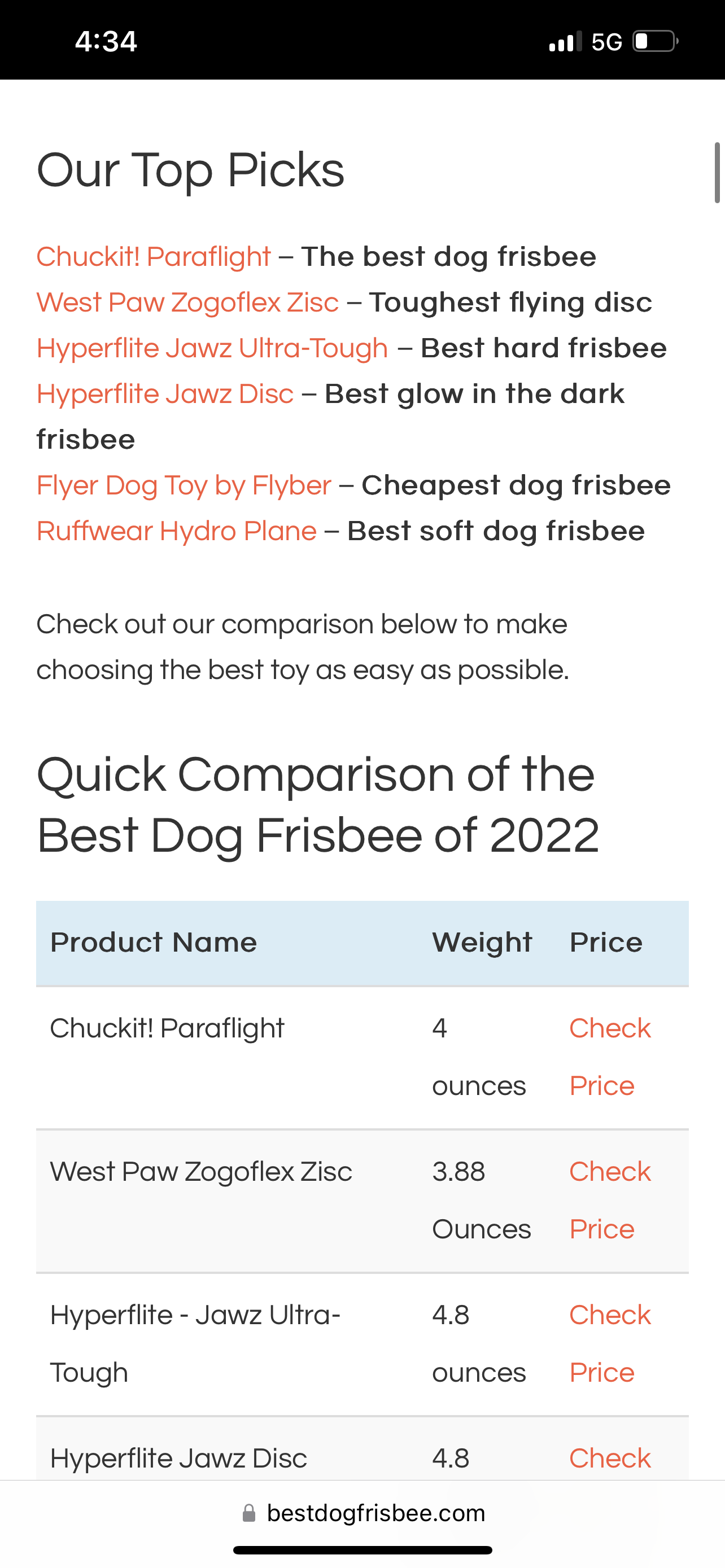
If you’re an online content producer, writer, or blogger, how do you actually make money on your work? Here’s an example from a site a friend of mine, James Camp, actually built and sold.
The site is called bestdogfrisbee.com and what you’ll see here are a few review articles about the best dog frisbee out there, with links to said frisbee. Each of these links redirect to Amazon, and every purchase made through that results in a small commission for sales made.
By earning a percentage on sales, James had monetized his site. So when someone purchased that website from him, they did it because they said : “Hey, this website already has money, and we can likely make more of it if we improve the site and grow it further.”
But back to Pickleball…
When you start a niche content site, you’ll want to set up for a series of ongoing content where you write likely everyday or two-to-three times a week. Choose topics you find interesting or you think people are searching for that can add value.
You can use tools like AnswerThePublic or various SEO tools to help you think intelligently about the best topics for your niche. Use social media to your advantage by posting shorts on TikTok or YouTube, tweeting about your niche, or starting a podcast.
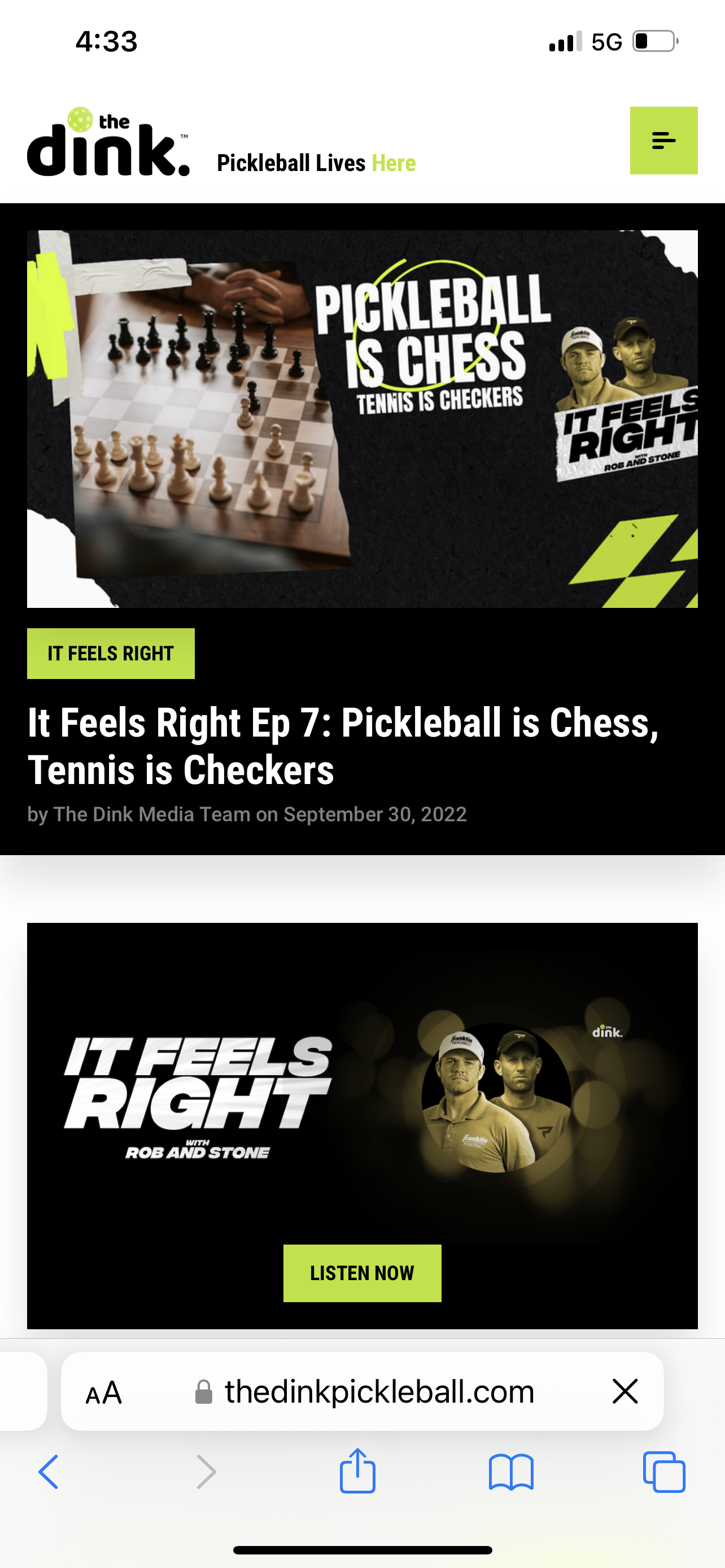
Make friends everywhere you go and let this activity grow your audience through your social media networks.
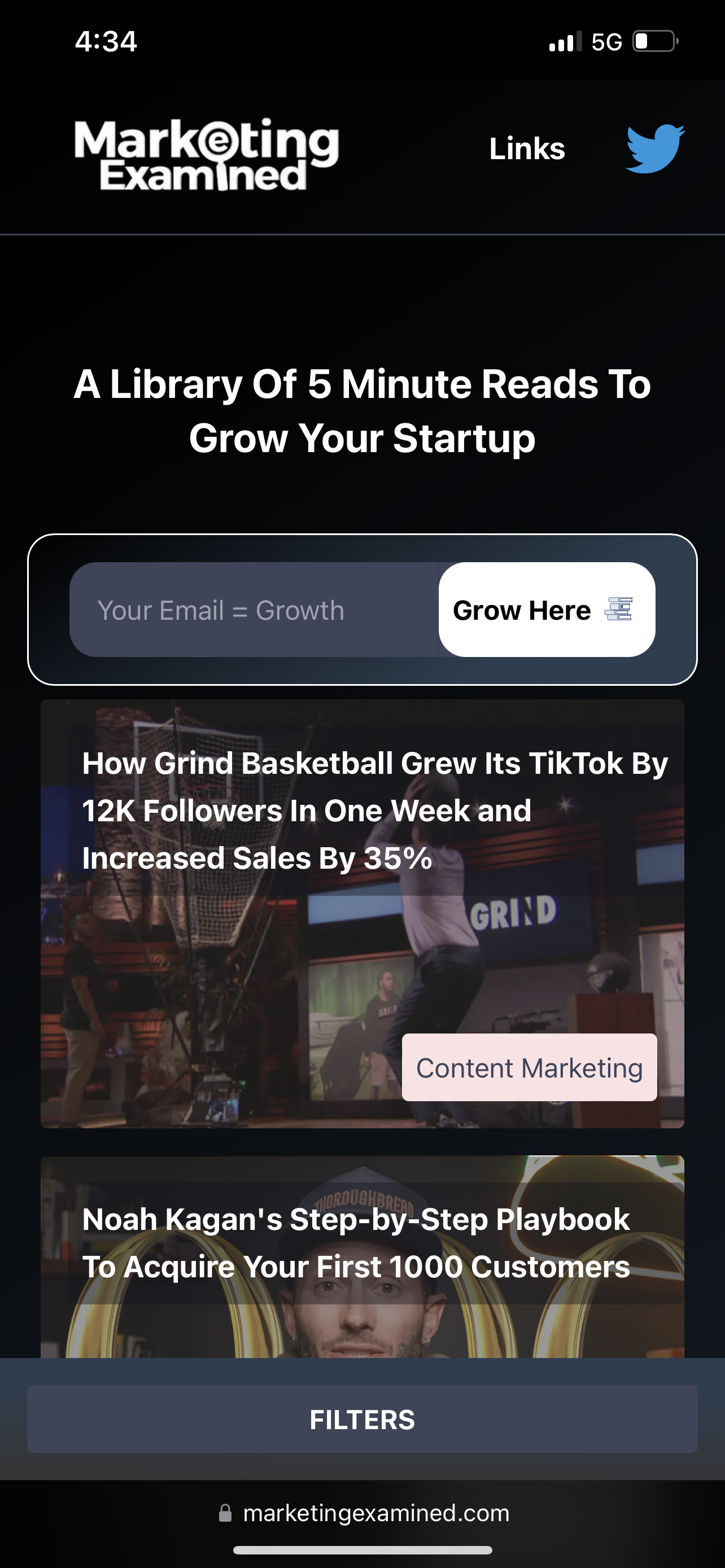
Marketing Examined is a niche content blog from my good friend, Alex Garcia, who writes about all things marketing. He does case studies where he actually goes in-depth with individual marketers about things that have a lot of value to the niche.
What’s nice about these sites is that you can also build email lists around them and people would either pay you for sponsorship of this email newsletter, or when you go to package your content site to sell because people do buy these sites on platforms like MicroAquire and Flippa. Here, the general concensus is that the site already comes with X amount of traffic, X amount of email subscribers, X amount of social media followers, etc.
When people are starting a business, or want to expand traffic to their existing business, they look to content sites and social media things like this. They specifically search for sites that are easily packable with lots of statistics and Google analytics. In this way, it’s easy to increase their own traffic, to sell the things they’re trying to sell, or to get the impressions they want for themselves for advertising.
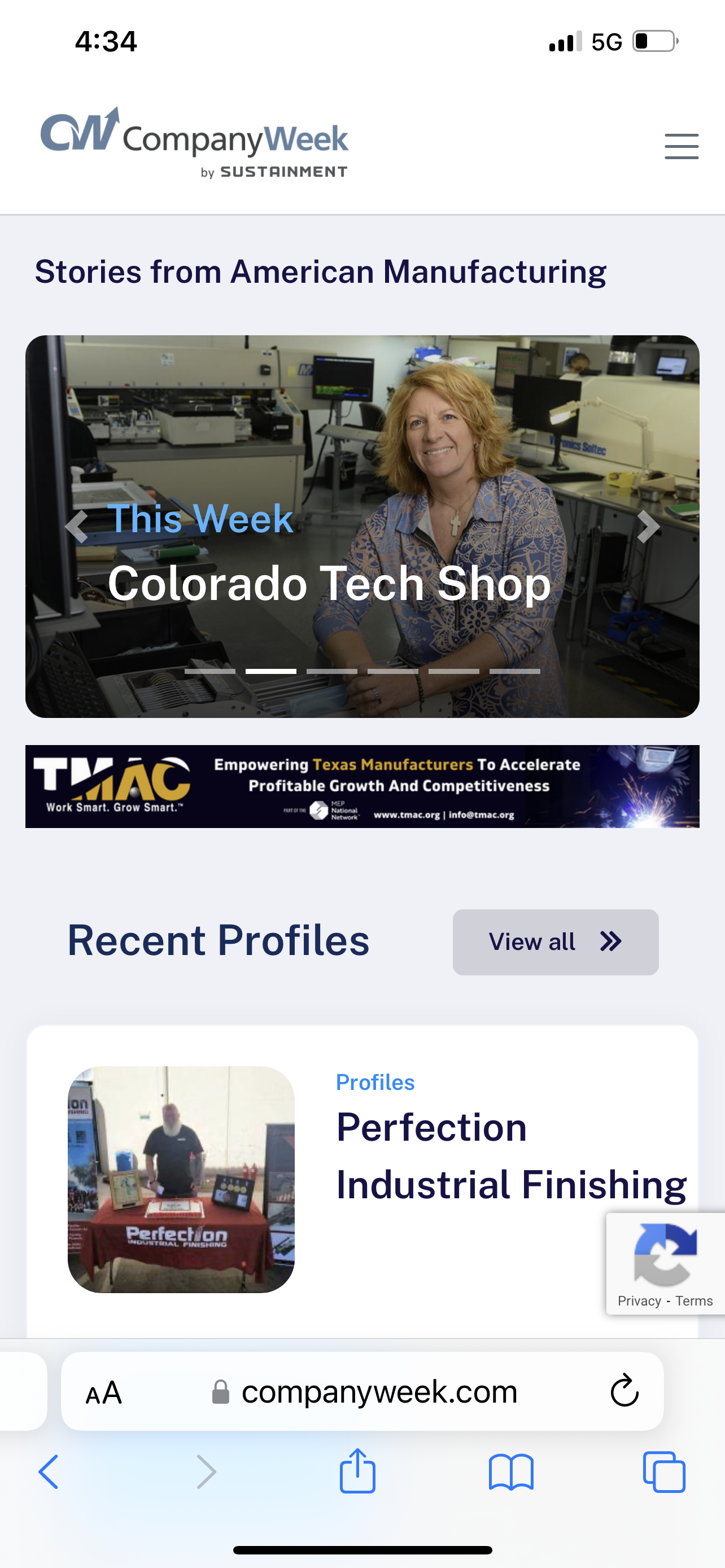
It doesn’t have to be just writing and blogging about your own story; you could write others’ stories, too. Take Company Week, a site that was recently bought by the niche tech company Sustainment.
Company Week survived by interviewing American manufactures and placing their profiles and interviews online so those manufacturers’ profiles could be found. The resulting traffic had tremendous value when they started working within that niche, ultimately resulting in their site being found and the eventual acquisition by Sustainment.
Similar to listings, Company Week also offered ad space on their site that generated revenue for their business.
So, how do you start a business like these guys did, when you don’t have much money to work with then?
Overall, if you’re short on cash but have tons of time, this is the ultimate 15-step guide on how to start a business without much money:
1. Pick something you love, can live with, or have a lot of experience in. This is your niche.
2. Look up topics in this niche you feel you could write about regularly.
3. Choose a domain name that reflects your niche or target market needs. BestDogFrisbee mentioned above is a good example of this.
4. Do your SEO research with tools like Ahrefs and AnswerThePublic so you have clear ideas on what topics will suit your niche best.
5. Use a simple CMS (content management system) with a blog option like WordPress.
6. Install a service like IONOS, which costs 50c a month to host your site.
7. Design some logos with Canva’s free options.
8. Find stock photos from free sites like Unsplash, Pexels, FreePik, etc.
9. Pay a little more for a service like Envato Elements.
10. Write everyday about your niche topic.
11. SEO and optimize your content for readability and searchability.
12. Share that content on social media and build a community.
13. Create an email newsletter that builds your following, but also generates clickable leads.
14. Wait about a year or two until you’ve built enough traffic, and you’ll be able to sell that site for lucrative money.
15. Take that money and fund a more interesting and larger scale project than the last one.
The only difference between having money and not having much of it when you use this 15-step approach is that you either do it yourself, or you hire someone to help you do it. It’s that simple. The process remains the same, whether you have money or not.
Yes, it’s going to take a little longer if you’re doing it all yourself, but search engine algorithms have pretty much leveled the playing field these days. You stand as good a chance as anyone else to be at the #1 search result organically… What are you waiting for?
RELATED CONTENT
This is your sign to start a supplements brand
Thanks for reading. I regularly break down sourcing and developing different products to 4800+ entrepreneurs on my Product People newsletter. You should join me there.
– Oren
Twitter: http://www.twitter.com/orenmeetsworld
LinkedIn: http://www.linkedin.com/in/orenj/
TikTok: https://www.tiktok.com/@orenmeetsworld
Check out 2 newsletters from my best friends, James & Colin
NanoFlips – Learn the art of buying, growing, and selling websites with James Camp:
https://www.nanoflips.com/
Free Smoke – A Cannabis business newsletter by Colin Landforce:
https://freesmoke.xyz/
Sign up today for more content like this!
We chat to serial entrepreneur and beverage creator, @Roy_Bntz on how to create a beverage brand. This Q & A interview takes a look at things you need to know, and where to start to launch or grow a successful beverage brand.
Specifically, this interview guides the entrepreneur with advice and know-how on:
Roy, tell us a bit about your background.
I’m a serial entrepreneur. I’m originally from Israel, and I moved to the US, to New York City, 9 years ago to study photography. Instead, I got bit by the entrepreneurial bug.
Since then, I’ve built and launched multiple CPG and online startups. I’m a former amateur Muay Thai fighter, so when I’m not building stuff, I like to be outdoors as much as possible.
What were the biggest challenges in growing your previous businesses?
Some background first: Our first company was called Beyond Neutral. It was an alkaline-forming cold press juice business. We were one of the first companies to discuss & promote alkalinity (and its importance).
Our second company was ShotCo., a premium organic cold-pressed line of shots that were like a daily vitamin. When we started back in 2016, this category of premium cold-pressed shots was still very young, and there were only a handful of other brands out there doing something similar. We had a pre-workout shot, post-workout shot, digestive shot, immunity-boosting shot, etc.
Our challenges for ShotCo were –
Talk to us about formulation. What are some best practices to help make a great beverage?
We did everything ourselves, however, if you want to save yourself a lot of time (and mess) there are many formulation companies that do this in a fraction of the time it took us. However, costs vary.
Whatever you do, make sure a lot of people taste it before you launch it.
Every time we found a few formulations that we thought were winners, we would gather 30 or so people and have them try them all out and then write anonymously on a page what their favorite ones were. This helped us get a better understanding of what were actual winners and what were just personal favorites.
We did a lot of small events as well. It didn’t matter if I liked a specific one. If our consumers didn’t, we would kill it… and fast. You can use all the best marketing & fancy buzzwords but if your beverage doesn’t taste amazing, you will not have repeat purchases.
If someone wants to create a beverage brand today, any advice for them?
Don’t!
Just kidding, it’s an amazing space to be in, and one I’m still deeply interested in – but it’s highly competitive so do your due diligence before you decide to start a CPG beverage brand. Between fighting for shelf space, figuring out DTC, online ads, creating relationships with distributors, and trying to differentiate yourself for consumers, it’s a very difficult task to pull off.
Figure out how to stand out in your category; no one is reinventing the wheel, they’re simply reimagining the existing.
Examples could be – bone broth in a can, wine in a box, water in a can, kombucha in a can, healthier soda, seltzers with herbal infusions, etc. Don’t try to invent something that doesn’t exist; simply take something that works and improve it, reimagine it, and think “How can I make this better”?
To create a beverage brand, keep your focus on 5 things:
Any thoughts on DTC vs retail vs Amazon?
I can only comment on what we did, which was DTC, retail, and events.
Events proved to be very successful for us… From the small yoga events to weekend markets, vegan markets, supermarkets, and large industry expos, we did them all. It was a great way to connect with our customers, build trust, talk to them face-to-face, show them the people behind the brand, tell them our story, and add a human element to the brand.
DTC was very successful for us… We worked a lot with micro-influencers by sending them free products and having them promote them. This was pre-Insta stories so most of them would post it on their page (longer visibility), and we worked hard on creating an Instagram feed that would be aligned with the brand.
However, since it had to stay cold, any shipment we did – specifically to the west coast – we would break even (at best) or often lose a few dollars. We tried focusing on the Tri-State area but our shipments to the west coast grew in volume. We had the idea of partnering with a west coast co-packer, as well, but just didn’t have enough in the bank at the time to justify that expansion.
Retail can be difficult and the one we focused the least on; both the distributors and the retailers get a cut. Unless you’re doing massive volumes, you’re making little to no profit. They essentially price it at whatever they want and place you wherever they want. They pay late and generally speaking show a lack of interest in you and your company.
With that said, I would do it differently in the current marketplace of 2022, and have much more retail presence due to a shift in consumer habits. If you can land deals with major retailers or big box stores, that’s a massive win for the company. Amazon will always prove to create accessibility for your customer and it’s pretty much a no-brainer in my book to have your product there. I don’t have personal experience working with Amazon for Shotco, but as a consumer I see huge value there.
Any tips or tricks for long-term success in the space, based on your experience?
IMO if you are looking for longevity you have to expand into retail and constantly evolve as a brand; the brand aesthetics, look, SKUs, taste profiles, ingredients, everything:
What are brands whose product and marketing you really respect in the space?
At the time that we were live, we really looked up to Dirty Lemon. When they started out they were strictly a DTC model done via text. They had a great-looking product, killer design, a really cool Instagram account, great names, the whole 9. Dirty Lemon just oozed cool.
They used the same co-packer we were using at the time. That’s how we really got a first-hand look at the evolution and success of the brand. They’ve since gotten bought out and shifted strategy to retail – which is where the market as a whole has shifted.
Right now you would have to be crazy not to be in awe of what Liquid Death is doing. It’s water in a can with amazing branding that has become one of the fastest-growing beverage brands in the world. They were recently valued at $700 million. If I was an up-and-coming beverage startup, I would study and copy would those guys are doing. They have a very wide distribution and are placing themselves prominently in varied arenas through smart collaborations and marketing strategies.
What are you working on next?
Right now I’m building (currently revamping) Wilder, an outdoor marketplace for guided adventures. The site should go live early next year. Be sure to sign up for early access and to stay up-to-date on what we’re doing at Wilder
This interview forms part of a series of interviews with brand specialists and product strategists. See other interviews here.
There has never been a better time to launch your own product. Create a beverage brand today.
Join 6,200+ happy subscribers on my Product People email list. Access product playbooks, factory links, and insights for running your own brand direct in your inbox, FREE. Subscribe now.